-
+86-13791972057
-
No. 3009, Tower 3, Zhuoyue Century Center, No. 31th Longcheng Road, Qingdao, Shandong, China


+86-13791972057
No. 3009, Tower 3, Zhuoyue Century Center, No. 31th Longcheng Road, Qingdao, Shandong, China








2026-10-12
Contents
Food processing plants demand steam that’s clean, precise, and always available. No compromises. No smoke. No downtime. When a facility switches from gas-fired or coal boilers to an electric steam boiler for food processing plant operations, it isn’t just upgrading equipment—it’s redefining safety, traceability, and compliance.
We’ve installed over 142 electric steam systems in meat processing lines, dairy pasteurization units, and ready-meal sterilization tunnels since 2015. In every case, the core requirement was identical: steam at 3–6 bar, dryness ≥99.5%, with zero hydrocarbon carryover—and zero risk of combustion near food-grade zones. That’s where purpose-built electric steam boilers deliver what legacy systems can’t.
Steam in food processing isn’t auxiliary—it’s critical infrastructure. It sterilizes fillers, powers jacketed kettles, humidifies ovens, and drives autoclaves. But traditional boilers introduce three unacceptable risks: thermal lag during ramp-up, flue gas contamination near production lines, and inconsistent pressure during peak demand.
Electric steam generators eliminate all three. They convert electricity to steam in under 90 seconds—no warm-up delay. No burner tuning. No draft fans. No CO₂ monitoring required. All stainless-steel wetted parts (AISI 316L standard) resist corrosion from cleaning agents like caustic soda or peracetic acid. And because they produce zero emissions on-site, they meet FDA 21 CFR Part 117, EU Regulation (EC) No 852/2004, and HACCP validation protocols without retrofitting ventilation or exhaust ducts.
One client in Poland replaced a 600 kW oil-fired boiler with a 500 kW XINGFU S-Series unit. Steam quality improved from 92% to 99.7% dryness. Energy consumption dropped 18%—not from efficiency gains alone, but from eliminating standby losses and burner cycling. Most importantly, their third-party audit passed on first attempt: no steam trap sampling failures, no condensate pH deviations, no trace of NOx in ambient air testing.
Some engineers assume “electric = plug-and-play.” It’s not. Voltage stability matters. Water pretreatment is non-optional. And control integration must speak Modbus TCP—not just 4–20 mA.
We’ve seen three common failure points:
That’s why every XINGFU project starts with a free thermal load audit—not a brochure. We map steam demand minute-by-minute across production cycles, verify transformer capacity, and model condensate return rates before quoting a single kW.

Not all electric steam boilers serve food plants equally. Here’s what separates industrial-grade units from generic heaters:
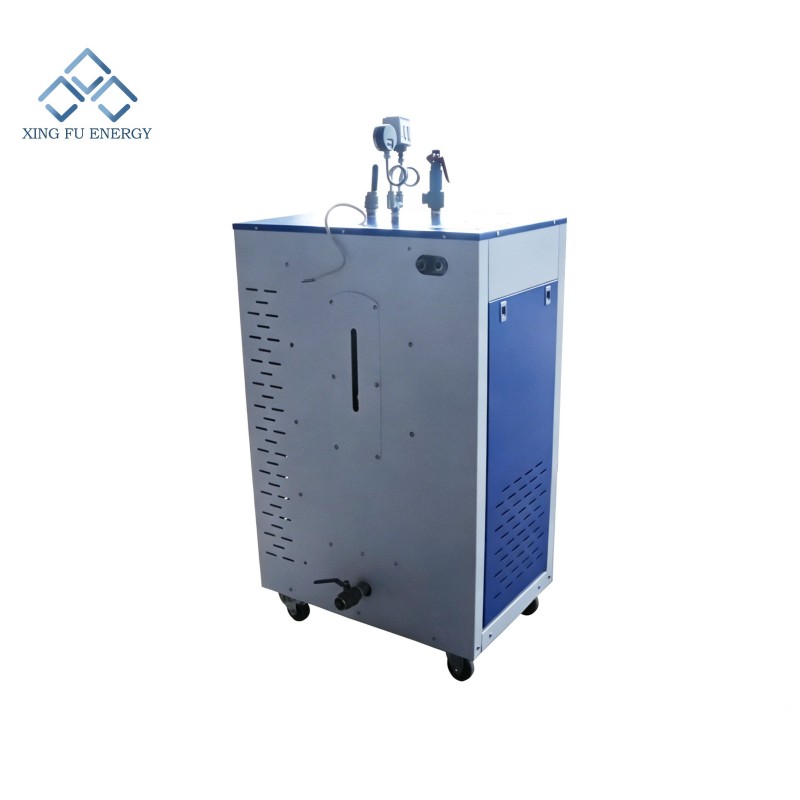
The S-Series line includes compact 30–150 kW units for pilot kitchens, mid-range 200–600 kW boilers for medium-scale dairies, and heavy-duty 800–2000 kW systems with dual-circuit steam distribution for multi-line facilities. All use finned-tube immersion elements—no electrode-type designs that degrade water chemistry or require constant brine dosing.
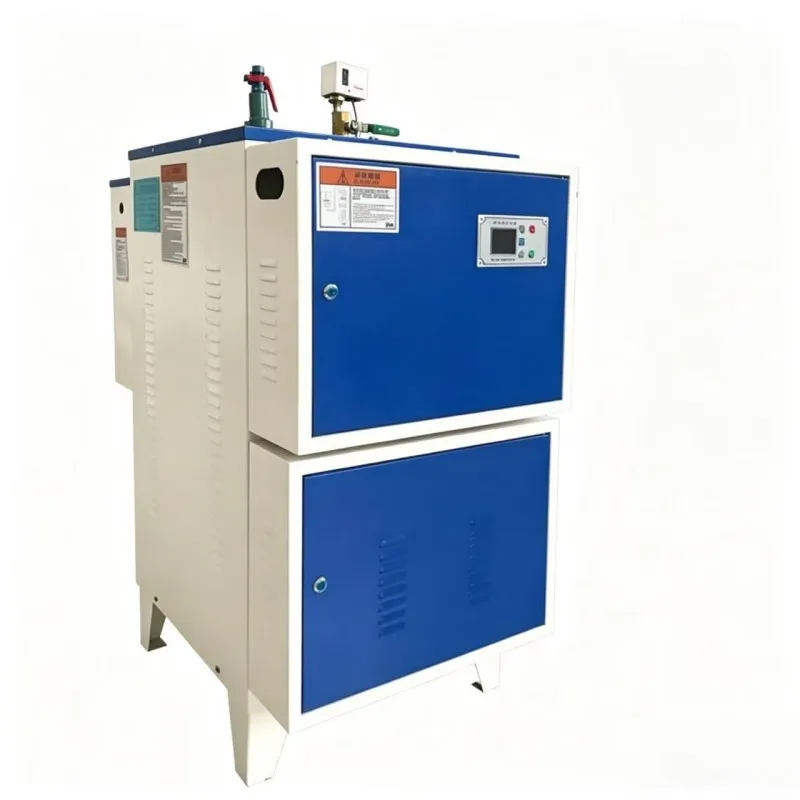
An electric steam boiler for food processing plant operations does more than make steam. It generates data: real-time kW draw, steam flow accuracy, element resistance decay, and predictive maintenance alerts. When integrated with SCADA or MES platforms, it becomes a node in your food safety system—not a black box behind a firewall.
QINGDAO XINGFU ENERGY EQUIPMENT CO.,LTD builds these systems in-house, tests them under full load for 72 hours, and ships with FAT documentation signed by certified welders and pressure vessel engineers. Their 70,500 m² facility handles everything from coil winding to CE marking—no subcontracted fabrication, no off-site welding.
If your next steam upgrade needs zero emissions, FDA-aligned materials, and engineering support from sizing through commissioning—start with thermal load data, not a catalog. Because in food processing, steam isn’t measured in kW. It’s measured in validated batches, auditable records, and uninterrupted uptime.