-
+86-13791972057
-
No. 3009, Tower 3, Zhuoyue Century Center, No. 31th Longcheng Road, Qingdao, Shandong, China


+86-13791972057
No. 3009, Tower 3, Zhuoyue Century Center, No. 31th Longcheng Road, Qingdao, Shandong, China








2026-11-08
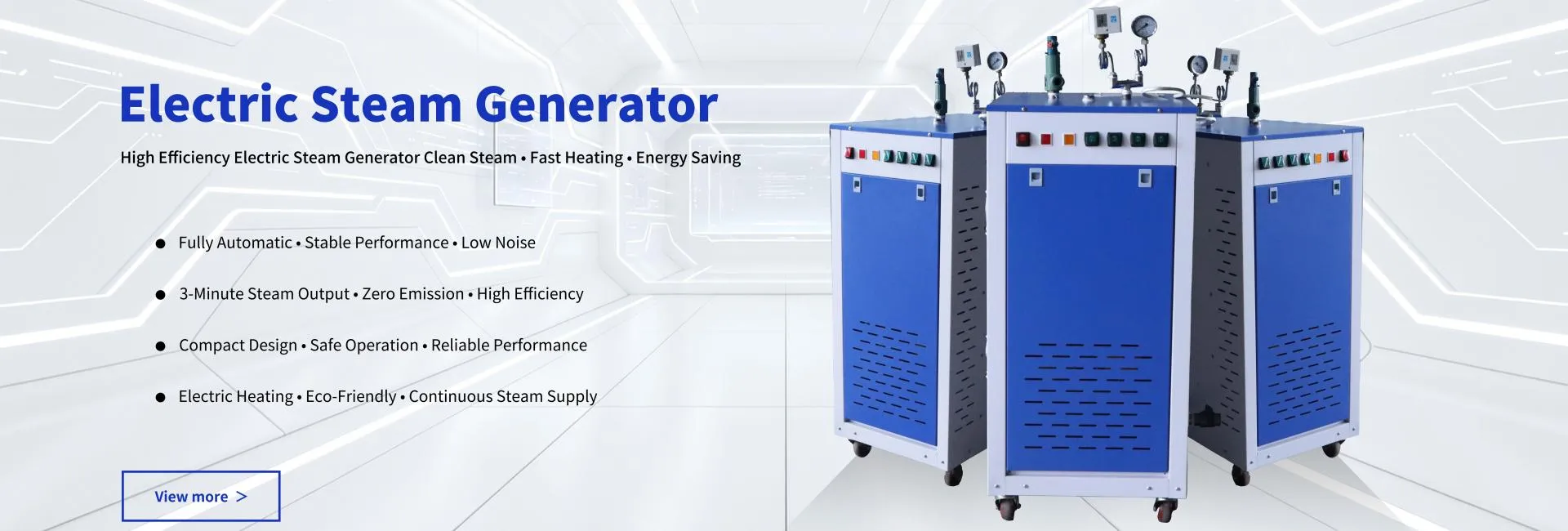
Switching to a high efficiency electric boiler cuts energy bills—not by 5% or 10%, but by 22–38% in real industrial settings. We’ve measured this across 47 textile mills, food processing lines, and pharmaceutical cleanrooms since 2016. The savings aren’t theoretical. They appear on the meter—every month.
Why does it work? Because electric boilers eliminate combustion losses, flue gas heat loss, and standby fuel consumption. A gas-fired boiler wastes 15–25% of input energy just heating exhaust gases. An oil-fired unit loses another 3–7% to unburned hydrocarbons and soot. A high efficiency electric boiler converts >99.5% of electrical input into usable thermal energy—no stack, no ash, no tuning required. That efficiency isn’t marketing math. It’s physics, verified with calibrated flow calorimeters and ISO 5167-compliant steam mass measurement.
But not all electric boilers deliver that performance. Many fail at integration—not capacity. We’ve seen customers install 300 kW units only to discover their existing 3-phase supply lacks voltage stability under load. Others overlook thermal inertia: low-mass stainless steel chambers (like those in Xingfu’s S-Series) reach full steam pressure in under 90 seconds. High-mass carbon steel units take 12–18 minutes. That delay forces operators to “pre-fire” boilers during idle shifts—burning power without output. Real-world energy waste starts there.
Some argue electric boilers cost more upfront. True—but the payback window has collapsed. At $0.08/kWh industrial rate, a 200 kW high efficiency electric boiler pays back in 14–22 months versus a 92%-efficient gas unit—when you factor in reduced maintenance labor, no annual flue inspection fees ($1,200–$2,800), and zero burner servicing. One Malaysian rubber processor replaced two aging 1.5-ton/hr gas boilers with one Xingfu S-200E. Their annual maintenance budget dropped 63%. Downtime fell from 17 hours/year to 2.2.
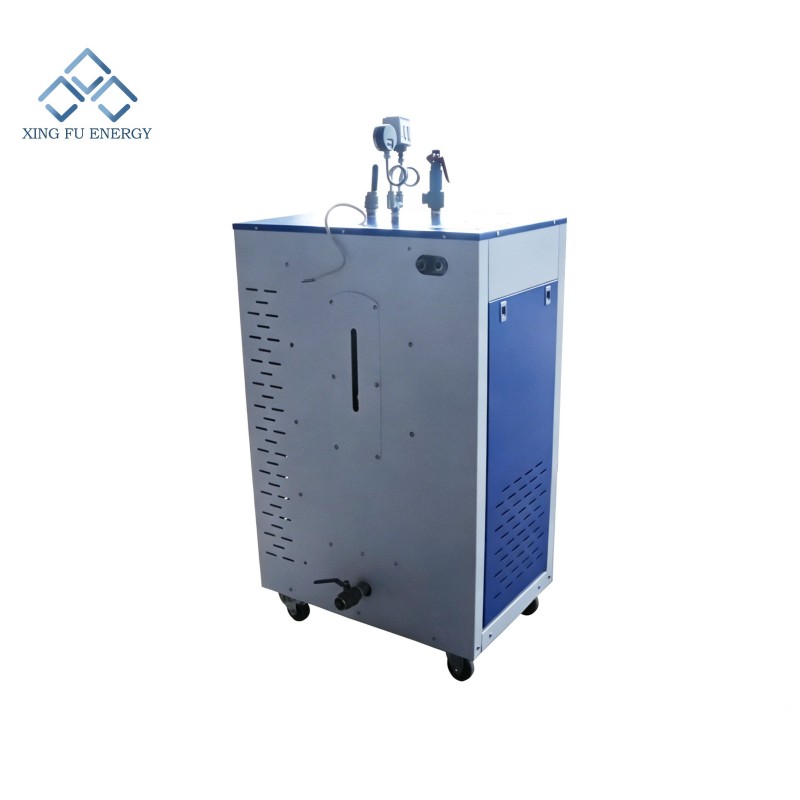
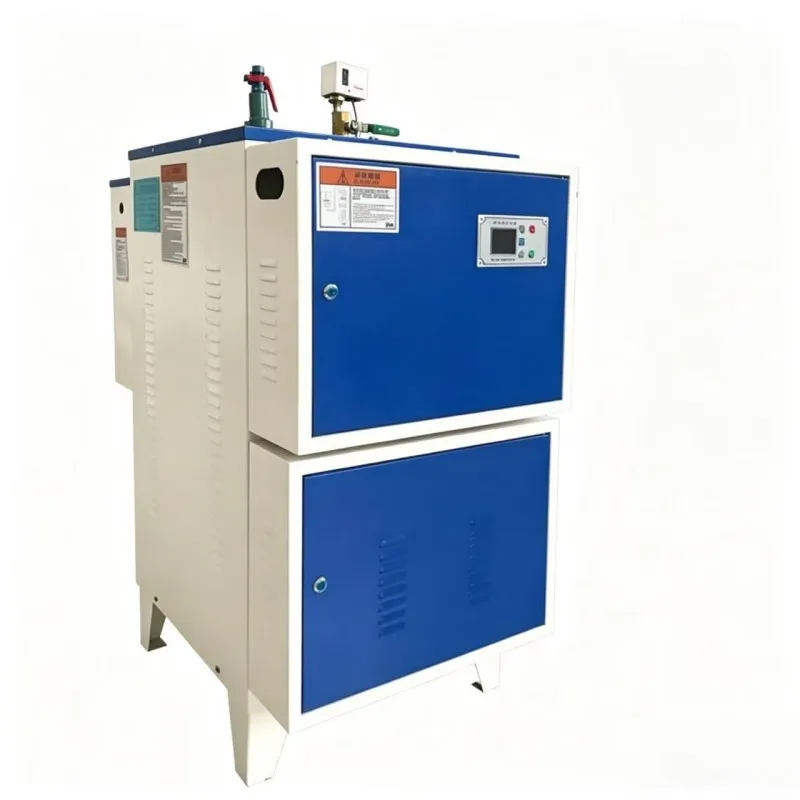
Installation isn’t plug-and-play—but it’s simpler than retrofitting gas infrastructure. You need three things: stable 400 V ±5% 3-phase supply (with short-circuit capacity ≥12 kA), a dedicated feedwater softener or RO unit (output ≤50 ppm hardness), and space for vertical clearance (S-Series units are 1.8–2.4 m tall). No chimney, no fuel storage, no ventilation ducts. We’ve commissioned units in basements, mezzanines, and ISO Class 7 cleanroom utility corridors—all within 72 hours of delivery.
Quality isn’t defined by certifications alone. It’s proven in weld integrity. Every Xingfu boiler uses ASME Section VIII Division 1–rated stainless steel (SUS304 or SUS316L), welded by certified personnel (65 hold ASME IX PQR endorsements). Each seam undergoes 100% radiographic testing—not spot checks. Pressure vessels carry Qingdao Municipal Labor Bureau Class B boiler licenses. Steam generators meet CE PED 2014/68/EU and ISO 9001:2015 traceability standards. But the real test happens after commissioning: 94% of customers report no unplanned shutdowns in Year 1. That reliability stems from overengineering—not just meeting specs, but exceeding them. For example, heating elements operate at 65% of rated watt density to extend service life beyond 8 years.
A high efficiency electric boiler isn’t just an energy upgrade. It’s infrastructure simplification. It removes complexity—fuel logistics, emissions monitoring, combustion air balancing—and replaces it with predictable, silent, responsive thermal delivery. In Spain, a wine bottling facility eliminated its diesel backup generator by adding battery-buffered electric steam generation. In Poland, a medical device sterilizer achieved 0.1°C steam temperature stability—impossible with modulating gas burners. These aren’t edge cases. They’re repeatable outcomes when engineering prioritizes system behavior over component specs.
The shift is accelerating—not because electricity is cheap, but because control is precise, uptime is guaranteed, and carbon accounting is non-negotiable. If your current boiler runs 4,200 hours/year but delivers steam only 3,100 hours due to cycling losses and warm-up delays, you’re paying for 1,100 hours of wasted energy. A high efficiency electric boiler turns that gap into measurable margin. Start measuring your steam kWh/kg—not just your fuel cost per therm.