-
+86-13791972057
-
No. 3009, Tower 3, Zhuoyue Century Center, No. 31th Longcheng Road, Qingdao, Shandong, China


+86-13791972057
No. 3009, Tower 3, Zhuoyue Century Center, No. 31th Longcheng Road, Qingdao, Shandong, China








2026-07-25
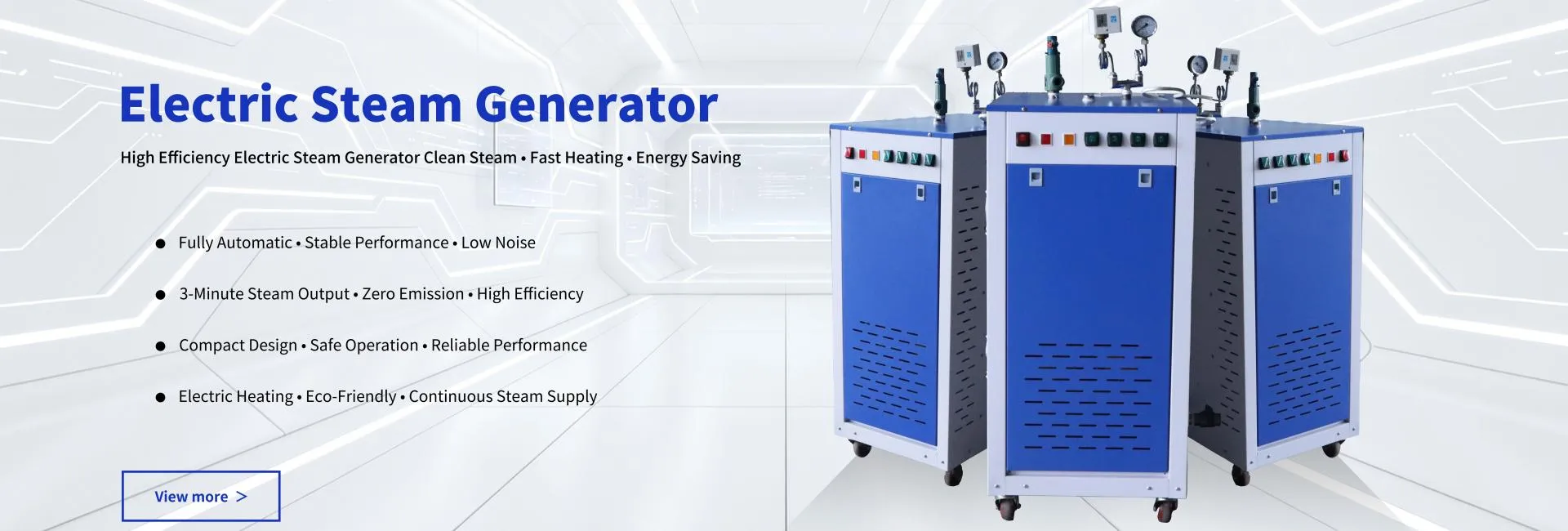
Industrial operations demand steam that arrives on time, stays stable under load, and never compromises safety or emissions. When pressure requirements climb above 10 bar—and especially when consistency matters more than peak capacity—electric steam generator industrial systems stop being optional. They become the backbone of sterilization, textile dyeing, food processing, and precision chemical synthesis.
We’ve seen clients replace aging gas-fired boilers only to face new bottlenecks: voltage instability, undersized transformers, or mismatched control protocols. Others assumed “fully automated” meant plug-and-play—until commissioning revealed missing I/O mapping for PLC integration. Real-world reliability isn’t about specs on a datasheet. It’s about how fast steam reaches 15 bar at 200°C during cold start… how tightly temperature holds within ±1.5°C across an 8-hour shift… and whether your maintenance team can diagnose a heating-element fault without waiting for overseas firmware updates.
Gas or oil-fired systems struggle with turndown ratios below 30%. At partial load, efficiency drops sharply—and so does steam quality. Electric steam generators eliminate combustion inefficiencies, flue losses, and air-fuel ratio drift. With resistive heating, energy conversion exceeds 99.5% from grid to steam. No heat exchanger fouling. No burner tuning cycles. No annual flue-gas analysis.
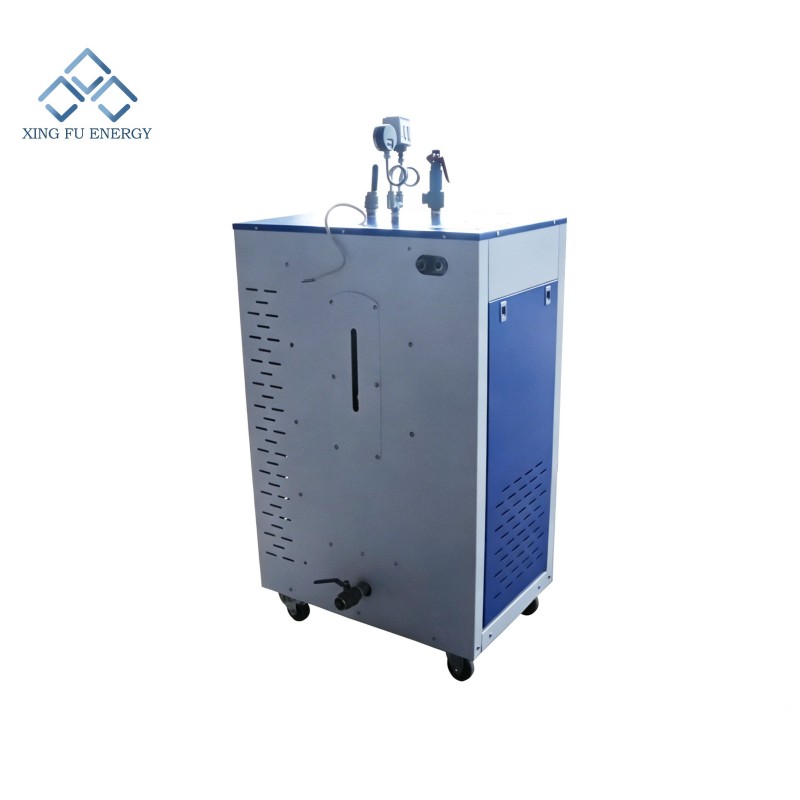
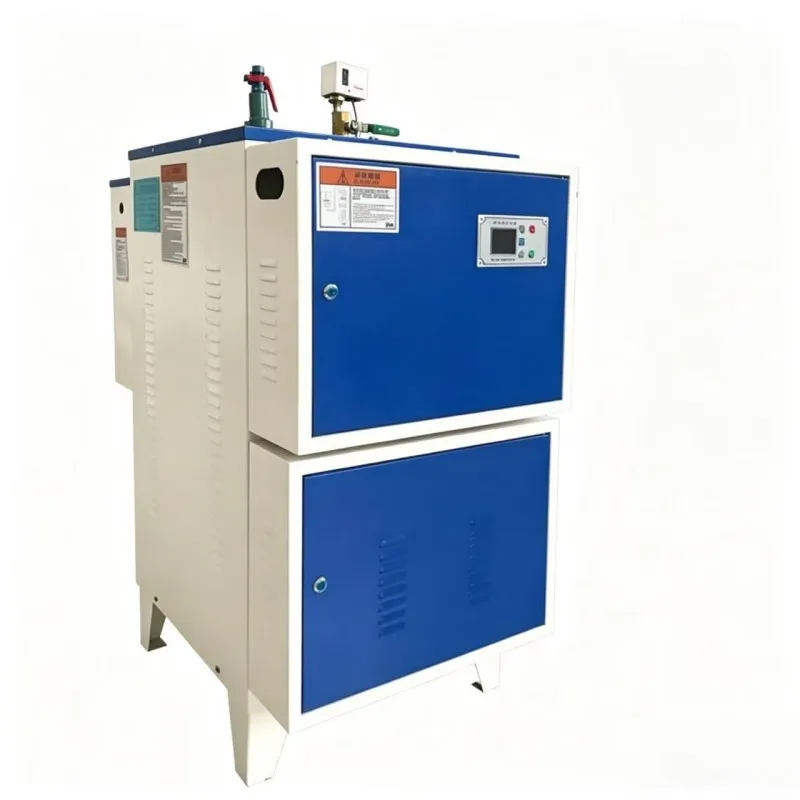
But not all electric units deliver high-pressure steam reliably. Most compact models cap out at 8 bar. True industrial-grade units must sustain 15–25 bar while maintaining zero thermal shock during rapid ramp-up. That requires three non-negotiable design elements:
Without these, scaling builds in 6 months. Element burnout spikes after 18 months. And “zero emissions” becomes theoretical—not operational.
Some engineers treat electric steam generators as drop-in replacements. They’re not. Voltage tolerance matters: a 400 kW unit drawing 577 A at 400 V AC demands Class II surge protection and harmonic filtering. We’ve measured THD >18% on unprotected lines—triggering tripped breakers during startup.
More common is control misalignment. A customer in Poland specified Modbus RTU—but their DCS only accepted BACnet MS/TP. Rewiring cost €3,200 and delayed production by 11 days. The fix? Pre-commissioning protocol checks: confirm communication protocol, baud rate, register map, and physical layer (RS-485 termination, shield grounding). Every S-Series unit from Qingdao Xingfu Energy Equipment includes factory-loaded configuration files for Siemens Desigo, Honeywell Experion, and Yokogawa CENTUM VP.
Installation also hinges on space discipline. Compact doesn’t mean “fits anywhere.” These units need minimum 800 mm service clearance, condensate return piping sized for flash steam velocity, and dedicated grounding rods—not shared building grounds. Skip any step, and vibration-induced micro-cracks appear in stainless welds within 14 months.

At a textile mill in Indonesia, a 1.5 ton/hr electric steam generator replaced a 3-ton/hr gas boiler. Steam pressure held steady at 18 bar ±0.3 bar across 22 daily cycles—even with ambient temps hitting 38°C and humidity at 92%. Energy consumption dropped 27% versus the old system. More critically: no unplanned shutdowns in 26 months of operation.
How? Three things made the difference:
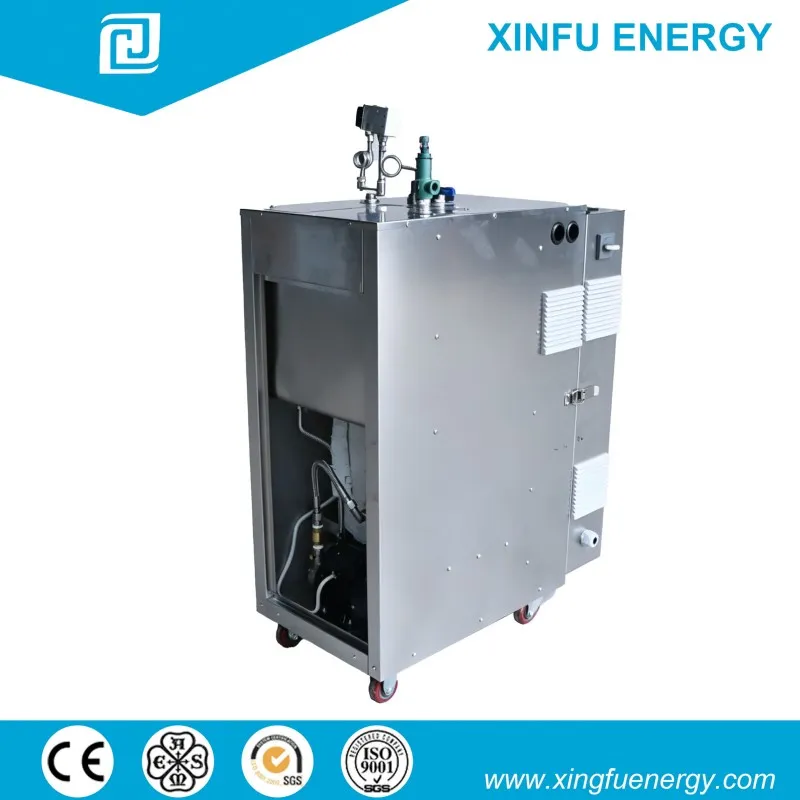
All units ship with ISO 9001-certified documentation packs—including hydraulic schematics, CE Declaration of Conformity, and ASME Section VIII Div. 1 calculation reports. No “certification pending” clauses. No post-shipment paperwork delays.
Ask your supplier: Can you provide third-party test reports for thermal cycling endurance? Do your welders hold ASME Section IX certification—or just internal company cards? Is your quality control lab accredited to ISO/IEC 17025?
Qingdao Xingfu Energy Equipment meets each standard. Their 21,000 m² workshop houses a full-cycle test bay where every unit runs 72 hours under full load before shipping. Their 78 technical staff include 28 engineers certified in pressure equipment design—21 hold ASME BPVC stamps. Every welder carries valid certification cards traceable to Qingdao Municipal Labor Bureau audits.
Export experience confirms it: units operating continuously since 2014 in Spain’s pharmaceutical plants, Mongolia’s dairy processors, and Malaysia’s rubber vulcanization lines show less than 0.7% field failure rate over 5 years. Not because failures don’t happen—but because root-cause analysis feeds directly into next-gen design iterations.
When steam pressure defines product quality, downtime costs thousands per minute, and emissions compliance is audited quarterly—the right electric steam generator industrial solution isn’t about lowest upfront price. It’s about predictable uptime, verifiable certifications, and engineering support that speaks your language—literally and technically. Start with steam quality. Build from there.