-
+86-13791972057
-
No. 3009, Tower 3, Zhuoyue Century Center, No. 31th Longcheng Road, Qingdao, Shandong, China


+86-13791972057
No. 3009, Tower 3, Zhuoyue Century Center, No. 31th Longcheng Road, Qingdao, Shandong, China








2026-11-18
Steam demand in a meat plant — and the way a steam generator for meat processing is sized — differs from general food-industry demand in three ways, and each has a consequence for equipment.
A cookhouse or smokehouse program is usually described by its temperature steps, but what the product experiences is a combination of dry-bulb and wet-bulb conditions. Steam’s job in that combination is twofold: it carries heat through the coil or injector that warms the chamber, and it sets the humidity that governs how fast the product surface loses water.
That second role is the one that gets neglected. A surface that dries early forms a crust-like layer that resists heat transfer, so the core heats more slowly while the chamber reads on set point. The result is a program that appears to run correctly and produces a product that is either undercooked at the centre or overcooked at the surface, depending on where the control probe sits.
This also explains why programs do not travel well between cookhouses. Two chambers with the same set points but different humidity control, different door seals and different fan patterns will produce different products from an identical recipe card.
Some meat processes inject steam directly into the product or into a chamber the product occupies — continuous cookers, direct-injection heating, some emulsion and batter processes. In those cases steam stops being a utility and becomes an ingredient-adjacent medium, and everything downstream of the generator moves into the specification: feedwater quality, the acceptability of any treatment chemical, separation of droplets, material of construction, and the management of dead legs where condensate sits overnight.
Indirect heating is the opposite case. A jacketed vessel, a coil in a tank, a plate heat exchanger for cleaning liquor — in all of these the steam never meets the product, and the requirement is ordinary industrial steam with ordinary industrial water treatment.
The practical consequence is that the first question in any meat-plant specification is not “how much steam” but “where does the steam go”. A plant with both duties needs either a single system specified to the stricter of the two, or a deliberate separation between a food-contact side and an industrial side. Choosing between those two is a design decision with cost consequences at both ends.
Humidity in the cookhouse affects moisture loss from the product surface, and moisture loss is part of what the trade calls shrink. This is a real and explainable mechanism, and it is worth understanding because it explains why two plants with the same recipe report different yields.
It is also where the mechanism stops. Yield is determined by raw material condition, formulation, injection or tumbling practice, program design, chamber sealing and cooling method as much as by humidity. A supplier who attributes a yield improvement to the steam system alone is overselling, and a buyer who expects the steam system to fix a yield problem is buying the wrong solution. What steam can do is remove humidity variation as a source of unexplained loss.
A retort sterilizes by filling its chamber with saturated steam, which condenses on the packs and releases latent heat at the surface. For that to happen evenly, the steam has to displace the air in the vessel and in the gaps between packs. Air is an effective insulator; a pocket of it at the centre of a crate creates a cold spot that no probe mounted near the vessel wall will register.
There is a second, less obvious consequence. A pressure gauge reads total pressure, and total pressure is the sum of the steam’s partial pressure and whatever air remains. If air is present, the gauge can read the value an operator expects while the steam’s own partial pressure — and therefore its temperature — is lower than the saturated-steam table implies for that reading. The cycle looks correct on paper and runs cooler than intended. This is why retort operation begins with venting until the discharge is steam rather than a steam-air mixture, and why the venting procedure is part of the process validation rather than a start-up ritual.
Steam quality enters here as well. Wet steam carries droplets that wet cartons, pouches and trays, and a film of water on a pack makes heating uneven and can damage packaging before the cycle is over. Non-condensable gases behave like the residual air described above and blunt heat transfer wherever they accumulate. Both are properties of the steam supply, not of the retort, which is why a steam generator feeding retorts has to be judged on dryness and gas content as well as on capacity and pressure.
The limits that apply — the dryness value and the allowable non-condensable gas content — are set by the standards governing the sterilization equipment in use, and those standards differ between jurisdictions. They are not values to be assumed, and this article deliberately does not quote them.
Pasteurization of ready-to-eat products is usually a water process rather than a steam process. Steam heats water through a heat exchanger; the water then treats the product, whether by immersion, spray or tunnel. The controlled variable is water temperature and its uniformity, and the steam system’s contribution is how quickly and how steadily that water loop can be brought to set point and held there.
The two formats fail differently. A tunnel circulates continuously, so its risk is a temperature gradient the product passes through rather than a single set point. A batch tank is uniform by construction but has to recover after every load, and recovery is where steam capacity shows: a tank that was at temperature before the load is several degrees down afterwards, and the next batch waits for the loop, not for the operator.
Post-pack surface treatment follows the same pattern: a tank or a tunnel of hot water, heated by steam, with the product passing through. The failure mode is not usually a cold tank; it is a cold zone — a corner where circulation is poor, or a recovery lag after a large load enters.
A single retort coming up to temperature draws a large block of steam for a relatively short period, then holds. Because plants run several vessels on staggered cycles, the real peak is set by how many come up together, not by any one vessel’s rating.
There are three ways to meet that peak, and they are not equivalent:
Redundancy — a second unit, or N+1 across several — is a common requirement in plants that cannot stop. It buys continuity and costs efficiency, because units sized for a peak run at low load most of the time, and low-load running is where cycling losses and component wear concentrate. The honest framing is that redundancy is an insurance premium, not an efficiency measure, and it should be costed as one.
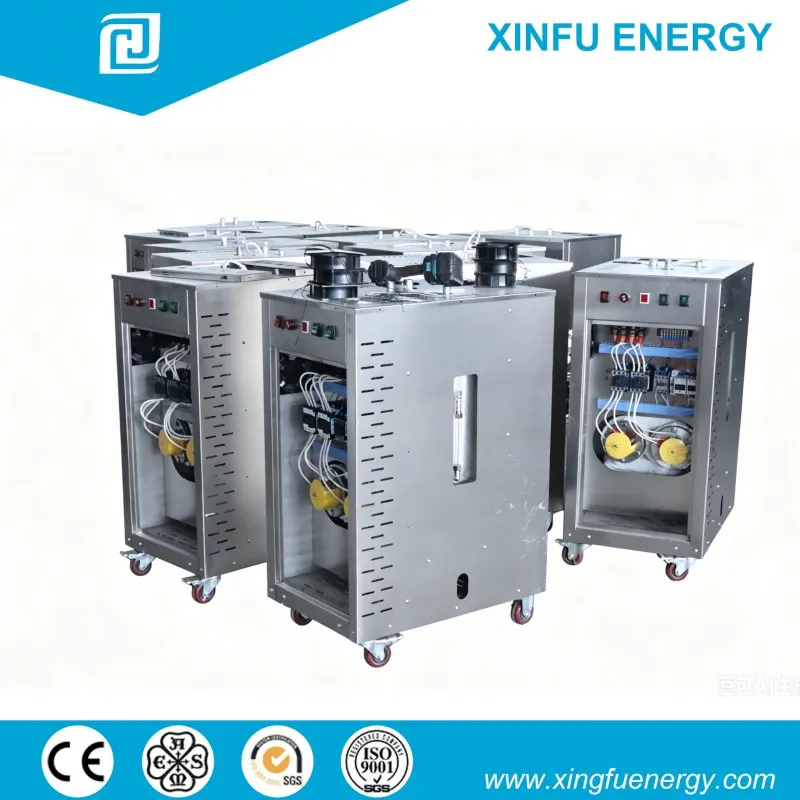
Clean-in-place and clean-out-of-place are the two cleaning regimes in a meat plant, and both are steam loads in disguise — the steam heats the cleaning liquor rather than the product.
A typical CIP sequence runs pre-rinse, caustic wash, intermediate rinse, acid wash where required, final rinse and, in some plants, a sanitizing step. The steam demand concentrates in the wash steps, where the caustic has to be held at temperature, commonly in the 70–80 °C band depending on the chemistry and the soil type. That heat is delivered through a plate heat exchanger, and the exchanger’s duty is set by the volume of liquor and the recovery rate between circuits.
The variable that upsets the calculation is soil load. A day of high-fat production leaves deposits that consume caustic and extend the wash step; a protein-heavy day does the same to the pre-rinse. Cleaning that runs long does not just consume time — it consumes steam at the moment the plant has finished producing and wants to restart.
COP adds a different pattern: soak tanks and parts washers that need their own heated liquor, often simultaneously with CIP.
Room and equipment washdown uses hot water at pressure, typically in the 60–70 °C range, and in volumes that surprise people who have only counted process loads. The water is either stored hot or heated on demand; storage is what absorbs the block demand at the end of a shift.
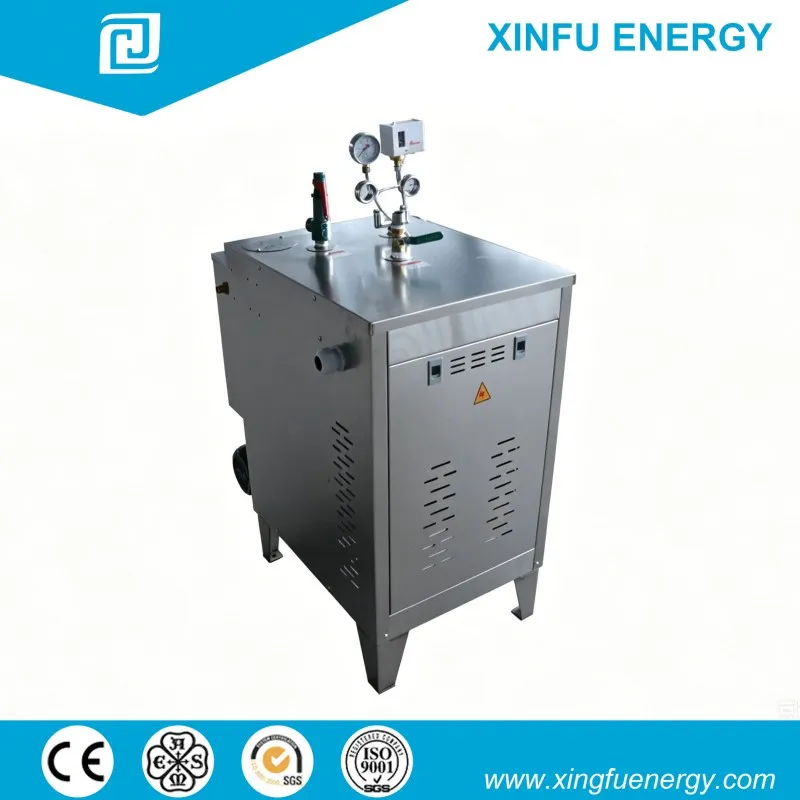
Three symptoms indicate that hot water supply, not operator behaviour, is the reason cleaning overruns:
None of these look like a steam problem to production, which is why they are usually recorded as a cleaning problem for months before anyone checks the generator.
Steam is used for localized disinfection of surfaces, equipment and, in some plants, containers. It works when three conditions are met: the surface has been cleaned first, the surface reaches the required temperature, and that temperature is held for the required contact time.
Its limits are structural. Steam reaches what it can see. It does not reach the inside of a weld, a gap in a conveyor frame, the space behind a guard, or a biofilm that has already formed. It also does not dry a surface; condensation left behind is a growth medium rather than a clean one.
That is why steam sanitation is best understood as one step in a sequence — after cleaning, before production, in combination with chemical sanitation where the plant’s own risk assessment calls for it — rather than as a substitute for washing.
In a meat plant the question is rarely a blanket one, because the same generator often serves three situations that look alike and are not.
Direct injection is the clearest case. Steam admitted into a cooker, an emulsion, a batter or a chamber the product occupies is a product-side medium, and it has to be designed as one.
Retort steam is the case most often misjudged. In most installations the steam meets the packaging rather than the meat, because the pack is sealed before it goes in — which sounds like an industrial duty. It stops being one the moment a pack is open: open trays, open-top moulds and products sterilized before sealing put the same steam against the product itself.
Washdown steam is the third. Steam applied to a conveyor, a table or a hopper is not in contact with anything at the instant it is used, but the surface it leaves behind is one the product touches next. The wet surface is the connection, not the steam.
Where any of these applies, what follows is not a long checklist but three properties of the supply: water the plant would drink, chemicals it would accept inside a product, and a line that drains rather than stores. Dryness, filtration and materials follow from those three as engineering, not as separate requirements.
Where none of them applies — a jacket, a coil in a tank, a heat exchanger for cleaning liquor — ordinary industrial steam is the right specification, and adding food-contact provisions there buys cost without buying safety.
No article can certify a plant’s compliance, and this one does not try. The plant’s own hygiene and process validation is where those provisions are demonstrated.
The same generator technology serves several food industries, but the duties are not interchangeable. The differences that matter when specifying:
| Plant type | Main role of steam | Load shape | Easiest thing to underestimate |
|---|---|---|---|
| Brewery | Heating and CIP | Batch blocks that stack | How much the blocks overlap |
| Dairy | Continuous heating and evaporation | Long steady demand | Steam quality where it meets product |
| Bakery | Humidity control and oven injection | Second-scale pulses | Humidity overshoot |
| Meat processing | Cooking, sterilization, cleaning | Batch peaks plus cleaning blocks | The air inside the retort |
The last column is the point of this article. Of the four, only meat processing uses steam quality as part of a product release decision.
A steam generator for meat processing is quoted well only when the quotation is built from a duty list rather than a single capacity number.
| Item | Unit | What to provide | Example (illustrative only) |
|---|---|---|---|
| Cookhouse continuous demand | kg/h | Per chamber, at hold | 90 |
| Single retort demand | kg/h | During come-up | 320 |
| Retorts heating together | number | Worst-case overlap | 2 |
| Retort cycle time | min | Come-up, hold, cool | 25 / 40 / 30 |
| CIP liquor heating | kW or kg/h | Per circuit, at wash temperature | 180 |
| Washdown hot water | L/h at °C | Peak hour, end of shift | 1,500 at 65 |
| Pressure at point of use | bar (gauge) | Per duty, at the inlet | 1.0 retort / 0.3 cookhouse |
| Steam quality class | — | Food-contact or industrial | food-contact |
| Electrical supply | V / phase / Hz | From the electrical study | 415 / 3 / 50 |
| Hours of operation | h/day | Including cleaning window | 20 |
| Feedwater hardness | ppm as CaCO3 | Water analysis | 60 |
| Redundancy required | — | N+1, standby, or none | N+1 |
The values show the format, not a recommendation.
Two questions belong in the same conversation and are usually what decides whether the installation works: how each retort vents and where the vent discharge goes, and how much hot water storage the plant actually has. A supplier who asks those two is sizing an installation; one who does not is selling a box.
Meat plants often combine hard water with high make-up rates, an unforgiving combination for any steam generator. Hardness deposits on heating surfaces, reduces output, and eventually takes elements out at the worst possible moment — typically during a cleaning window when the plant is trying to restart.
Two water-side issues deserve attention beyond scale. Dissolved solids can carry over into steam, which matters wherever steam meets product; and sustained high make-up rates amplify whatever is wrong with the pretreatment. Softening or reverse osmosis, a blowdown regime matched to the water analysis, and periodic inspection of heating surfaces belong in the plan from commissioning rather than after the first failure.
Dryness and non-condensable gas content are worth measuring at commissioning and then on a schedule. Wet steam shows up as wetted cartons and slower come-up; non-condensables show up as a vessel that reaches pressure but heats slowly and unevenly. Neither is visible on a pressure gauge.
Records matter more in meat processing than in most industries, because a retort cycle is a batch record. When a batch is questioned, being able to show what the steam supply was doing during that cycle — dryness checks, generator status, maintenance history — turns an open investigation into a closed one.
The cost of an unplanned stop in a meat plant is not the steam; it is the product in the cookhouse, the retorts waiting, and the cleaning window that has to be rebuilt around a repair. That is the argument for redundancy, and it is worth quantifying before the purchase rather than after the failure.
A practical spares list for an electric unit is short: heating elements, the safety valve, the level and pressure sensors, and the controller’s critical input cards. Planned shutdowns should avoid the overlap between cleaning and production, which is when a stopped generator hurts most.
How large a steam generator does a meat plant need?
Size it from four numbers: cookhouse hold demand, the largest simultaneous retort come-up, the cleaning liquor duty, and peak washdown hot water. The retort figure usually dominates, and it is usually smaller than a nameplate sum.
Can one generator serve cooking, retorts and cleaning?
Often yes, provided the peak is managed. The retort come-up is the constraint; a steam accumulator or staggered cycles can absorb it without adding capacity.
Why does product fail when the retort temperature reads normal?
Most often residual air. Air raises total pressure while lowering the steam’s partial pressure and temperature, so the gauge looks right and the load runs cool. Check venting and non-condensable gas content before blaming the retort.
Cleaning water runs short at the end of every shift. What should we change?
Check stored hot water volume and recovery rate before adding generator capacity. A larger tank is usually cheaper than a larger generator and solves the actual problem.
Does steam affect product flavour?
It can, where steam meets product. Treatment chemicals not intended for food contact can carry an odour that is often attributed to raw material or packaging.
Is electric steam practical for a meat plant?
It generally is, and the reasons are locality and control: short runs to retorts, precise pressure, and no flue gas in a hygiene-sensitive building. The constraints are electrical capacity and water treatment.
If you are specifying a steam generator for meat processing, four documents decide more than any site visit: the retort list with cycle times, the cookhouse programs, the cleaning sequence with hot-water volumes, and the electrical and water reports. With those, an engineering review can fix the capacity, the way the peak is met, and whether the plant needs one system or a food-contact side and an industrial side.