-
+86-13791972057
-
No. 3009, Tower 3, Zhuoyue Century Center, No. 31th Longcheng Road, Qingdao, Shandong, China


+86-13791972057
No. 3009, Tower 3, Zhuoyue Century Center, No. 31th Longcheng Road, Qingdao, Shandong, China








2026-11-15
Choosing an industrial steam boiler supplier is rarely a matter of comparing quotes alone. Electric steam generators and boilers are pressure-bearing, continuously operated pieces of equipment, and the supplier’s qualifications, manufacturing discipline, customization capability, and after-sales support directly affect plant safety, production stability, and total operating cost. This checklist helps buyers evaluate a CE-approved industrial steam boiler supplier systematically—what documents to request, what production conditions to review, and which questions reveal real capability versus vague claims.
Industrial steam equipment supports processes such as cooking, sterilization, textile finishing, packaging, chemical heating, and commercial laundry. When a supplier lacks proper qualifications or manufacturing control, buyers may face problems that appear only after delivery: non-compliant pressure components, inconsistent weld quality, delayed shipment, unavailable spare parts, or a support contact who cannot answer technical questions.

A structured qualification review reduces these risks. It separates suppliers who can design, build, and support equipment over its service life from those who can only quote a price. The checklist below follows a practical purchase path: document review, factory or video audit, sample or trial order, and then volume cooperation.
The review covers six areas: certifications and qualifications, manufacturing capacity, product range and customization, quality control, after-sales support, and common weaknesses to probe. For each area, request verifiable materials before forming a judgment, rather than relying on sales descriptions.

| Review area | Materials to request | What to judge |
|---|---|---|
| Certifications & licenses | CE documentation, ISO 9001 certificate, boiler/pressure vessel licenses | Whether the scope matches the equipment you intend to buy |
| Manufacturing conditions | Workshop layout, welding records, testing facilities, team composition | Whether the factory has stable, repeatable production conditions |
| Product range & customization | Model lineup, power ratings, pressure and voltage options, OEM terms | Whether the lineup covers your steam demand and operating conditions |
| Quality control | Inspection procedures, test records, safety protection checks | Whether quality checks are documented and traceable |
| After-sales & support | Technical documents, spare parts list, contact channels, support process | Whether support remains available after the order is placed |
| Risk review | Answers to qualification and capability questions | Whether the supplier addresses gaps transparently or avoids them |
Certifications are the first checkpoint, but a logo on a brochure is not enough. The buyer should confirm that the documentation applies to the actual equipment, covers the relevant scope, and remains valid.
When evaluating a CE-approved industrial steam boiler supplier, ask for the CE documentation and any declaration of conformity for the equipment model you are considering. Check that the document identifies the product type and model, along with the issuing body. Because certificates can be limited to certain machine types or configurations, confirm that your intended model and configuration fall within the documented scope rather than assuming a general CE mark covers every product.
The exact certificate number, applicable directives or standards, and covered models should be verified against the supplier’s actual documents; do not rely on a summary provided in marketing material.
An ISO 9001 certificate indicates that a quality management system is in place. Review the certificate’s scope to confirm it covers the design and manufacture of boilers or pressure vessels, not an unrelated business line. Also check the certificate holder’s legal name, validity period, and certification body so the document can be cross-checked if needed.
Steam boilers and related pressure equipment may require local manufacturing qualifications. A credible manufacturer should be able to show the relevant boiler manufacturing license, pressure vessel permits, and any installation authorization applicable to its market. The license category and grade should match the type and pressure rating of the equipment supplied.
As a reference point, established Chinese manufacturers in this field may hold qualifications such as a B-grade boiler manufacturing license, Class I and II pressure vessel permits, and a boiler installation license, together with CE and ISO 9001 certification. Treat this as the type of qualification to look for; confirm the actual certificates and their scope with the supplier before making a decision.
To avoid relying on invalid or mismatched documents:
Certifications describe the system behind the product; production conditions show whether the factory can execute consistently.
Review the production site and layout: fabrication areas, assembly space, and a dedicated testing or commissioning area. A physical visit is ideal, but a video factory tour can still reveal whether the facility is organized and equipped for the product category. Site scale can be one signal of production stability—for reference, established manufacturers in this sector may operate sites of tens of thousands of square meters with a dedicated workshop area, though size alone does not replace quality review.
Pressure-bearing components depend heavily on welding quality. Ask about the welders involved, their qualifications, and how welding procedures are controlled. Qualified welders and consistent fabrication practice are more relevant than general claims about “strong manufacturing capability.” Request information on how critical pressure parts are welded and inspected rather than accepting a blanket statement.
Find out what checks are performed before a unit leaves the factory, such as pressure or leak tests, electrical safety checks, and checks of water-level and pressure protection functions. A supplier should be able to describe its inspection sequence and retain test records that can be shared on request. The specific test items and applicable standards should be confirmed from the factory’s documentation; buyers should not assume an unlisted test is performed.
Consider the engineering and technical staffing behind the product. A supplier with dedicated engineers, technicians, and skilled workers is better positioned to answer technical questions, adapt designs to specific conditions, and resolve issues after delivery. Team composition can be asked about directly during the audit, along with how design changes and technical requests are handled.
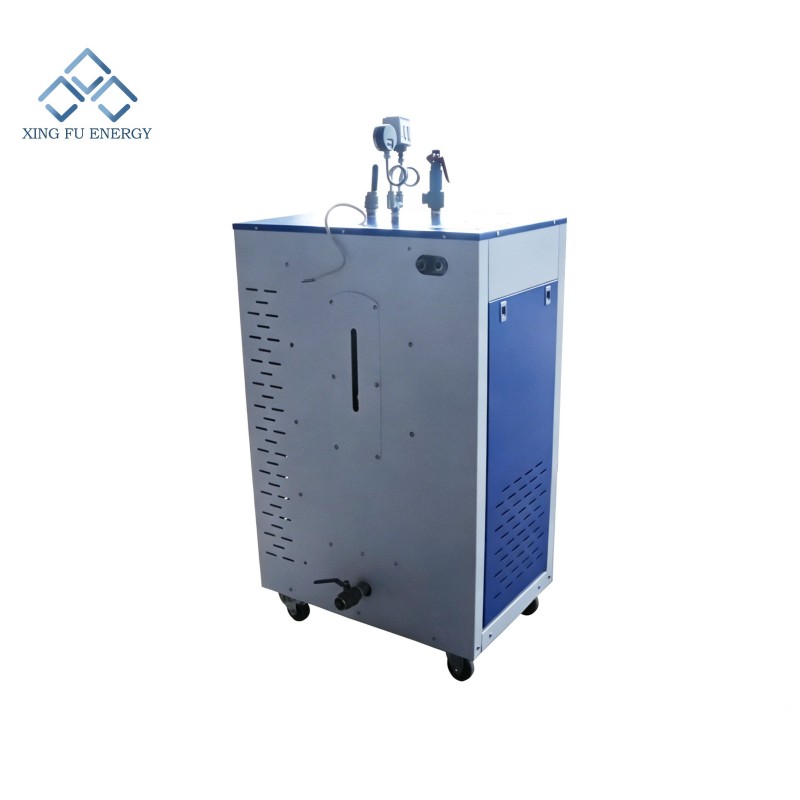
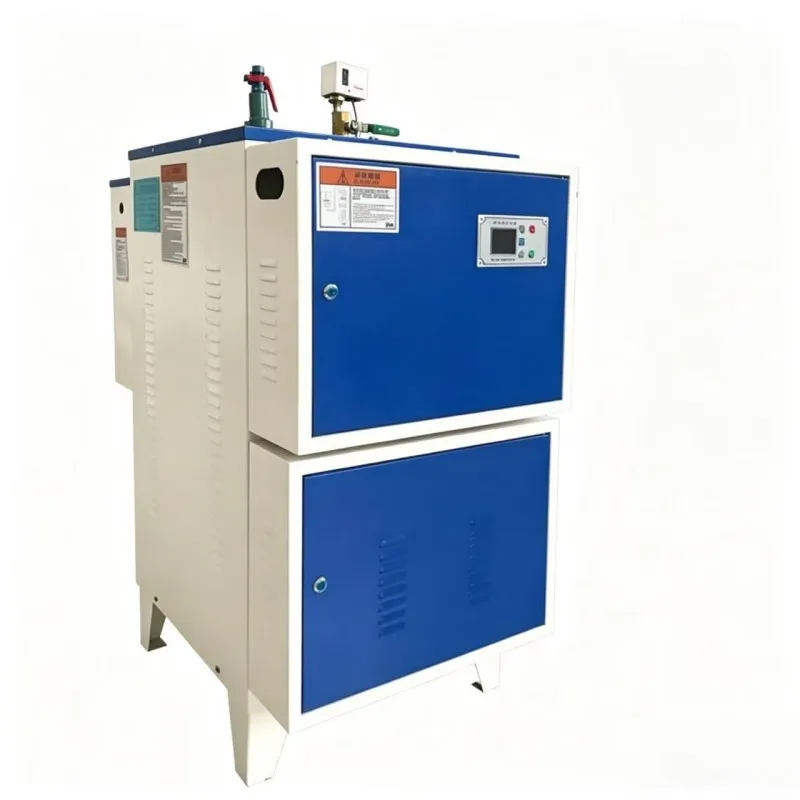
Compare the supplier’s lineup against your operating conditions: steam output in kg/h, working pressure, steam temperature, available power supply, and installation environment. Industrial electric steam generators and boilers are commonly organized around power ranges; a broad lineup makes it more likely the supplier can match a unit to your demand rather than forcing an oversized or undersized model onto the application.

Determine what can be adjusted for your site: voltage and frequency, working pressure, control configuration, steam connections, and material options such as a carbon steel inner chamber or optional stainless steel construction. List your required modifications early, and ask the supplier to confirm which items are standard and which require custom engineering. Specific customization options should be confirmed against the supplier’s technical documentation rather than assumed.
If you buy under your own brand or resell into your market, discuss OEM cooperation up front: how samples are handled, how labeling and packaging are managed, what information is required, and whether confidentiality arrangements are available. Minimum order quantities, sampling timelines, and other commercial terms should be agreed in writing rather than inferred from general cooperation statements.
A steam boiler is a long-life asset, and support after the sale matters as much as the initial purchase.
Ask what documentation accompanies the equipment: operation manual, installation guidance, and technical drawings where applicable. For international buyers, confirm whether remote technical support is available and how installation and commissioning questions are handled. Clear documentation reduces installation errors and helps on-site staff operate the unit correctly.
Review the spare parts that may need replacement over time, such as heating elements, valves, sensors, controllers, pumps, and electrical components. Confirm which parts are stocked or readily available, how spare parts are supplied, and how ordering works after the warranty period. Delivery lead times and stock levels should be clarified with the supplier, since these details vary by manufacturer.
Evaluate the communication channels available—email, phone, messaging apps—and whether a technical contact handles inquiries rather than a general sales inbox. Note how quickly substantive technical questions are answered during the pre-sale stage, as this often reflects post-sale support behavior. Response times and warranty terms should be confirmed explicitly; do not assume a service level that has not been stated.
Watch for the following signals during review:
Use these questions to probe capability directly:
After reviewing the materials and answering the questions above, shortlist suppliers whose qualifications and production conditions match your requirements. Prepare your own operating parameters before requesting a quotation: required steam capacity in kg/h, working pressure, voltage and frequency, single- or three-phase supply, application, daily operating hours, feedwater source, and destination country. With these details, a supplier can recommend a suitable model and provide a technical proposal rather than a generic quote.
You can then review the supplier’s product range, compare how each option fits your process, and contact the selected supplier with your requirements and supporting conditions.
What does a CE-approved industrial steam boiler supplier need to show?
Relevant buyers should request CE documentation for the specific model, an ISO 9001 certificate whose scope covers boiler or pressure vessel manufacturing, and the applicable boiler and pressure vessel manufacturing licenses. Documents should be checked for validity, scope, and matching certificate holder.
Does the highest-efficiency or largest-capacity supplier make the best choice?
Not automatically. The right supplier is one whose product range, pressure rating, power supply options, and customization capability match your actual steam demand and installation conditions. Capacity and efficiency claims should be supported by specifications and test information rather than treated as purchasing reasons on their own.
What should buyers prepare before asking for a boiler quotation?
Steam capacity in kg/h, working pressure, voltage and frequency, power supply type, application, daily operating hours, feedwater source, and destination country. These details allow the supplier to size the equipment correctly and respond with a relevant proposal.
How important are spare parts and after-sales support?
They are significant for a long-life steam asset. Buyers should confirm the available spare parts, supply process, technical documentation, and support contact channels before ordering, because support after delivery affects uptime and maintenance cost over the equipment’s service life.