-
+86-13791972057
-
No. 3009, Tower 3, Zhuoyue Century Center, No. 31th Longcheng Road, Qingdao, Shandong, China


+86-13791972057
No. 3009, Tower 3, Zhuoyue Century Center, No. 31th Longcheng Road, Qingdao, Shandong, China








2026-11-16
Three very different organisations answer to the same description, and the difference determines what you can hold them responsible for.
| Dimension | Factory-direct manufacturer | Trading / agent company | Assembly workshop |
|---|---|---|---|
| Design responsibility | Own engineering team converts your steam demand into a specification | Passes requirements to an outside factory | Usually works from an existing pattern rather than a new design |
| Pressure parts and welding | Fabricated and welded in-house under the manufacturer’s licence | Sourced from a third-party fabricator | Often bought in semi-finished |
| Inspection records | In-process and final inspection carried out on the same site | Records come from the third-party factory, if at all | Limited or unavailable |
| Certificate holder | Company whose name appears on the CE and ISO documents | May hold no manufacturing licence at all | Licence may belong to another entity |
| After-sales responsibility | Technical support, spares and documentation from the builder | Mediated through the agent | Depends on the assembler’s capacity |
A second distinction is technical. Steam boilers are not one product family: fuel-fired boilers (gas, oil, coal, biomass) and electric steam generators sit under different design, licensing and emission regimes. A manufacturer that builds electric units may not hold the scope to build fuel-fired ones, and vice versa. When a supplier’s website or catalogue uses “steam boiler” as a single generic term, the first question is which technologies are actually in scope.
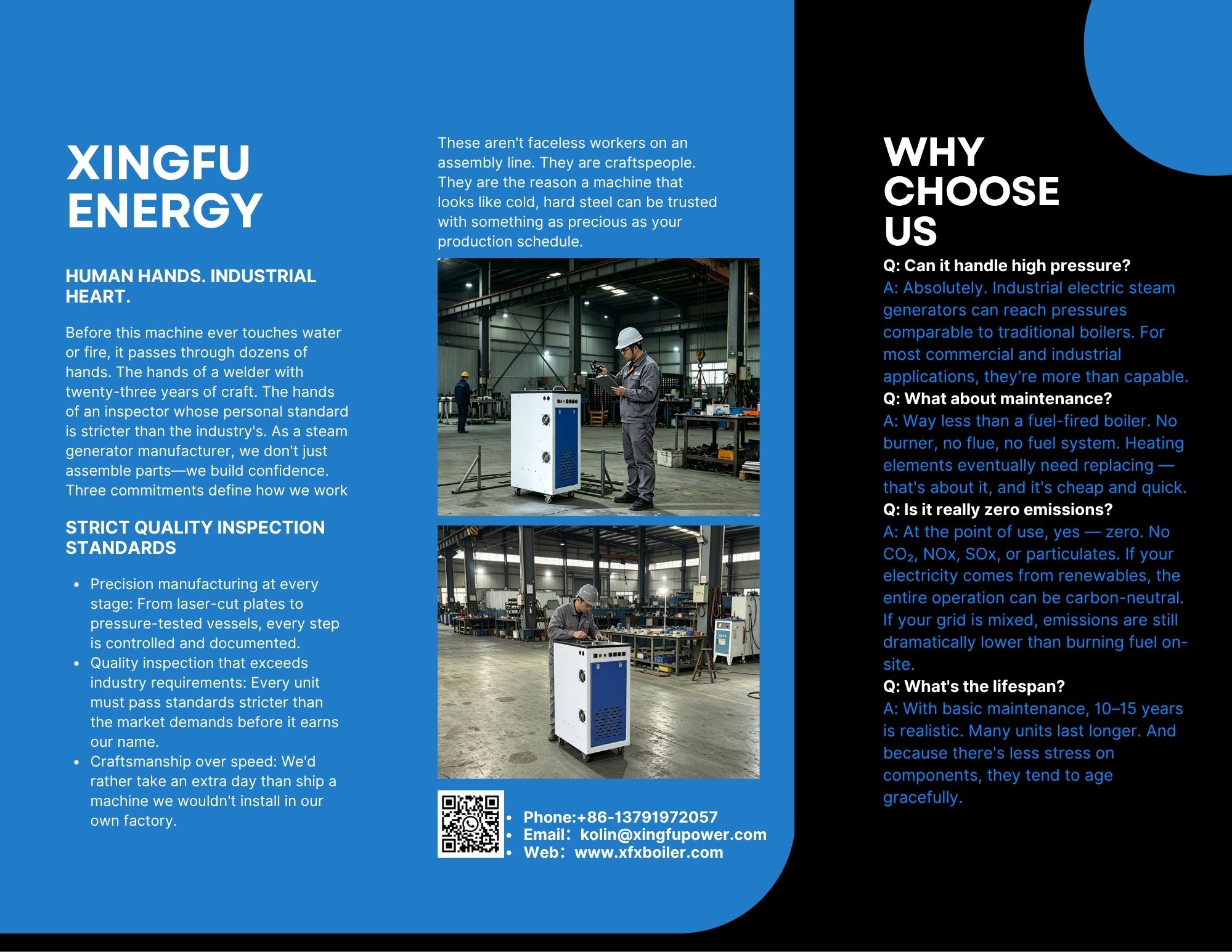
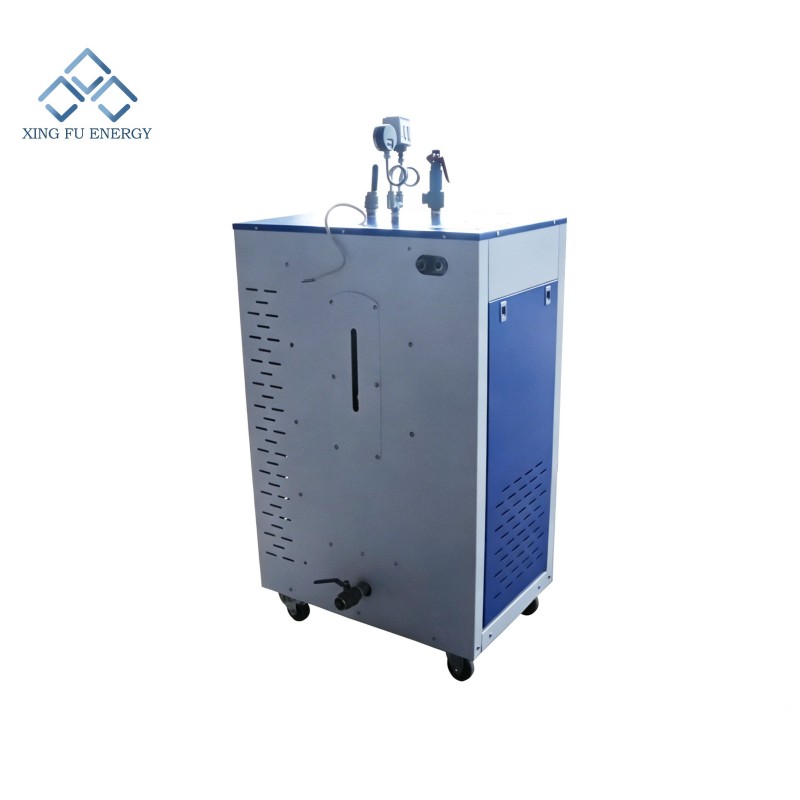
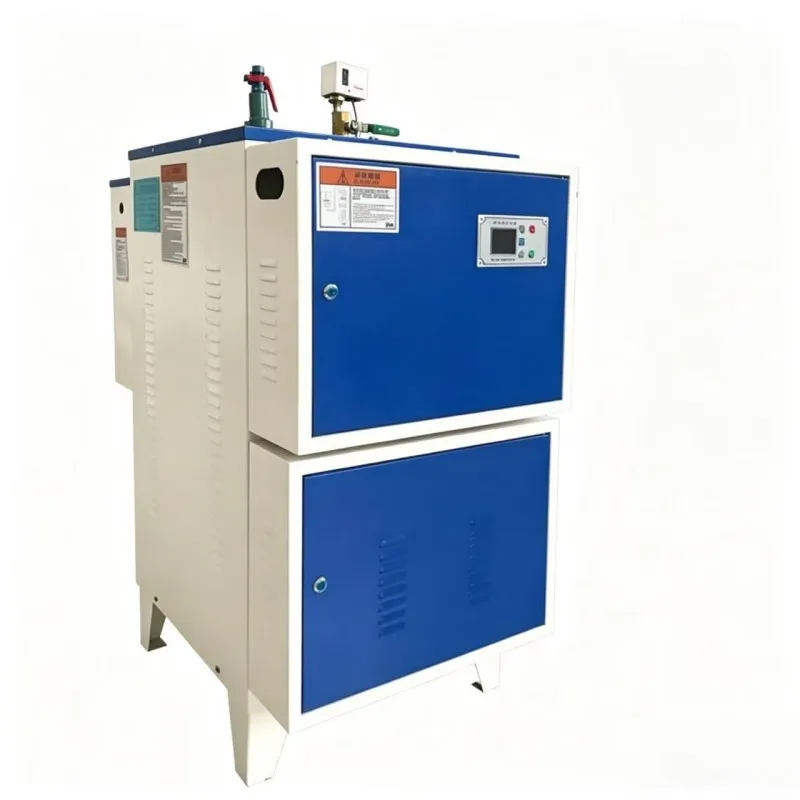
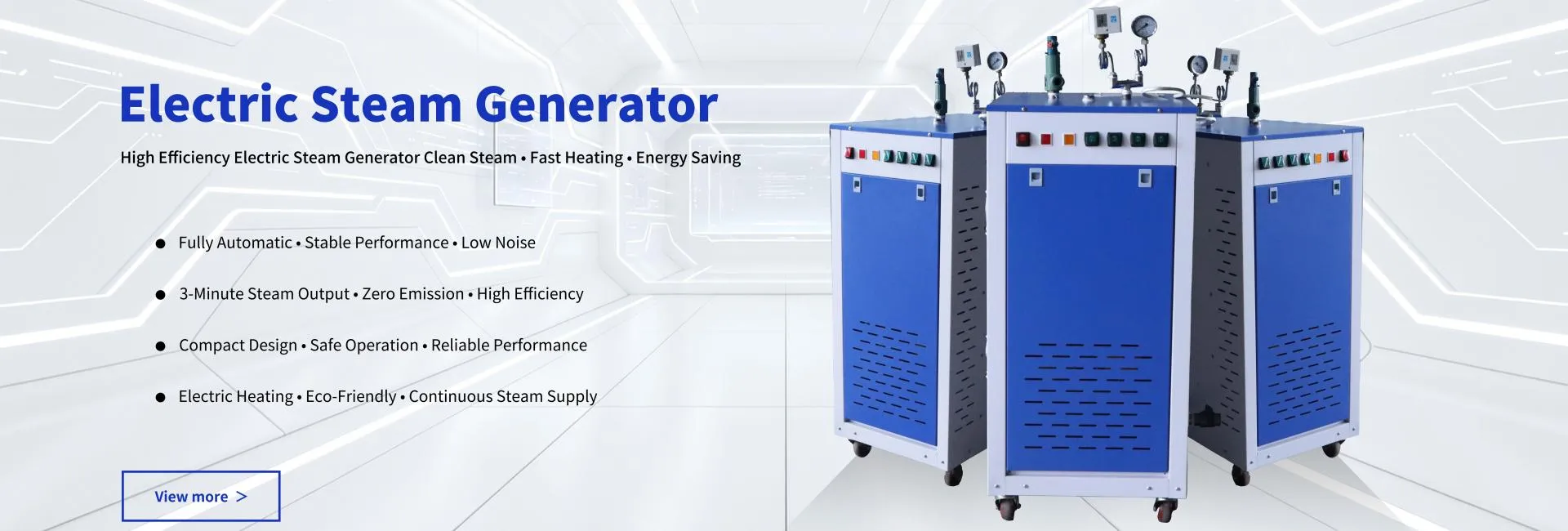
The manufacturer profiled here builds electric steam generators and electric steam boilers: heating is by electrical elements, with no on-site combustion, which removes fuel supply, flue and emission management from the project. Its published company history states that it was founded in 2010, giving roughly sixteen years of manufacturing experience, and that its site covers more than 70,500 m², of which 21,000 m² is workshop space.
A manufacturer’s range tells you whether your duty point falls inside standard production or outside it into custom engineering. The range here is organised into three series — S-Series, L-Series and X-Series — and three power bands. In export catalogues, “electric steam boiler” and “electric steam generator” are often used interchangeably for this class of equipment, an electrically heated pressure vessel that produces steam on demand, and this article follows that usage.
| Power band | Position in the range | Typical duty |
|---|---|---|
| 3 kW – 60 kW | Compact units | Single workshop, one or two steam points, intermittent operation |
| 72 kW – 108 kW | Mid-size industrial units | Several steam points, longer daily running, small production line |
| 144 kW – 360 kW | Largest standard units | Multi-point supply, continuous operation, larger process load |
Series names identify product families, while individual model codes carry a series letter. Which band a specific model belongs to should be confirmed in the written quotation rather than inferred from its series name, because catalogue bands and individual model ratings are published in different places.

Published specification examples give a sense of how the data is presented and what the numbers look like:
| Model | Rated power | Rated steam output | Working pressure | Steam temperature | Voltage | Dimensions L×W×H |
|---|---|---|---|---|---|---|
| ZY-RDX-48S | 48 kW | 65 kg/h | 0.4–0.7 MPa | 150–170 °C | 380 V | 74×53×88 cm |
| ZY-RDX-90L | 72 kW | 120 kg/h | 0.4–0.7 MPa | 150–170 °C | 380 V | 81×52×103 cm |
These two rows are quoted from the individual product pages and are included as examples of the published format, not as a complete range table. Ratings for the specific model you select should be confirmed in the written quotation, together with the model’s series assignment.
Two practical limits follow from this table. First, the confirmed working pressure range for these units is 0.4–0.7 MPa at 150–170 °C; if your process needs a different pressure level, ask the manufacturer to confirm the available rating rather than assuming that a higher figure exists somewhere in the range. Second, steam output is linked to power — 65 kg/h at 48 kW and 120 kg/h at 72 kW in the examples above — so a capacity requirement in kg/h can be converted into a power requirement before you compare quotations.
Electric steam generation moves the engineering problem from fuel to the electrical installation. The manufacturer’s published specification allows 220 V, 380 V, 400 V and 440 V, at 50 Hz or 60 Hz, in single-phase or three-phase configuration; industrial models are commonly supplied as three-phase units, and voltage and frequency are treated as customisable items rather than fixed defaults.
That matters for overseas projects in three ways:
Customisation is one of the most loosely used words in equipment procurement, so it is worth separating what is confirmed from what must be asked.
Confirmed adjustable items: voltage, frequency, working pressure and control system configuration. Confirmed construction details: industrial-grade carbon steel liner with stainless steel liner available as an option, stainless steel water tank, float-type water level sensor, copper-core feed water pump, and precision welding of the pressure parts.
What to ask about if your project depends on it: the complete list of customisable items, non-standard steam outlet positions and interfaces, material substitutions beyond the liner option, control integration with your plant system, and documentation language. None of these is a standard promise, and the correct answer is the one written in your quotation.
A manufacturer that only assembles standard skids will answer a technical question with a catalogue page. A manufacturer with a design function will answer it with a specification — and that difference is what you are actually assessing when you compare China steam boiler manufacturers.
The company’s published inquiry guidance lists the information it needs before sizing equipment. Each item changes the design in a specific way:
| Design input | Why it changes the specification |
|---|---|
| Required steam output, kg/h | Sets heating power and steam space; the primary sizing figure |
| Working pressure, bar / MPa | Determines pressure rating of the vessel and the safety components |
| Voltage and frequency | Determines element wiring, contactors and control hardware |
| Single-phase or three-phase | Determines electrical architecture and achievable power |
| Application and process | Determines steam quality expectations, outlet arrangement and materials |
| Daily operating hours | Indicates whether the unit is sized for intermittent or continuous duty |
| Feed water source | Indicates water treatment needs and feed pump selection |
| Destination country | Determines electrical standard, documentation and market-access questions |
An inquiry that omits three or four of these items can still receive a quotation, but the quotation describes a reference configuration rather than your plant. Supplying all eight at the start shortens the technical exchange and makes later change requests less likely.
The company reports 228 employees, and its published team breakdown lists 28 engineers, 78 technicians, 136 technical workers and 65 qualified welders as separate counts. Its published production description sets product development as the first stage of the manufacturing sequence: a technical development team completes the equipment design, and the design is then realised through standardised machining and certified welding in the company’s own workshop, followed by product testing and delivery.
That sequence is the part of a manufacturer’s capability that cannot be bought in. A design that begins from a real requirement — including the electrical conditions and the duty cycle — produces a different machine from a drawing reused across every order, and it is usually visible in how precisely the manufacturer answers questions about interfaces, load steps and control logic.
Items still to confirm with this manufacturer: which design tools and calculations are used, what design output is issued (general arrangement drawing, electrical schematic, bill of materials, design calculation), and who signs off on non-standard designs. None of this should be assumed from the website.
For a buyer, a completed design stage should leave a set of documents behind it, not only a price. The usual expectation for industrial steam equipment is:
Which of these the manufacturer supplies as standard, in what language, and whether they are issued before or after the order, should be confirmed in writing. These documents are also the basis for site preparation, so late delivery of drawings delays the electrical work rather than the boiler.
The pressure-bearing part of a steam generator is the part that decides its service life and its safety. Fabrication conditions and welder qualification are therefore among the most concrete capability signals a factory can offer.
The company’s site lists more than 70,500 m² of site area with 21,000 m² of workshop, and describes production as standardised machining and certified welding carried out in its own workshop. For a buyer, the useful reading of that statement is the sequence it implies:
Whether individual steps are automated — CNC cutting, automated welding of longitudinal seams, for example — has not been published and should be asked about if weld consistency across a batch matters to your project.
The company states that it employs 65 qualified welders and that production welding is carried out under certification. Qualification matters because it fixes the range within which a welder may work: process, material, thickness and position. A welder qualified for thin sheet in one position is not automatically qualified for a thick pressure shell in another.
The control questions that follow from this are standard in pressure equipment procurement:
The manufacturer’s published information confirms qualified welders and certified welding production; it does not state which NDT methods are applied or by whom. Treat that as an item to obtain in writing rather than an assumption in either direction.
Published construction details for these units are an industrial-grade carbon steel liner with a stainless steel liner available as an option, a stainless steel water tank, a float-type water level sensor and a copper-core feed water pump, with precision welding of pressure parts.

The material decision has a practical consequence beyond purchase price. Carbon steel liners are generally the normal choice where feed water quality is controlled; a stainless liner generally becomes relevant where water chemistry is less predictable or where the application imposes stricter cleanliness expectations. Either way, the feed water source listed in your inquiry is what allows the manufacturer to recommend one over the other, and water treatment should be planned as part of the installation rather than as an afterthought.
Testing is where a factory’s quality claim becomes checkable. The company’s published production description places product testing immediately after fabrication and treats quality control of the product as part of that same stage. What that stage covers in detail is the subject of the questions below.
Two different kinds of inspection exist and neither replaces the other.
In-process inspection covers what cannot be verified later: material identification before cutting, weld appearance and dimensions before assembly closes the joint, fit of components, and correctness of pipe routing and wiring before the unit is assembled.
Final inspection covers the assembled unit: pressure testing of the vessel, leak checks on connections, electrical safety checks (insulation, earthing, dielectric strength where applicable), verification of control sequences and safety interlocks, and a running test to confirm steam production, pressure stability and continuous operation.
For electric steam generators, the running test is particularly informative: it exercises the elements, the feed water control, the level sensing and the pressure regulation together, and exposes control tuning problems that a cold electrical check will not show.
The manufacturer’s published product descriptions state intelligent, fully automatic control: automatic water feeding, pressure and temperature regulation, safety alarm and automatic shutdown protection, and multiple layers of safety protection. PLC and touch-screen control are referenced on some product pages.

From a verification point of view, the interlocks are the part to test rather than read about. The checks worth asking for are low-water cutoff, overpressure protection with safety valve, over-temperature protection, and dry-burn protection where fitted, together with the alarm and shutdown response for each. Which models include PLC control, and which protection items are fitted to which model, is not published as a matrix and should be confirmed model by model.
A finished unit should be accompanied by evidence, not only by a certificate of conformity. Records worth requesting with the shipment are: the individual pressure test record, the final inspection or running test sheet, certificates for key bought-in components (elements, controller, safety valve, sensors), and the packing list that ties these to the serial number.
Whether the manufacturer issues a per-unit test record as standard, and in what format, is not stated in its published material. Ask for a sample record before ordering; a factory that produces test records can send an example quickly, and the format tells you how much detail is actually retained.
Certificates are frequently presented as a single trust signal. When you assess a China steam boiler manufacturer, they are better read one at a time, because each one covers a different thing.
CE marking addresses conformity of the equipment with applicable European health, safety and environmental requirements. What it establishes depends on the documentation behind it: the applicable directive or regulation, the standards applied, the models covered, and the identity of the body involved. A CE document that does not name your model is a document about a different machine.
ISO 9001 certifies a quality management system, not a product. Its value to a buyer depends on the certified scope: a scope that covers the design and manufacture of boilers and pressure vessels tells you something quite different from a scope covering trading activities.
The manufacturer’s published company information states that it holds CE certification and ISO 9001 certification. Numbers, applicable standards, certified scope and validity dates are not published, and should be requested as document copies.
Chinese pressure equipment manufacturing is licensed by category, and the licence categories describe what a factory is permitted to build rather than how well it builds it. The company’s published information states that it holds a Class B boiler manufacturing licence, Class I and Class II pressure vessel licences, and a boiler installation licence issued by the Qingdao labour authority.
| Document | What it indicates | What it does not tell you |
|---|---|---|
| CE certification | Conformity assessment for the models and standards named in the certificate | Whether your specific model or configuration is covered |
| ISO 9001 | A certified quality management system within a stated scope | Product performance, or that the scope includes pressure equipment design |
| Class B boiler manufacturing licence | Permission to manufacture boilers within a defined parameter range | Whether the range covers your required pressure and capacity |
| Class I / II pressure vessel licence | Permission to manufacture pressure vessels in the licensed categories | Which components of your unit fall inside that category |
| Boiler installation licence | Permission to carry out installation work in the licensed jurisdiction | That installation abroad is included, or that site work is supervised by the manufacturer |
The parameter range attached to each licence is the part that matters commercially. A licence that stops below your required pressure, or that covers vessel categories your unit does not use, is not a substitute for a scope match.
The useful sequence for a buyer is short:
Steps 2 to 4 are also the reason to ask for certificate copies rather than accept a line in a brochure: only the documents show what is covered.
Export experience shows up in the parts of a project that happen after the equipment is built: documentation, electrical adaptation, shipping preparation, commissioning support and spares.
The company states that its products are exported to more than 30 countries, with Mongolia, Indonesia, Korea, Malaysia, Poland and Spain named among them. Its production description lists delivery and transportation as the closing stage of the manufacturing sequence, covering boilers and complete equipment sets for export.
On the evidence of that footprint, export is a routine process for this factory rather than a first attempt: export packing, shipping documents and destination-specific electrical configuration are recurring work. It does not follow that every destination’s approval requirements have been met. Export familiarity and market access are separate questions, and the second one is specific to your country and your application.
Two adaptations decide whether a unit works on arrival.
Electrical. Voltage, frequency and phase configuration are customisable, and the destination country’s standard has to be confirmed before production. Beyond the boiler itself, the site’s supply capacity, cabling, isolation and protection have to be designed by the buyer’s electrical contractor against the unit’s rated power.
Documentation. Manuals, drawings and nameplate information need to be readable by the people who will install and maintain the equipment. The languages available, and whether translated documents are supplied as standard or on request, should be agreed with the manufacturer rather than assumed.
Shipping preparation also belongs here: packing method, protection of instruments and connections, and the documentation that travels with the crate. Specific packing specifications are not published and should be confirmed for your shipment.
The services the company lists are selection and quotation, OEM and customisation, installation guidance and technical documents, remote technical support, and spare parts supply covering heating elements, valves, sensors, controllers, pumps and electrical components.
Three of these deserve more attention than they usually get in a quotation:
Response times, warranty terms and spare parts lead times are not published and should not be assumed from a website. Confirm them in the commercial documents.
By this point the question is no longer whether the factory looks capable, but whether it can hand over the documents that prove it for your specific order. Requesting them as a package is faster than asking question by question.
| Category | Documents to request | Why |
|---|---|---|
| Company and factory | Business licence; production address; site and workshop area; workforce and technical team composition | Confirms that the entity quoting is the entity manufacturing |
| Qualifications | CE certification; ISO 9001 certificate with scope; Class B boiler manufacturing licence; pressure vessel licences; installation licence | Establishes the licensed and certified scope against your model |
| Product and design | Specification sheet and general arrangement drawing for the selected model; electrical requirements; list of customisable items; list of documents supplied with the unit | Confirms that the offered machine matches your duty point |
| Quality | Final inspection item list; sample pressure test and running test record; certificates for key components | Shows what is checked and what evidence is retained |
| Commercial and support | OEM and customisation process; packing method; spare parts list and supply route; warranty terms; technical support contact and channel | Fixes the terms that are not visible in a specification |
Ask in that order: entity and qualifications first, model and parameters second, commercial terms last. A supplier that can produce the first two categories quickly is usually organised; one that answers a document request with a brochure has told you something as well.
The signals worth reacting to are specific, and they all point to a gap between the claim and the record:
How to weigh these signals — and how to follow up on each — belongs to a separate supplier-verification checklist rather than to this capability overview. The short version is that a missing document is a question to pursue, not automatically a reason to walk away; what matters is whether a credible answer follows.
The practical output of reading a manufacturer’s capabilities is a short, complete inquiry that can be answered with a real specification instead of a catalogue page.
Assemble these eight items before contacting the manufacturer:
With those in hand, the three power bands give a first filter: small workshop duties fall in the 3–60 kW band, several steam points with longer running in 72–108 kW, and multi-point or continuous industrial duty in 144–360 kW. The band narrows the conversation; the specific model and rating come from the manufacturer’s written proposal, where the steam output, pressure, voltage and control configuration are stated together.
Questions about a specific duty point, series selection or documentation can be sent through the contact channels listed on the company’s contact page, which also carries the email, phone and messaging details used for quotations.
Are Chinese steam boiler manufacturers able to supply CE-marked equipment?
Yes, CE-marked electric steam generators are offered by Chinese manufacturers for export, and coverage varies by supplier and by model. What matters is coverage rather than the existence of a marking: which models the certificate names, which standards were applied, and whether your configuration falls inside that scope. CE marking also does not settle destination-market approval, which is a separate check.
How do I know whether a manufacturer builds the boiler itself or resells it?
Look at three things: whether the business licence entity holds the boiler manufacturing and pressure vessel licences, whether pressure parts are welded in the manufacturer’s own workshop, and whether per-unit test records can be produced. A reseller can usually arrange none of the three, because the records and the licences belong to someone else.
Which series fits a small workshop versus a continuous production line?
Start from steam output in kg/h and daily running hours. A single workshop with intermittent demand sits in the compact 3–60 kW band; a production line with several steam points and long running hours moves into the 72–108 kW or 144–360 kW bands, where automatic control and continuous supply capability become the deciding features rather than price per kW.
What is the minimum information needed to get a meaningful quotation?
The eight design inputs in Section 9: steam output, working pressure, voltage and frequency, phase, application, daily operating hours, feed water source and destination country. Without most of them, any quotation describes a reference configuration and will need to be revised before it can be compared.