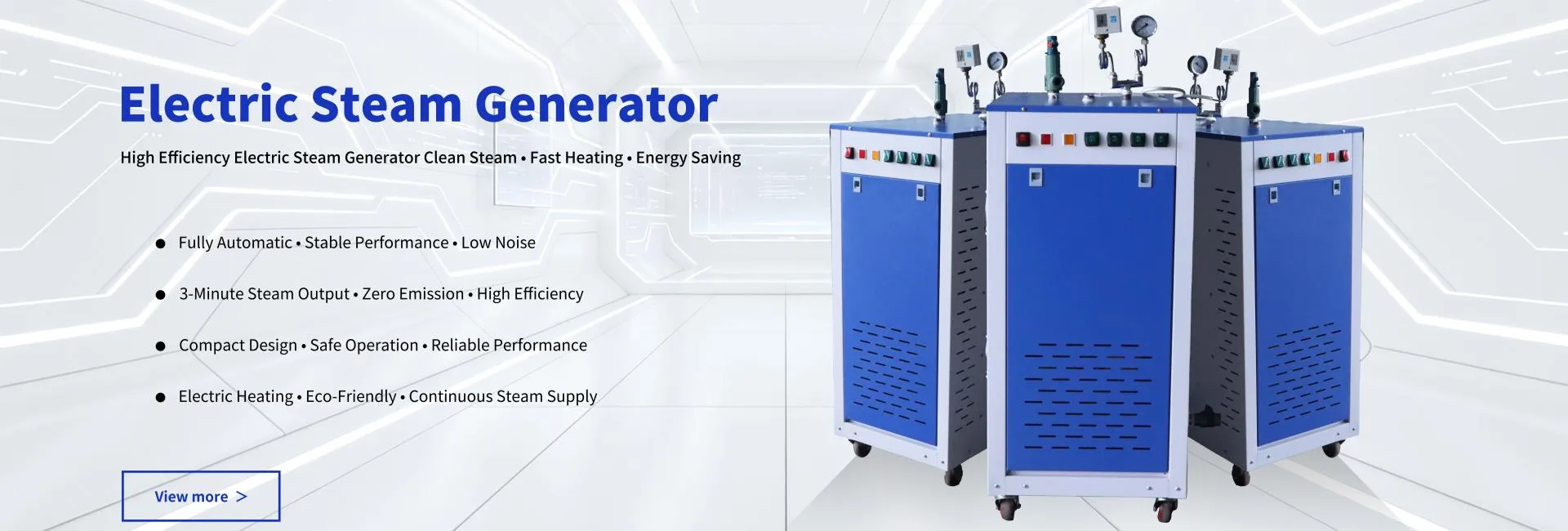
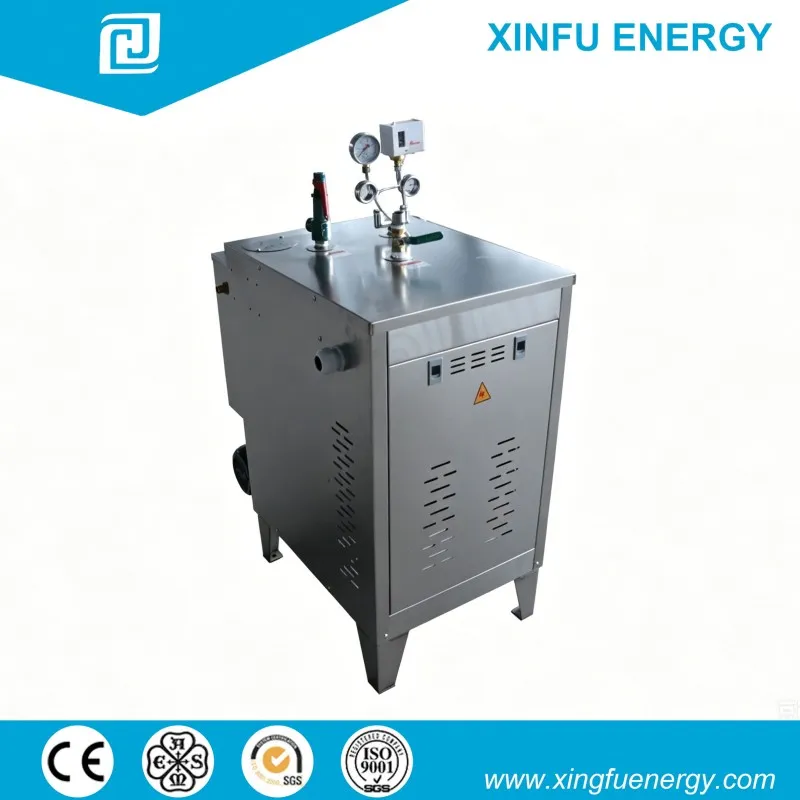
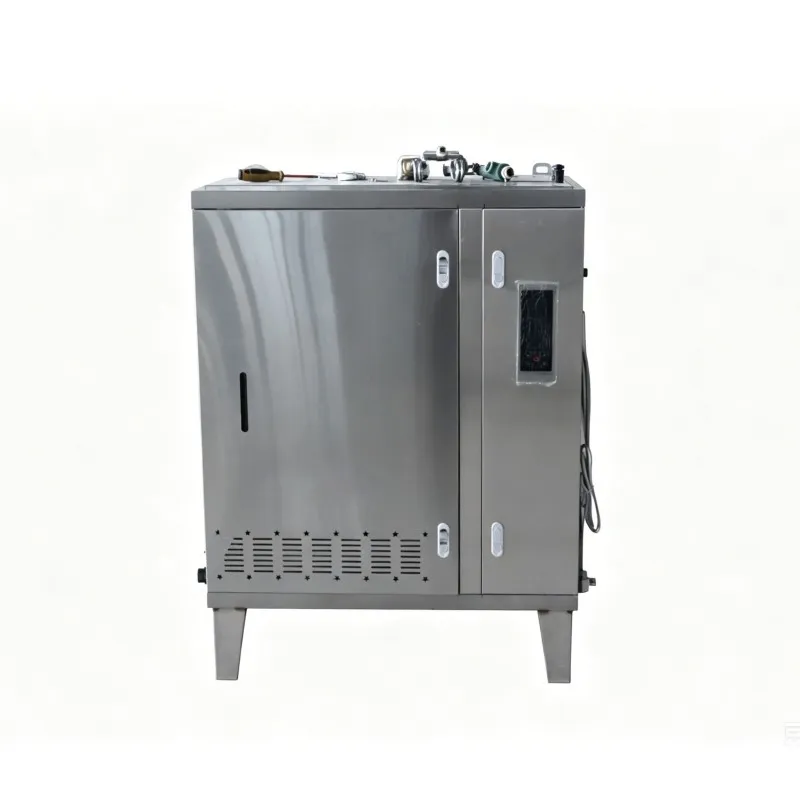
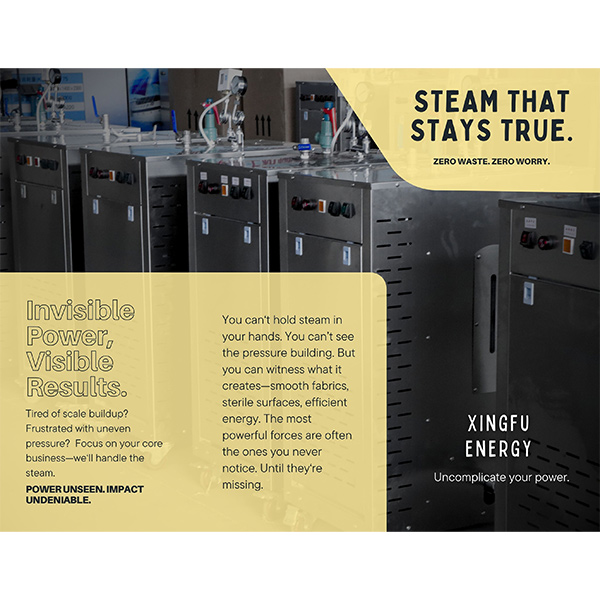
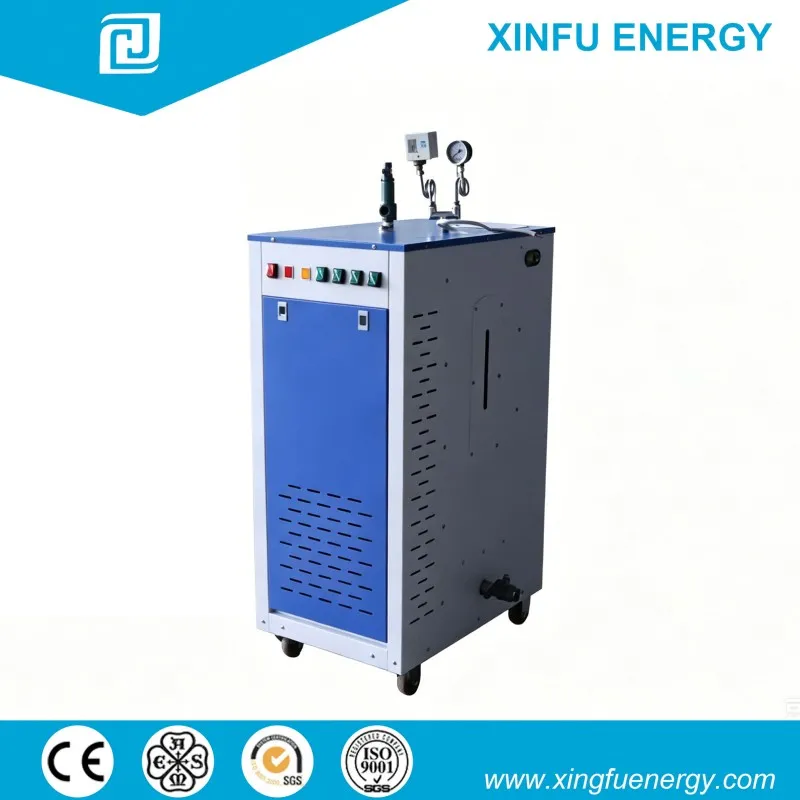
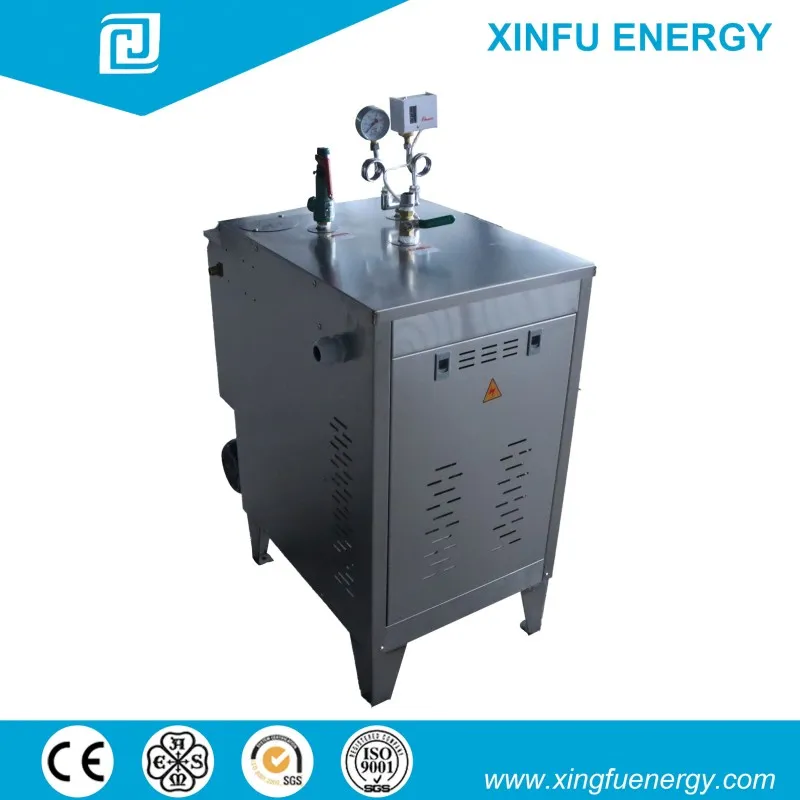
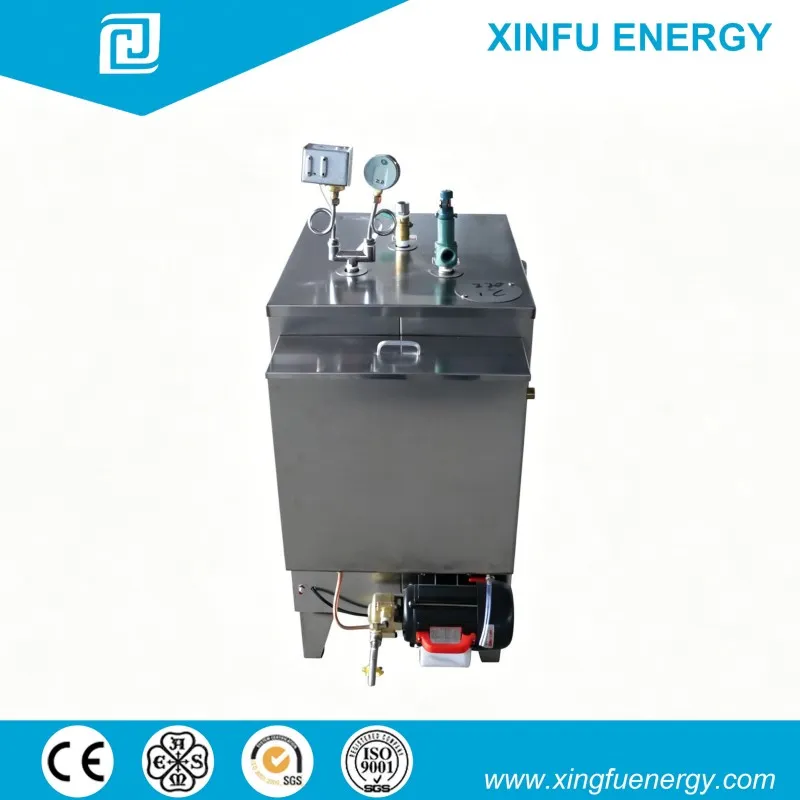
Industrial operations demand steam that arrives on time, stays stable under load, and never compromises safety or emissions compliance. When a food processing line stalls because steam pressure drops—or a textile dyeing plant faces downtime during boiler maintenance—engineers don’t ask for “more features.” They ask for reliability, zero-emission operation, and seamless integration. That’s why electric steam generator corp solutions from Qingdao Xingfu Energy Equipment Co., Ltd. appear repeatedly in real-world deployments across 30+ countries—not as theoretical upgrades, but as field-proven replacements for aging gas-fired systems.
Why Electric Steam Generators Are Replacing Traditional Boilers in Critical Processes
Most industrial users underestimate how much downtime stems from combustion-related variables: fuel quality fluctuations, burner tuning drift, flue gas corrosion, or seasonal air humidity affecting ignition. We’ve seen textile mills in Indonesia replace two 1.5-ton/hr oil boilers with a single 2-ton/hr S-Series electric steam generator—and cut annual unscheduled stops from 17 to 2. Why? No flame sensors to calibrate. No stack temperature monitoring. No CO alarms triggering shutdowns. Just stainless-steel heating elements immersed in deionized water, energized only when steam is called for.
The S-Series units deliver full-rated steam in under 90 seconds. Not “warm-up time”—actual saturated steam at 1.0 MPa (145 psi), verified by on-board PT100 sensors and PLC-controlled pressure-hold logic. Unlike fire-tube boilers requiring 3–4 hours to reach operating temperature, these units respond like a switch: cold start → steam → production. That matters most where batch cycles are tight—pharmaceutical autoclaving, semiconductor wafer cleaning, or dairy UHT preheating.
All models use 316L stainless steel pressure vessels, ASME Section VIII Div. 1–rated, with full radiographic weld inspection. No carbon steel shells hiding internal pitting. No refractory linings cracking after thermal cycling. Just predictable thermal expansion, repeatable output, and zero NOx, SOx, or particulate emissions—even during ramp-up.
Engineering Support That Starts Before the Purchase Order
Some vendors send datasheets. Qingdao Xingfu engineers send load profiles. During a recent project in Poland, their team reviewed the client’s 24-hour production log—not just peak demand—but ramp rates, idle periods, and condensate return temperature variance. They sized a 350 kW intelligent steam boiler with dual-stage power modulation instead of a fixed 400 kW unit. Result: 12% lower kWh/m³ steam over 18 months, confirmed by third-party metering.
This isn’t consultancy-as-upsell. It’s built into their workflow: free thermal audit, piping layout review (including insulation specs), electrical supply validation (voltage drop, breaker sizing, harmonic filtering), and commissioning support onsite. Their technical staff includes 28 certified mechanical engineers—most with 8+ years in boiler system integration—not sales engineers repurposed from HVAC.
We’ve observed one consistent pattern: customers who engage early in design rarely request retrofits later. Why? Because Qingdao Xingfu specifies exact inlet water conductivity (<2 μS/cm), defines minimum feedwater tank volume based on 3× peak minute demand, and flags incompatible existing control protocols (e.g., Modbus RTU vs. ASCII) before shipment—not during startup.
Real-World Validation: Beyond Certifications
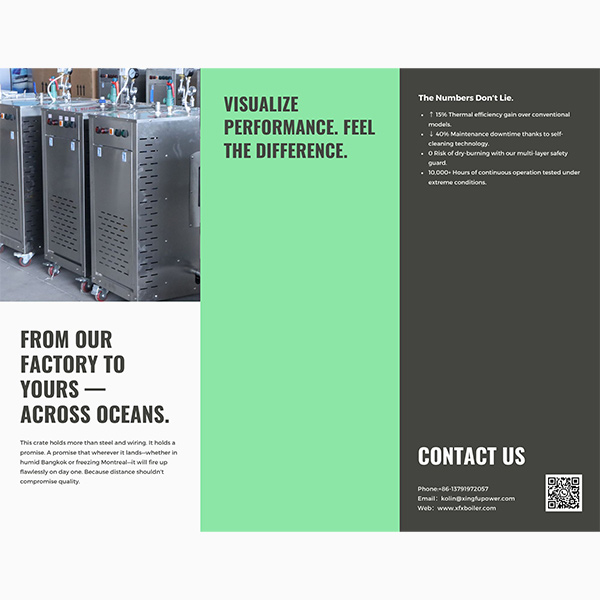
CE and ISO 9001 matter—but they don’t prevent field failures. What does? Consistent execution across 14 years, 228 employees, and 70,500 m² of integrated manufacturing space. Their 21,000 m² workshop houses CNC tube bending, orbital TIG welding cells, and a dedicated hydrostatic test bay where every unit undergoes 1.5× working pressure testing for 30 minutes—recorded, stamped, and archived.
Key differentiators visible on delivery:
No generic nameplates: Each unit carries engraved serial numbers traceable to raw material heat lots, welder IDs, and NDT reports
Pre-wired I/O terminals: Not “field-terminated cable glands,” but labeled, color-coded, and function-tested terminal blocks ready for PLC connection
In Malaysia, a rubber recycling plant runs three 600 kW electric steam boilers 24/7, feeding heat-to-oil exchangers for tire pyrolysis. After 26 months, mean time between failures exceeds 8,200 hours. No tube replacements. No refractory rebuilds. Just quarterly descaling and biannual electrode resistance checks.
Choosing the Right Electric Steam Generator Corp Partner Means Asking These Questions
Before signing any agreement, verify:
Do they perform factory acceptance tests with your actual control protocol loaded—or just simulate it?
Is their warranty limited to parts, or does it cover labor, travel, and lost production time for critical failures?
Can they provide reference sites in your industry, with verifiable uptime data—not just testimonials?
Qingdao Xingfu publishes none of its customer names publicly. But their export records since 2012 show consistent repeat orders from Spain (textile finishing), Korea (electronics plating), and Mongolia (food dehydration)—all sectors where steam interruption equals product rejection. Their philosophy isn’t “sell and forget.” It’s “design with you, install beside you, optimize with you.”
For engineers tired of combustion headaches, emissions reporting overhead, or unpredictable maintenance windows: electric steam generator corp solutions aren’t just cleaner. They’re simpler, faster, and more accountable—exactly what modern industrial steam demands.