-
+86-13791972057
-
No. 3009, Tower 3, Zhuoyue Century Center, No. 31th Longcheng Road, Qingdao, Shandong, China


+86-13791972057
No. 3009, Tower 3, Zhuoyue Century Center, No. 31th Longcheng Road, Qingdao, Shandong, China








2026-10-20
Looking for a reliable steam engine electric generator for sale? Our direct factory solutions offer high-efficiency power generation by converting thermal energy from steam into stable electricity. Ideal for industrial waste heat recovery, biomass projects, and off-grid applications, our generators are engineered for durability and maximum output. By purchasing directly from the manufacturer, you eliminate intermediary markups, ensuring competitive pricing without compromising on engineering quality or after-sales support.

A steam engine electric generator is a robust power generation system that utilizes steam pressure to drive a mechanical engine, which in turn rotates an alternator to produce electricity. Unlike modern steam turbines that operate at extremely high speeds and pressures, reciprocating steam engines operate at lower RPMs, offering distinct advantages in torque, longevity, and fuel flexibility.
In 2026, the demand for decentralized and resilient power systems has grown significantly. Industries are increasingly turning to steam-based generation not just for traditional coal-fired plants, but for sustainable energy loops involving biomass, solar thermal concentration, and industrial waste heat. The core appeal lies in the engine’s ability to utilize low-grade heat sources that would otherwise be wasted, transforming them into valuable electrical power.
The operational logic of a steam engine generator is grounded in thermodynamic principles, specifically the Rankine cycle. Understanding this process is crucial for selecting the right equipment for your facility.
This mechanical simplicity is why steam engines remain relevant. They do not require the ultra-high precision manufacturing of gas turbines, making them easier to maintain and repair in remote or industrial settings.
When searching for a steam engine electric generator for sale, buyers often encounter a wide price disparity. This is largely due to the supply chain structure. Purchasing directly from the factory offers several strategic advantages for B2B buyers and industrial project managers.
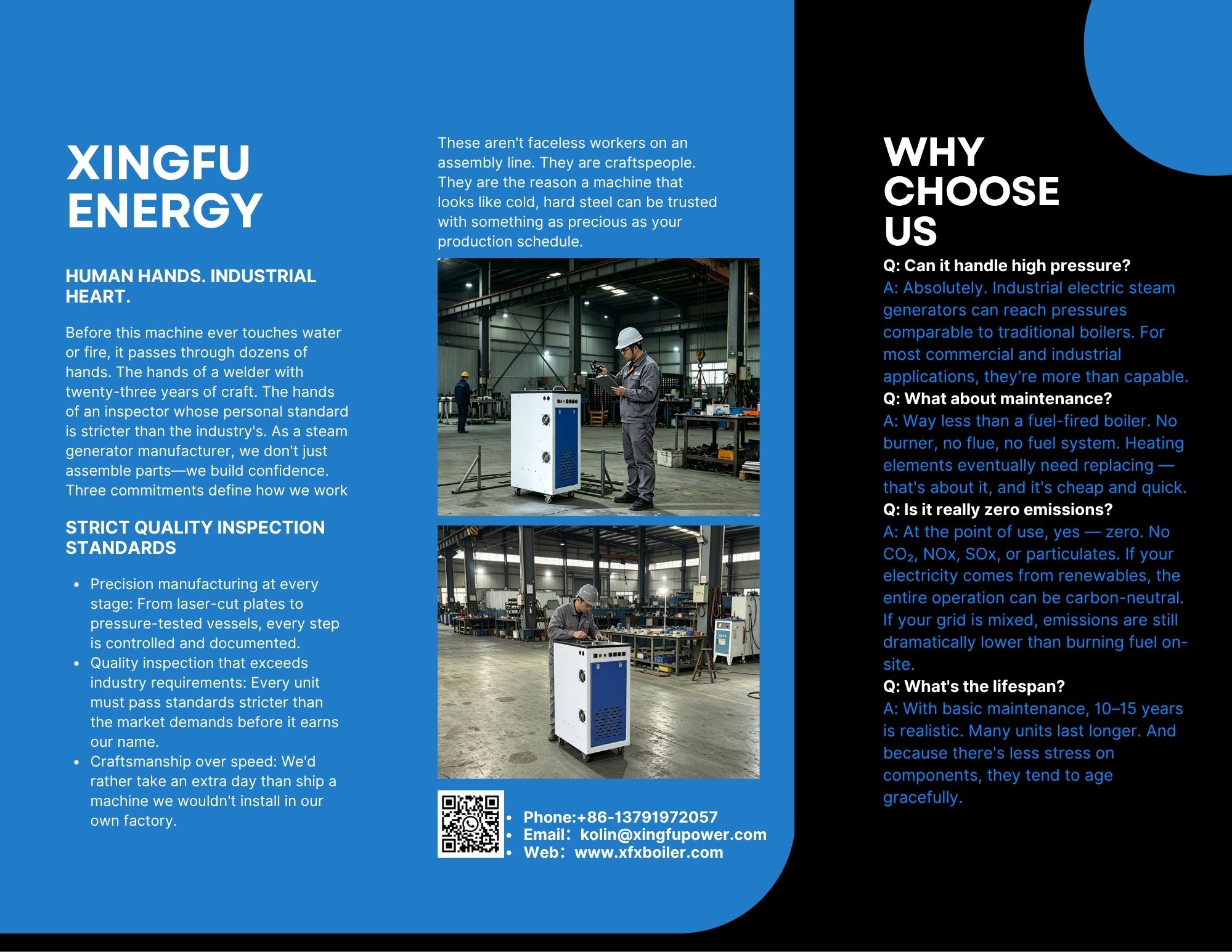
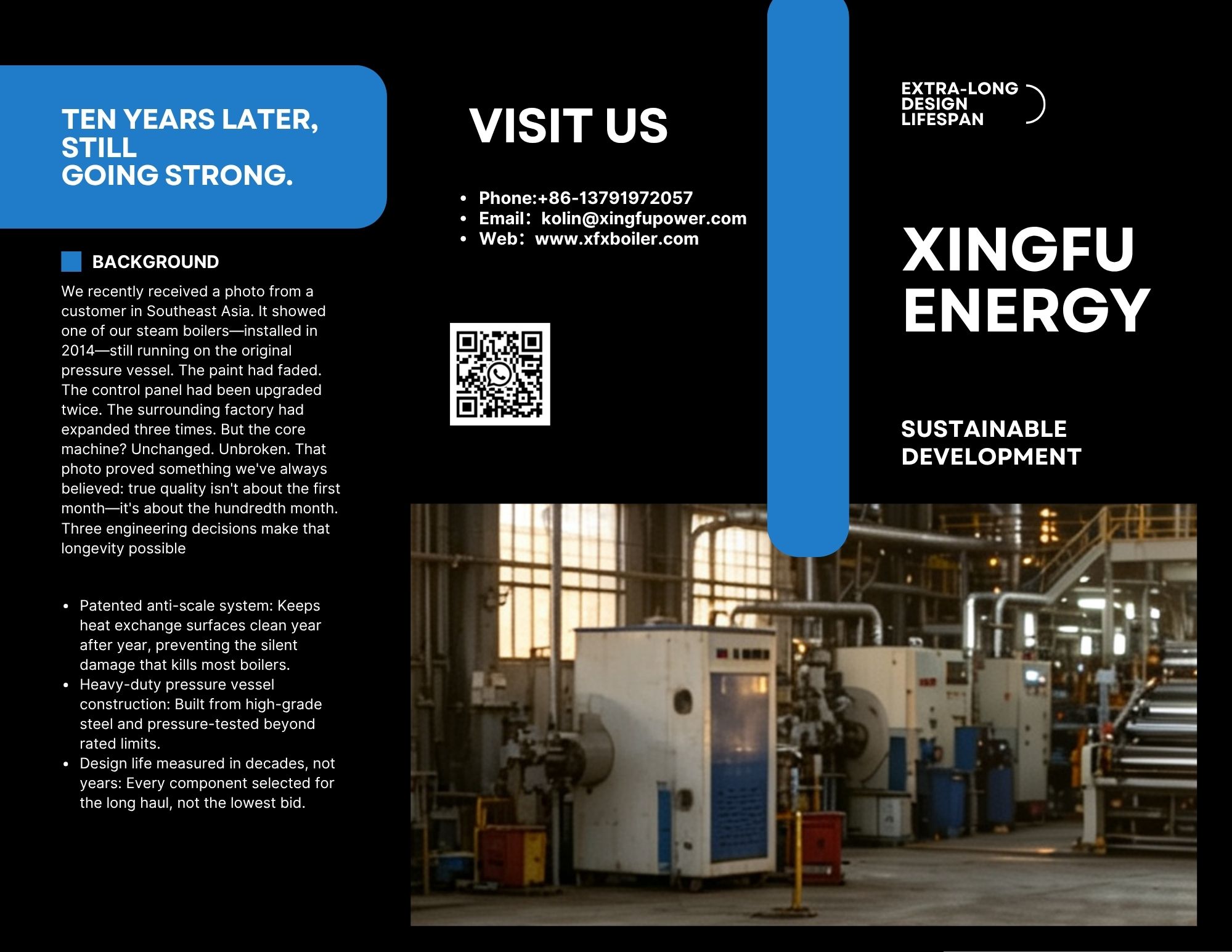
To truly understand the value of direct procurement, it helps to look at what a dedicated manufacturer brings to the table. Qingdao Xingfu Energy Equipment Ltd., headquartered in Qingdao City, Shandong Province, exemplifies the benefits of working with a vertically integrated high-tech enterprise. Founded in 2010, the company has spent over 14 years combining traditional manufacturing expertise with continuous technological innovation.
Unlike trading companies that simply broker deals, Qingdao Xingfu operates a massive 70,500-square-meter production base, including 21,000 square meters of dedicated workshops. This infrastructure allows for complete control over the product lifecycle—from research and design to manufacturing and certified transportation. With a team of 228 employees, including 78 technical experts and 65 certified welders, the company ensures that every component, from industrial boilers to pressure containers, meets rigorous international standards such as ISO 9001 and CE certifications.
This depth of engineering capability means that when you partner with a manufacturer like Qingdao Xingfu, you aren’t just buying a box; you are accessing a suite of specialized solutions. Their expertise spans electric steam generators, biomass burners, and gasification devices, all designed to improve energy efficiency and simplify integration with existing engineering systems. With exports reaching over 30 countries—including Mongolia, Indonesia, Poland, and Spain—their global reputation is built on transparency, quality responsibility, and long-term technical support.
Intermediaries, trading companies, and distributors add layers of margin to cover their operational costs and profits. By engaging directly with the manufacturer, you secure the direct factory price. This transparency allows for better budget allocation, enabling you to invest in higher-quality components such as superior alternators, advanced governors, or custom-mounted skids.
Standard off-the-shelf units rarely fit every unique industrial application. Factories possess the engineering capability to customize:
A direct relationship ensures that spare parts—such as piston rings, valves, and bearings—are sourced from the original equipment manufacturer (OEM). This reduces downtime risks. Furthermore, technical support comes directly from the engineers who designed the unit, ensuring accurate troubleshooting and maintenance guidance.
Before requesting a quote, it is essential to understand the technical parameters that define performance. In 2026, efficiency standards have tightened, and buyers must look beyond just the rated power output.
| Parameter | Description | Importance |
|---|---|---|
| Rated Power (kW/kVA) | The continuous electrical output the generator can sustain. | Determines if the unit meets your base load requirements. |
| Steam Pressure (Bar/Psi) | The operating pressure of the incoming steam. | Must match your boiler or waste heat source capabilities. |
| Steam Temperature (°C/°F) | The temperature of the steam at the inlet. | Higher temperatures generally improve thermal efficiency but require specialized materials. |
| RPM (Revolutions Per Minute) | The rotational speed of the engine. | Must match the alternator’s required speed (e.g., 1500 RPM for 50Hz, 1800 RPM for 60Hz). |
| Thermal Efficiency (%) | The ratio of useful work output to heat energy input. | Higher efficiency means less fuel consumption and lower operating costs. |
| Alternator Type | Synchronous or asynchronous, brushless or brushed. | Affects power quality, maintenance needs, and grid synchronization capability. |
Steam environments are harsh. High-pressure, high-temperature steam can cause corrosion and erosion. Premium manufacturers use cast iron or steel alloys for cylinders and pistons designed to withstand thermal cycling. When evaluating a steam engine electric generator for sale, inquire about the metallurgy of the core components. Cheap alternatives may use inferior casts that crack under thermal stress, leading to catastrophic failure.
While gas and diesel generators dominate the emergency backup market, steam engines occupy a unique niche in continuous and sustainable power generation. Their ability to run on diverse heat sources makes them versatile for specific industrial sectors.
Biomass energy is a cornerstone of renewable strategies in 2026. Agricultural waste, wood chips, and organic matter are burned to produce steam. Steam engines are particularly well-suited for small to medium-scale biomass plants (50kW to 5MW) because they tolerate variations in steam quality better than turbines. They provide a stable baseload power source for rural grids or industrial facilities.
Many industrial processes, such as cement production, steel manufacturing, and chemical processing, release significant amounts of waste heat. Instead of letting this energy dissipate, it can be captured to generate steam. A steam engine generator converts this “free” energy into electricity, powering auxiliary systems within the plant. This significantly reduces overall energy costs and carbon footprint.
In solar thermal applications, mirrors concentrate sunlight to heat a fluid, which then generates steam. Steam engines are used in smaller CSP installations due to their lower maintenance requirements and ability to start/stop more flexibly than large turbines. This supports renewable energy initiatives in sunny regions.
CHP systems, also known as cogeneration, produce both electricity and useful heat simultaneously. Steam engines are ideal for CHP because the exhaust steam retains significant thermal energy. This exhaust can be used for district heating, industrial drying processes, or absorption cooling, achieving total system efficiencies exceeding 80%.
A common question among buyers is whether to choose a reciprocating steam engine or a steam turbine. Both convert steam energy into mechanical work, but their operational characteristics differ significantly.
| Feature | Reciprocating Steam Engine | Steam Turbine |
|---|---|---|
| Efficiency at Partial Load | High. Maintains efficiency even at lower loads. | Low. Efficiency drops significantly at partial loads. |
| Maintenance Complexity | Moderate. Mechanical parts are accessible and easy to service. | High. Requires specialized tools and expertise for blade inspection. |
| Startup Time | Fast. Can reach operating temperature and pressure quickly. | Slow. Requires gradual warming to prevent thermal shock. |
| Cost (CAPEX) | Lower. Simpler manufacturing and installation. | Higher. Complex precision engineering required. |
| Scalability | Best for small to medium scales (up to ~5MW). | Best for large utility-scale applications (>10MW). |
| Fuel Flexibility | High. Tolerates wetter or lower-quality steam. | Low. Requires dry, high-quality superheated steam. |
For most industrial, commercial, and small-scale renewable projects, the reciprocating steam engine offers a better balance of cost, flexibility, and ease of operation. Turbines are generally reserved for massive utility-scale power plants where economies of scale justify the complexity.
Choosing the correct steam engine electric generator for sale involves a systematic assessment of your energy needs and site conditions. Follow these steps to ensure optimal performance.
Determine the available steam pressure and temperature. Is it saturated or superheated? What is the maximum mass flow rate (kg/h)? Your generator must be matched to these parameters. Over-pressurizing an engine can cause damage, while under-utilizing it leads to inefficiency.
Identify your base load and peak load requirements. Do you need continuous power (24/7) or intermittent support? Size the generator to handle the base load efficiently, with some headroom for peaks. Oversizing leads to poor efficiency and increased wear.
Specify the voltage (e.g., 400V, 11kV) and frequency (50Hz or 60Hz) required by your facility or grid connection. Ensure the alternator selected is compatible with these standards. If you plan to sync with the grid, verify that the generator includes a synchronizing panel.
Consider space constraints, noise regulations, and ventilation. Steam engines require adequate space for maintenance access. Noise enclosures may be necessary if the unit is located near residential areas or offices. Ensure there is a reliable water source for the condenser and boiler feed.
Contact the factory with your detailed specifications. Ask for a performance curve showing efficiency at various loads. Inquire about the warranty terms, recommended spare parts kit, and installation support. A reputable manufacturer will provide a comprehensive technical proposal, not just a price tag.
To maximize the lifespan and efficiency of your steam engine generator, adhering to a strict maintenance schedule is non-negotiable. Proper care prevents unexpected downtime and ensures safe operation.
Navigating the market for industrial machinery can be tricky. Avoid these common pitfalls to protect your investment.
Ignoring Total Cost of Ownership (TCO): Focusing solely on the purchase price is a mistake. A cheaper unit with low thermal efficiency will cost far more in fuel over its lifetime. Calculate the TCO, including fuel, maintenance, and expected lifespan.
Mismatching Steam Parameters: Buying a standard unit without verifying compatibility with your specific steam source leads to poor performance. Always customize the inlet valve gear to your pressure and temperature.
Overlooking After-Sales Support: Steam engines are mechanical devices that require periodic servicing. Buying from a supplier with no technical support or spare parts inventory leaves you vulnerable to long downtimes.
Neglecting Water Quality: Boiler feed water quality directly impacts engine life. Hard water causes scaling in boilers and pipes, reducing heat transfer and potentially causing blockages. Invest in proper water treatment systems.
With proper maintenance, a high-quality reciprocating steam engine can operate for 20 to 30 years or more. Unlike high-speed turbines, the lower RPM and robust construction of steam engines contribute to their exceptional longevity. Regular overhauls and timely replacement of wear parts like piston rings and valves are key to achieving this lifespan.
Yes, indirectly. Concentrated Solar Power (CSP) systems use mirrors to focus sunlight onto a receiver, heating a fluid to generate steam. This steam then drives the engine. This application is growing in popularity as a renewable, dispatchable power source that does not rely on batteries.
Modern reciprocating steam engines typically achieve thermal efficiencies between 15% and 25%, depending on the steam pressure and temperature. While this is lower than large gas turbines, it is highly competitive for small-scale and waste heat applications. When used in CHP systems, the overall system efficiency can exceed 80% by utilizing the waste heat.
If you purchase from a reputable direct factory, spare parts should be readily available. Standard components like bearings and seals are often off-the-shelf items. Custom parts like pistons and valves should be supplied by the manufacturer. It is advisable to purchase a recommended spare parts kit with your initial order to minimize future downtime.
Yes, but it requires specific equipment. The generator must be synchronized with the grid in terms of voltage, frequency, and phase. This requires a synchronizing panel and protection relays to ensure safety. Consult with your local utility provider and the generator manufacturer to ensure compliance with grid connection standards.
Steam engines are fuel-agnostic regarding the heat source. You can use coal, natural gas, diesel, biomass (wood chips, agricultural waste), or even waste heat from industrial processes. The choice of fuel depends on local availability, cost, and environmental regulations. Biomass and waste heat are increasingly preferred for their sustainability benefits.
Operating high-pressure steam systems involves inherent risks. Ensuring safety is paramount for both personnel and equipment integrity.
The boiler and steam lines are pressure vessels. They must comply with local and international safety standards (such as ASME in the US or PED in Europe). Regular inspections and hydrostatic tests are mandatory. Never operate a boiler without valid certification and safety valves.
Your generator system must include an emergency shutdown (ESD) mechanism. This system should automatically cut off the steam supply and disconnect the electrical load in case of overspeed, low oil pressure, or high temperature. Regularly test the ESD system to ensure it functions correctly.
Only trained and certified personnel should operate and maintain steam engine generators. Training should cover startup procedures, normal operation, emergency responses, and maintenance protocols. Well-trained operators are the first line of defense against accidents and equipment damage.
In the evolving energy landscape of 2026, the steam engine electric generator for sale represents more than just a piece of machinery; it is a strategic asset for energy independence and sustainability. Whether you are looking to monetize waste heat, harness biomass resources, or create a resilient off-grid power system, steam technology offers a proven, durable, and flexible solution.
By choosing a direct factory partner like Qingdao Xingfu Energy Equipment Ltd., you gain access to customized engineering, competitive pricing, and long-term support. With a philosophy rooted in quality responsibility and sustainable development, such partners ensure that your power generation system is not only cost-effective but also tailored to your specific operational needs. The robustness of reciprocating steam engines, combined with modern control systems and expert manufacturing, provides a reliable pathway to efficient energy conversion.
Do not compromise on quality or support when selecting your power generation infrastructure. Evaluate your steam parameters, define your power needs, and engage with a manufacturer who understands the intricacies of steam technology.
Ready to explore how a steam engine generator can transform your energy strategy? Contact our engineering team today for a customized consultation and a competitive direct factory quote.