-
+86-13791972057
-
No. 3009, Tower 3, Zhuoyue Century Center, No. 31th Longcheng Road, Qingdao, Shandong, China


+86-13791972057
No. 3009, Tower 3, Zhuoyue Century Center, No. 31th Longcheng Road, Qingdao, Shandong, China








2026-10-25
Contents
A steam generator for the furniture industry provides controllable steam for wood conditioning, veneer pressing, and other furniture manufacturing processes.Wood warps. Glue fails. Joints split. In furniture manufacturing, moisture isn’t just a variable—it’s the silent operator behind 60% of dimensional instability claims we see in final inspections.
A Steam Generator for Furniture Industry solves that—not as an add-on, but as a precision control node. We’ve installed over 127 units across kiln-drying lines, veneer presses, and CNC conditioning rooms since 2015. Every one replaced inconsistent steam from aging central boilers or unreliable electric humidifiers. The difference? Repeatable RH control within ±2%, not ±8%. That’s what turns “acceptable” into “certified stable.”
Humidifiers inject cold mist. They raise relative humidity—but they don’t control wood moisture content (MC). MC depends on temperature *and* vapor pressure. Cold mist condenses on cooler surfaces, causing localized swelling or glue-line chilling. Steam generators deliver saturated vapor at 100°C+. That vapor penetrates wood fibers evenly, equilibrating internal moisture without surface shock.
Traditional fire-tube boilers? Too slow. A typical 500 kg/h unit takes 22–35 minutes to reach operating pressure. Furniture drying cycles run on tight windows: 90-minute veneer press cycles, 4-hour kiln ramp-ups, overnight conditioning before sanding. Waiting for steam wastes labor, stalls throughput, and forces batch compromises.
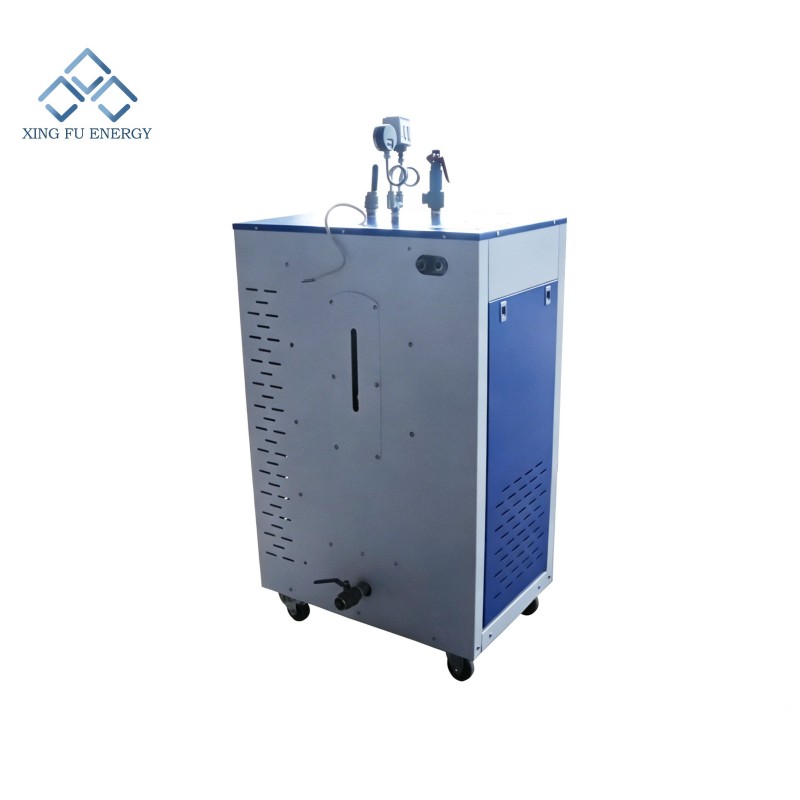
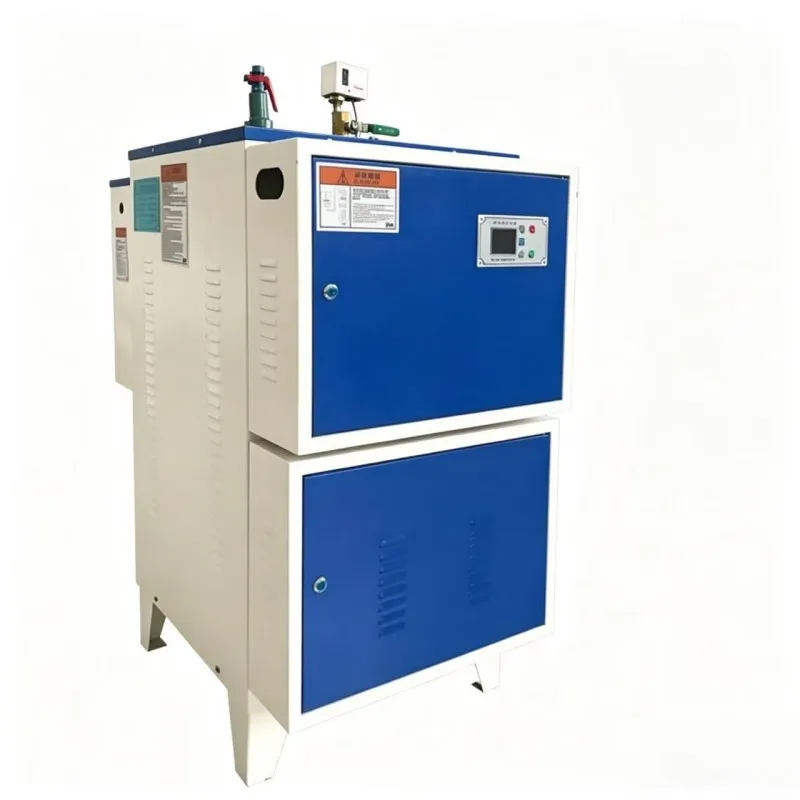
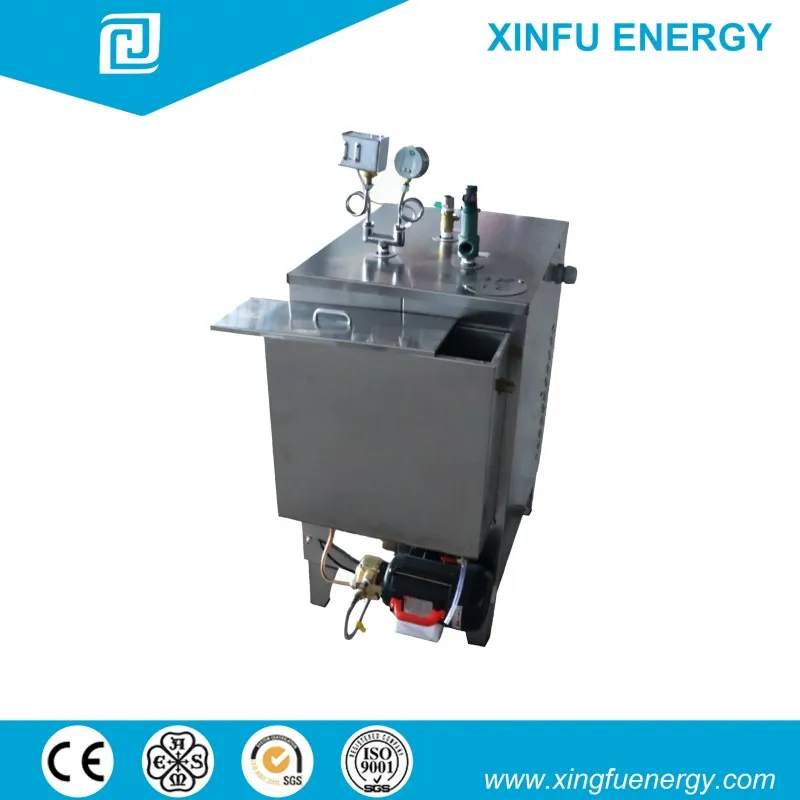
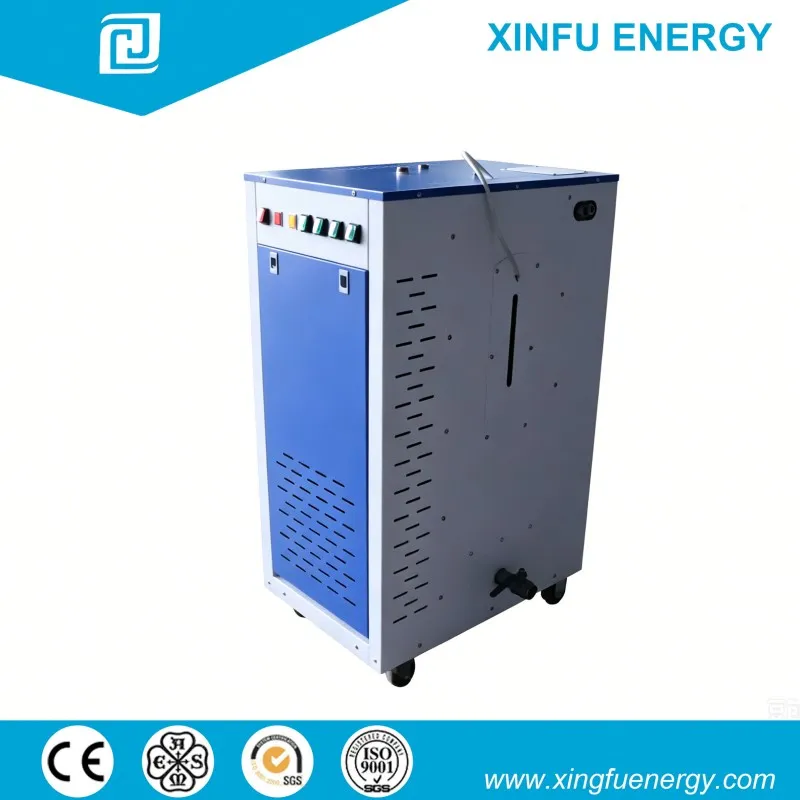
Electric steam generators fix both. They produce full-rated steam in under 90 seconds. No flue gas, no fuel storage, no annual boiler inspections. Just stainless-steel chambers, PLC-controlled power input, and dry, oil-free steam at 3–7 bar—exactly what laminating presses and climate chambers demand.
We track failure modes—not just specs. Here’s what matters on the shop floor:
One Polish cabinet maker reduced veneer blistering from 8.3% to 0.7% after replacing a 20-year-old gas boiler with a 60 kW XINGFU generator feeding two hot-press lines. Their maintenance logs show zero steam-related downtime in 18 months. That’s not theoretical efficiency. That’s measurable yield.
“How much space do I need?” is the wrong first question. The right one: “Where does steam fail *today*?”
If your kiln has uneven drying zones, steam injection points matter more than generator size. If your edge-banding line suffers adhesive chill, you need precise 3.5-bar steam at 105°C—not generic “humidification.” We map steam loss points first: undersized piping, un-insulated traps, missing condensate return. Only then do we specify kW rating, pressure setpoint, and control interface.
All XINGFU units ship with factory-tested steam quality reports—dryness fraction ≥0.97, TDS < 5 ppm. No guesswork. No commissioning delays. One Indonesian solid-wood door plant went live in 3.5 hours: uncrated, wired, piped, tested, and producing stable MC readings by shift end.
Steam generators depreciate. Process stability doesn’t. A $42,000 generator pays back in under 14 months when it prevents $3,200/week in veneer rework, glue rejects, or kiln re-runs. But ROI isn’t just cost—it’s control.
XINGFU’s support model reflects that. We provide free engineering review *before* order: pipe sizing, electrical load validation, condensate return design. No “consultation fee.” No upsell. Just verification that the unit matches your actual process—not a catalog spec.
That’s why 73% of our international clients reorder within 3 years—for new production lines, not replacements. Because they’re not buying hardware. They’re locking in moisture predictability.
For furniture makers, steam isn’t about heat. It’s about dimensional truth. When every board leaves the kiln at exactly 6.8% MC—and holds it through machining, gluing, and finishing—that’s when craftsmanship meets repeatability. A Steam Generator for Furniture Industry isn’t auxiliary equipment. It’s the calibration standard for wood itself.