-
+86-13791972057
-
No. 3009, Tower 3, Zhuoyue Century Center, No. 31th Longcheng Road, Qingdao, Shandong, China


+86-13791972057
No. 3009, Tower 3, Zhuoyue Century Center, No. 31th Longcheng Road, Qingdao, Shandong, China








2026-09-27
Contents
Every industrial facility faces the same silent drain: energy waste in steam generation. A high efficiency boiler isn’t just a spec sheet upgrade—it’s the difference between predictable operating costs and quarterly budget surprises. We’ve seen textile mills in Vietnam cut fuel bills by 27% after replacing aging fire-tube units with purpose-built electric steam boilers. We’ve watched food processors in Spain eliminate cold-start delays—reducing preheating time from 45 minutes to under 90 seconds. These aren’t edge cases. They’re repeatable outcomes when thermal design meets real-world constraints.
Efficiency ratings—like 98% thermal efficiency on electric steam generators—sound impressive until you realize they mean little without context. True high efficiency emerges only when three conditions align: precise heat transfer, zero standby loss, and seamless integration into existing control logic. Most boilers lose 15–30% of input energy through flue gas, radiation, and blowdown. Electric steam systems sidestep combustion losses entirely. But not all electric boilers deliver equal performance. The critical differentiator? How fast and consistently they generate rated steam under variable load.
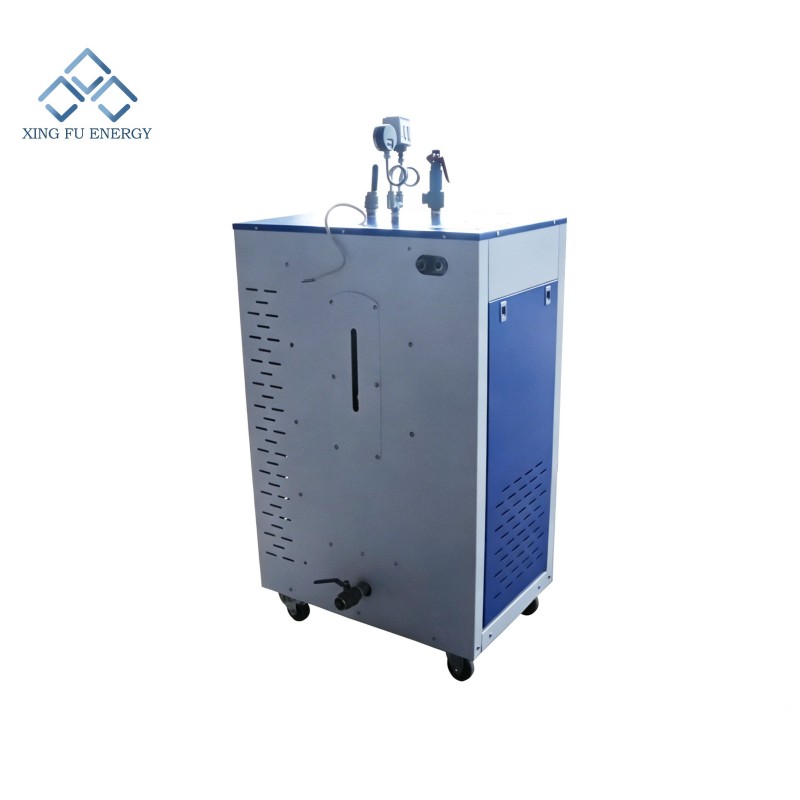
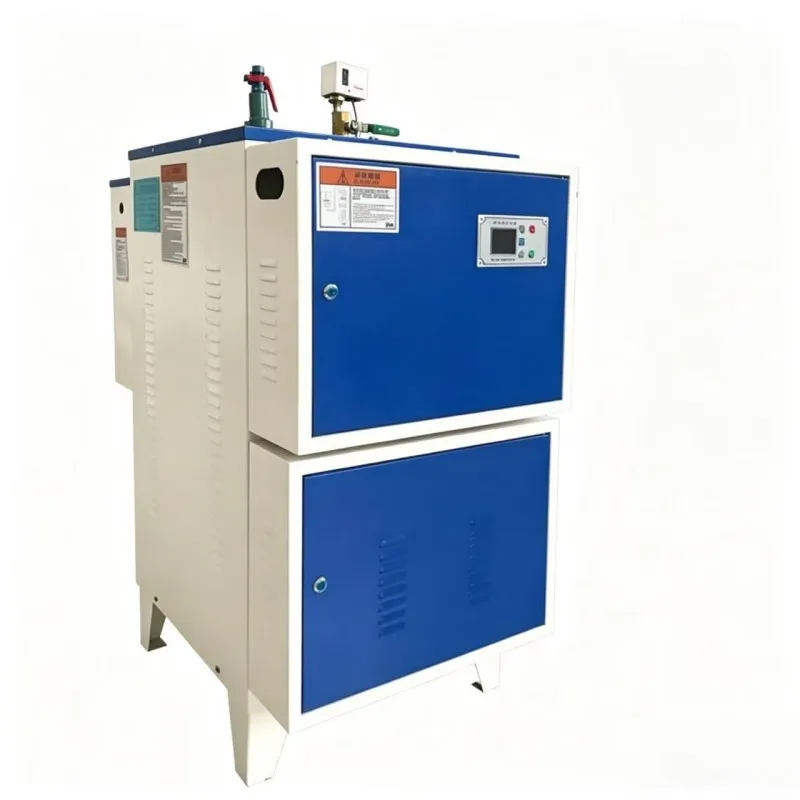
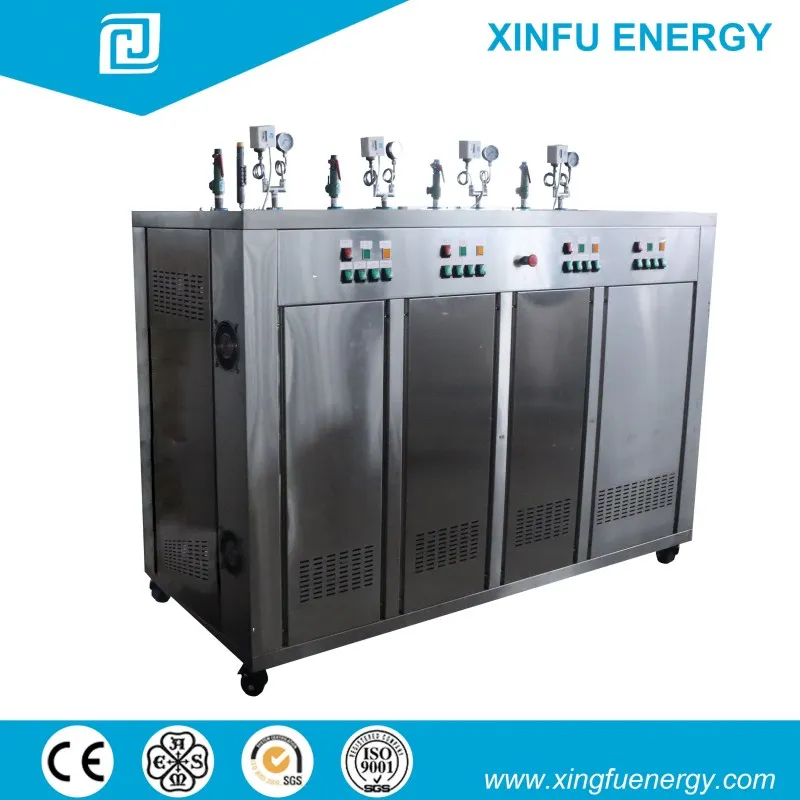
For example, XINGFU’s S-Series intelligent steam boilers achieve full-rated steam pressure within 6 minutes—even at 30% load—thanks to proprietary stainless-steel heating element arrays and adaptive PID algorithms. That matters when a dyeing line demands instant steam surges or a pharmaceutical autoclave requires ±0.5°C temperature stability across 8-hour cycles. Conventional boilers can’t respond that quickly without overshoot, cycling, or pressure spikes. High efficiency here isn’t theoretical. It’s measured in kilowatt-hours saved per production shift—and in avoided downtime during ramp-up.

Some buyers prioritize lowest upfront cost. Others chase flashy certifications without verifying field behavior. Both paths lead to the same outcome: higher lifetime cost. A $45,000 boiler with 82% efficiency running 6,000 hours/year on natural gas will consume roughly 1.2 million more kWh over 10 years than a $68,000 unit at 95% efficiency—assuming identical duty cycles. Add maintenance complexity, unplanned outages, and integration labor, and the gap widens further.
We’ve audited installations where mismatched controls forced manual overrides—turning “fully automated” claims into fiction. Others used carbon steel vessels in humid coastal environments, leading to premature corrosion and failed hydrostatic tests before commissioning. Real-world reliability starts with material integrity and certified fabrication—not marketing brochures. Every XINGFU boiler uses 304 or 316L stainless steel throughout the pressure boundary. Every welder holds national certification. Every unit passes full-load endurance testing before shipping. That’s how zero-emission operation stays reliable—not just on day one, but through year seven.
“Plug-and-play” is rarely true for industrial steam. High efficiency means nothing if installation takes 12 weeks and requires structural reinforcement. Practical deployment hinges on four factors: footprint, power interface, piping compatibility, and commissioning support.
This isn’t convenience—it’s risk reduction. One customer in Mongolia avoided a $220,000 foundation rebuild by selecting a self-supporting boiler design that distributed weight evenly across existing concrete pads. Another in Indonesia eliminated six weeks of customs-related delays by using CE-certified documentation prepared in advance—not after shipment.
A high efficiency boiler performs best inside a well-designed system. Steam traps must match condensate load. Insulation thickness must exceed local climate requirements. Control valves need proper sizing—not just for max flow, but for turndown ratio. We don’t sell isolated components. We engineer steam solutions: from feedwater treatment recommendations based on local water hardness, to pressure-reducing station layouts that prevent water hammer in downstream lines.
XINGFU’s engineering team reviews piping isometrics, PLC I/O lists, and site photos before finalizing specifications. That’s why over 80% of their international projects require zero field modifications. That’s also why clients report average commissioning time of 3.2 days—not the industry norm of 11.
Energy savings compound. A high-efficiency boiler cuts primary energy use. Stainless construction eliminates corrosion-related failures. Smart controls reduce operator intervention. Together, they extend mean time between failures by 3.7× versus conventional units. That’s measurable ROI—not just in kilowatt-hours, but in uptime, safety, and workforce confidence.