-
+86-13791972057
-
No. 3009, Tower 3, Zhuoyue Century Center, No. 31th Longcheng Road, Qingdao, Shandong, China


+86-13791972057
No. 3009, Tower 3, Zhuoyue Century Center, No. 31th Longcheng Road, Qingdao, Shandong, China








2026-09-27
Contents
Choosing a commercial electric steam boiler supplier isn’t about comparing brochures. It’s about matching your production line’s thermal demand, uptime requirements, and long-term maintenance reality with a partner who understands how steam behaves—not just on paper, but in a textile dye house in Poland, a food processing plant in Malaysia, or a pharmaceutical cleanroom in Spain.
We’ve seen too many facilities settle for “good enough” electric steam systems—only to face voltage instability during peak load, stainless steel scaling after six months of continuous operation, or integration delays because the PLC interface didn’t speak their existing DCS protocol. That’s why reliability starts not at the boiler flange—but at the supplier’s engineering gate.

A commercial electric steam boiler supplier must control every variable: material grade consistency, weld penetration depth, thermal expansion tolerance in multi-zone heating elements, and insulation integrity under 24/7 duty cycles. At Qingdao Xingfu Energy Equipment Co., Ltd., this isn’t outsourced. Their 70,500-square-meter facility houses dedicated workshops, in-house hydrostatic and non-destructive testing labs, and certified welders—65 of them, each holding ASME Section IX or EN 15614-1 qualifications.
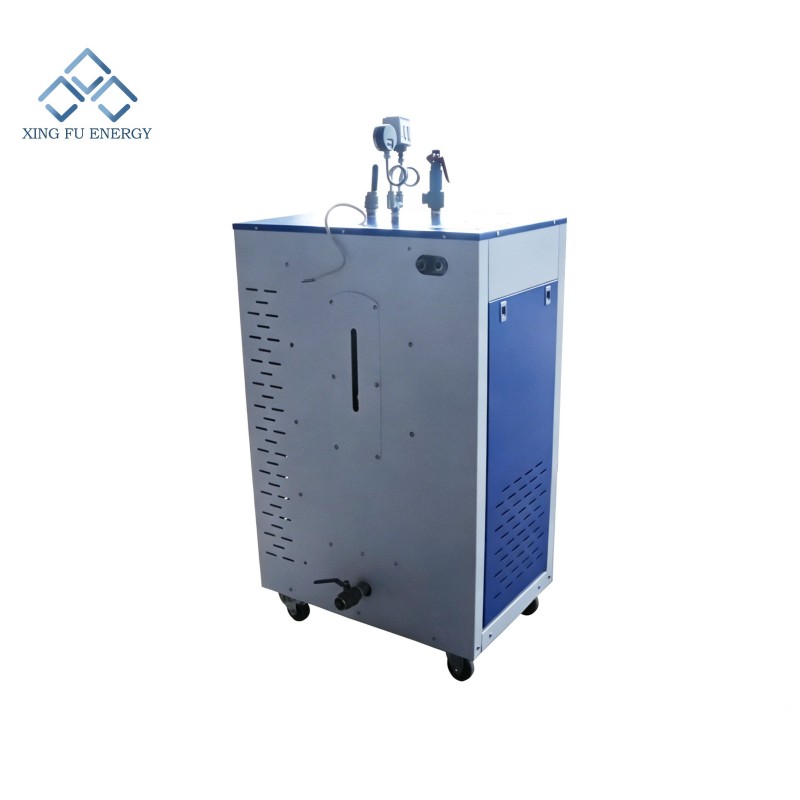
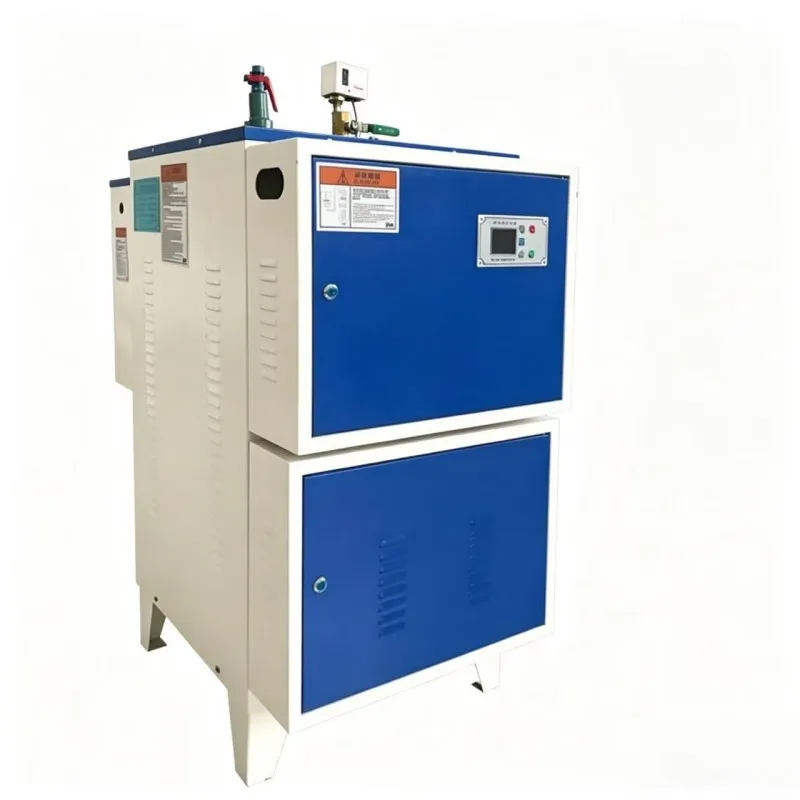
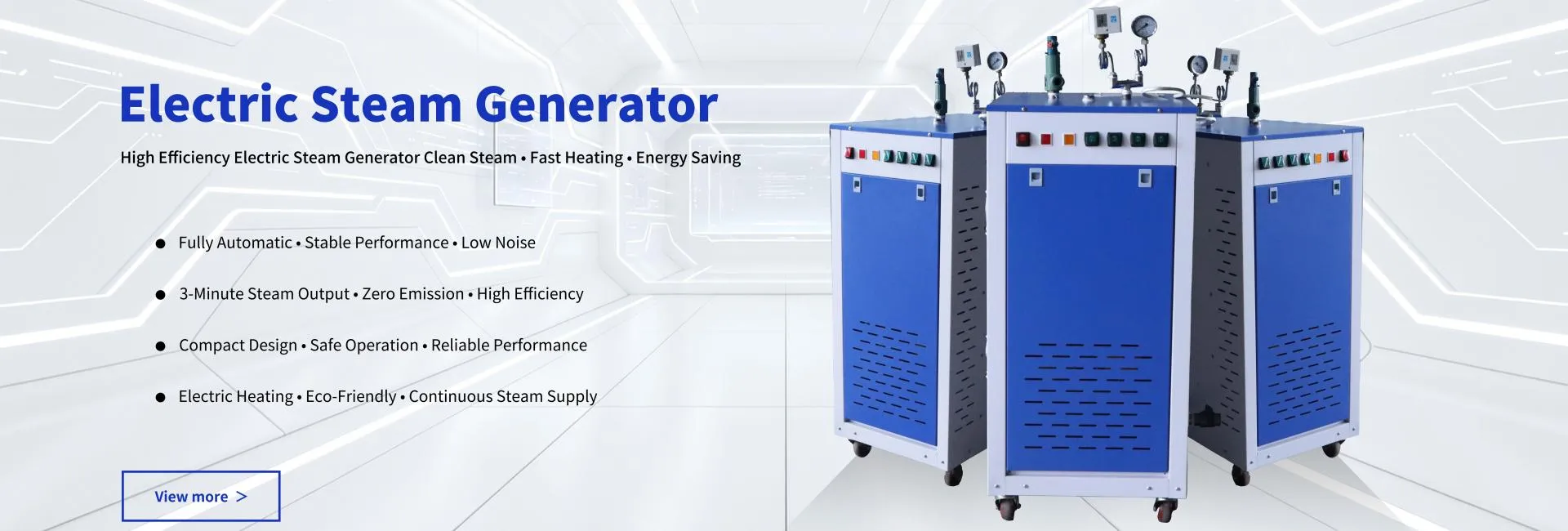
Their S-Series generators reflect that control. A 300 kW unit delivers full-rated steam in under 90 seconds—not “fast start-up” marketing language, but measured response time verified across three independent factory acceptance tests. All units use AISI 316L stainless steel pressure vessels, not 304. Why? Because chloride ion concentration in municipal water supplies in coastal markets like Korea or Indonesia accelerates pitting corrosion in lower-grade alloys. That detail doesn’t appear in datasheets—it appears in service logs after 18 months of operation.
They don’t ship “CE-certified” boilers. They ship units tested to EN 12953-2 (shell-type) and EN 12953-4 (electrical safety), with full traceability from raw material mill test reports to final pressure vessel stamping. Every weld joint carries a unique ID linked to the operator’s certification number and the specific heat treatment curve applied. This isn’t over-engineering—it’s what prevents unplanned shutdowns when a boiler fails its annual TÜV inspection in Germany.

Some suppliers hand off technical support after commissioning. Qingdao Xingfu embeds it earlier. Their engineers routinely join customer design reviews—not to sell, but to flag compatibility risks: undersized feedwater pumps causing cavitation in high-rise installations, insufficient breaker capacity for simultaneous startup of multiple units, or ambient temperature limits affecting condensate return efficiency in Mongolian winters.
Installation isn’t left to guesswork. They provide site-specific electrical schematics—not generic diagrams—with cable sizing tables validated for local grid harmonics, grounding resistance requirements per IEC 61000-4-30, and torque specs calibrated for regional bolt standards (DIN vs. JIS vs. ANSI). One client in Spain avoided a two-week delay because their team pre-verified that the local utility’s 5% voltage fluctuation tolerance matched the boiler’s ±3% input regulation range—before shipping containers left Qingdao port.
This level of engagement explains their repeat order rate: 68% of international clients have placed ≥3 orders since 2012. Not because of pricing—but because their service team diagnosed a recurring flow sensor drift issue across five textile plants, reverse-engineered the root cause (moisture ingress in non-IP67-rated housings), and issued a field retrofit kit—free of charge—within 11 days.
“Zero emissions” sounds simple until you run a 1,200 kW boiler 22 hours daily. Then efficiency becomes a hard cost metric: every 1% gain in thermal efficiency saves ~€4,200/year in electricity at €0.12/kWh. Qingdao Xingfu achieves 98.5%+ efficiency through three non-negotiable design choices:
That last point matters most in humid climates. In Indonesia, where ambient dew points exceed 25°C, improper condensate piping causes rapid air binding in return lines. Their standard solution includes vacuum-assisted return pumps with integrated moisture separators—tested at 92% RH before shipment.
Their ISO 9001 and CE certifications aren’t wall decorations. They’re evidence of audited processes: every pressure vessel undergoes 100% ultrasonic testing; every control panel passes EMC immunity testing per EN 61000-4-4; every software update follows IEC 62443-3-3 secure development protocols. No shortcuts. No exceptions.
When you need a commercial electric steam boiler supplier who treats your production continuity as their own operational KPI—not a sales target—you look for depth, not just delivery. You look for engineers who’ve debugged PLC communication failures in Polish cold storage facilities, technicians who’ve recalibrated flow meters on Malaysian palm oil refineries, and a quality system that doesn’t stop at the factory gate. That’s the threshold Qingdao Xingfu Energy Equipment meets—not occasionally, but systematically, across 30+ countries and 14 years of industrial steam deployment.