-
+86-13791972057
-
No. 3009, Tower 3, Zhuoyue Century Center, No. 31th Longcheng Road, Qingdao, Shandong, China


+86-13791972057
No. 3009, Tower 3, Zhuoyue Century Center, No. 31th Longcheng Road, Qingdao, Shandong, China








2026-11-29
Industrial heating systems sit at the heart of manufacturing—powering dyeing vats in textile mills, sterilizing equipment in pharmaceutical plants, drying coatings on automotive parts, and maintaining precise temperatures in food processing lines. When steam pressure drops, when response time lags, or when energy bills spike unexpectedly, production halts. We’ve seen it happen: a textile plant in Vietnam lost 12 hours of output during monsoon season because its aging gas-fired boiler couldn’t maintain stable 4.5 bar steam amid fluctuating fuel quality. Another client in Poland replaced three separate heating units with one integrated electric steam solution—and cut annual energy consumption by 28% without sacrificing ramp-up speed.
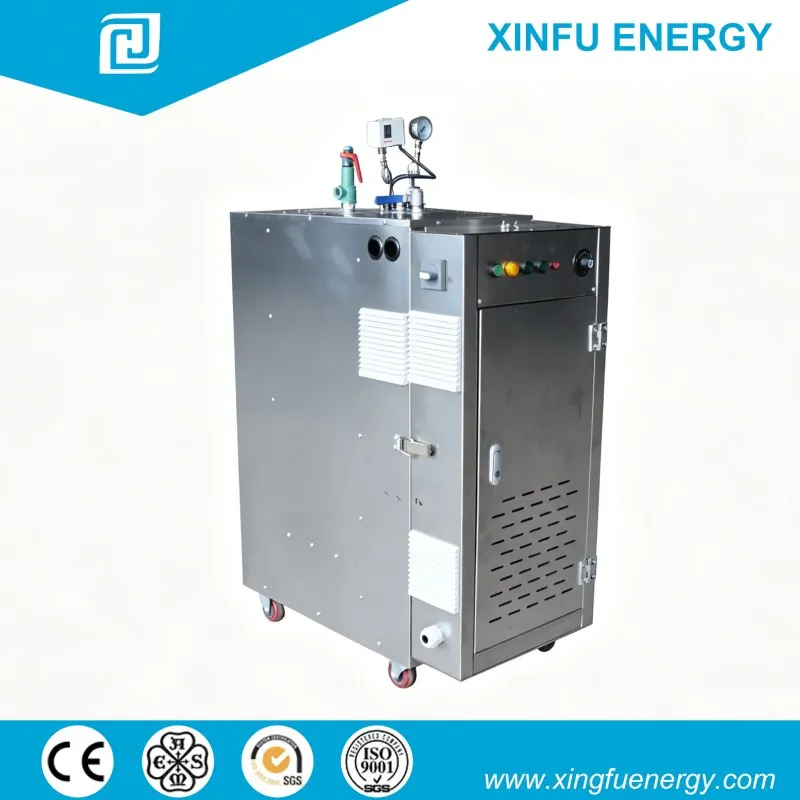
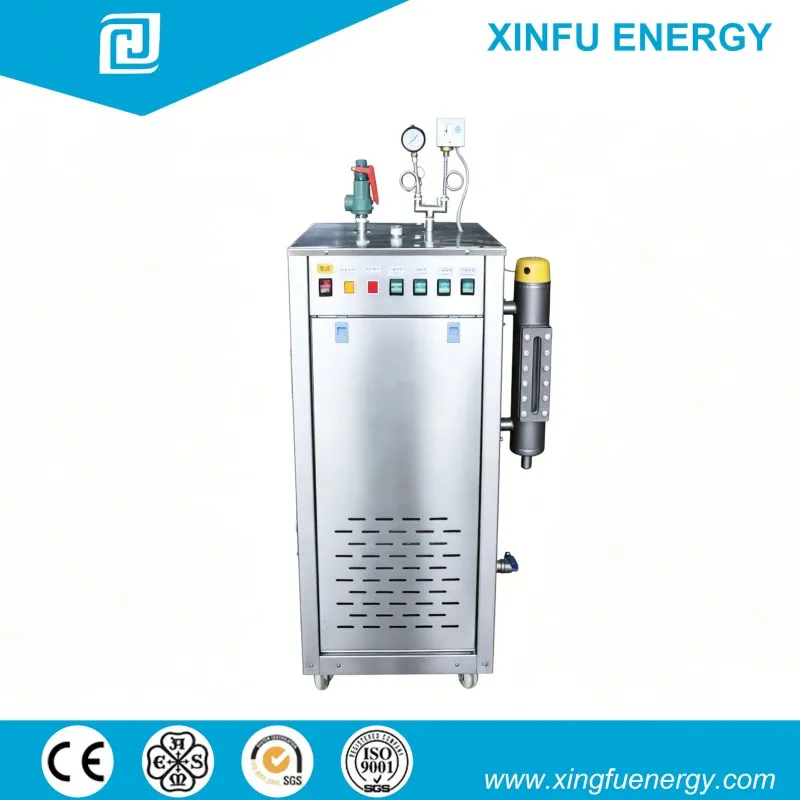
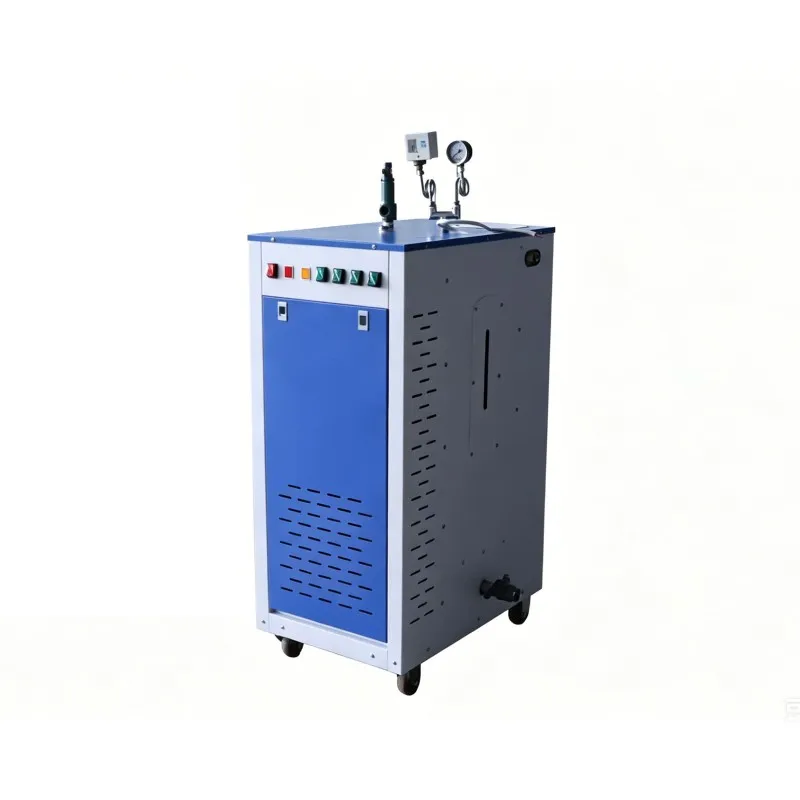
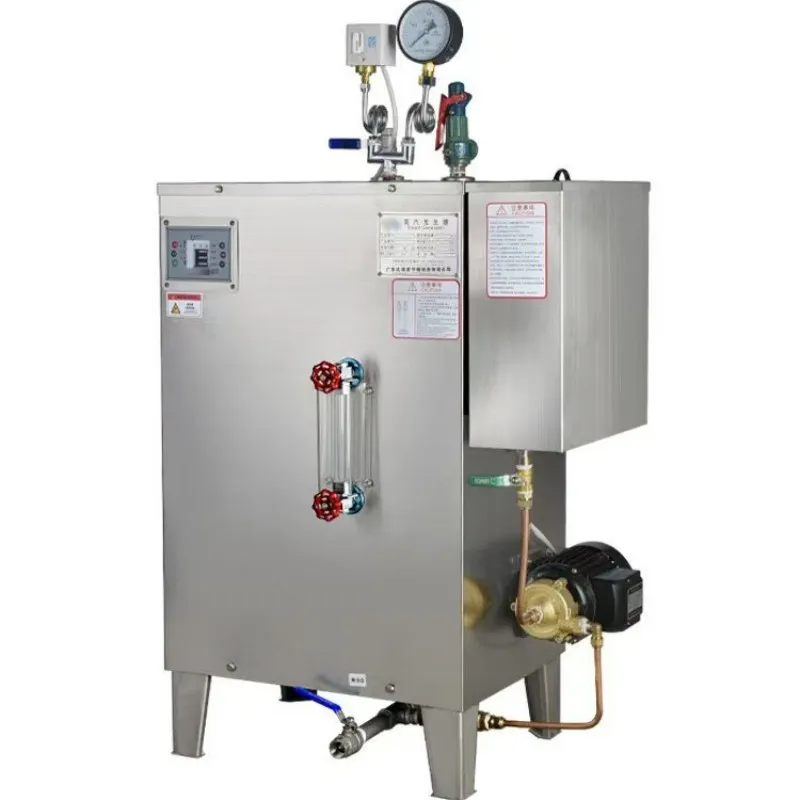
True industrial heating system efficiency starts before ignition. It begins with thermal inertia, material selection, and control logic—not just kilowatt ratings. Most users overlook that heat loss isn’t only about insulation; it’s about how fast a system reaches operating temperature, how tightly it holds setpoint under load variation, and how much residual energy remains trapped after shutdown. Our S-Series electric steam generators use stainless-steel spiral tube heat exchangers with optimized surface-to-volume ratios—reducing thermal mass by 37% compared to conventional fire-tube designs. That means full-rated steam in under 90 seconds from cold start. No pilot flame. No warm-up purge. No standby losses.
We test every unit for dynamic response: applying 100% load step changes at 2-minute intervals across 72 hours. Units must hold ±0.15 bar pressure deviation and deliver steam at ≥165°C consistently. Only stainless-steel construction passes this cycle—carbon steel degrades faster under rapid thermal cycling, increasing maintenance frequency and downtime risk. All models meet EU EN 12953 and China GB/T 16508 standards for cyclic stress endurance.
Some manufacturers quote “99.5% uptime.” But what happens during the 0.5%? A boiler failure at 3 a.m. on a Friday costs more than repair labor—it disrupts shift handovers, delays shipping schedules, and triggers penalty clauses in OEM contracts. Reliability is measured in mean time between interventions (MTBI), not just mean time between failures (MTBF). At Qingdao Xingfu Energy Equipment, our design philosophy treats maintenance as part of the operational rhythm—not an emergency.
Every S-Series generator includes predictive diagnostics: real-time monitoring of electrode conductivity decay, scaling accumulation rates, and pump cavitation onset. Alerts trigger at 65% degradation—not 95%. Field technicians receive actionable data: “Replace electrodes in 14 days” instead of “Check water quality.” This cuts unplanned stops by 62% in continuous-process clients like rubber extrusion plants in Indonesia and starch gelatinization lines in Spain. And because all units ship with ISO 9001–certified documentation—including torque specs per weld joint and calibration logs for each sensor—commissioning takes under 8 hours, not 3 days.
“Plug-and-play” is marketing fiction. Real integration demands protocol compatibility, physical footprint alignment, and control layer transparency. We’ve helped over 47 customers retrofit legacy PLC systems—from Siemens S7-1200 to Mitsubishi FX5U—without replacing their existing SCADA architecture. How? By embedding Modbus TCP, BACnet MS/TP, and OPC UA servers directly into the boiler’s controller—not as add-on gateways. No extra cabinets. No protocol translation delays. Steam demand signals arrive in <120 ms.
But integration goes beyond wiring. It’s about engineering fit. Our textile-specific steam boilers include dual-pressure zones: high-flow, low-pressure steam (1.2 bar) for pre-wash tanks and precision-controlled high-pressure steam (4.8 bar) for final curing ovens—all from one boiler frame. The entire unit fits through standard 2.4-meter-wide factory doorways. No crane rental. No structural reinforcement.
A boiler isn’t infrastructure. It’s process enabler. If your next product line requires higher steam dryness, faster ramp rates, or tighter temperature bands, your heating system must adapt—not be replaced. That’s why every S-Series unit ships with field-upgradable firmware, modular electrode banks, and scalable power inputs (from 48 kW to 2,400 kW per module).
We don’t sell machines. We deliver thermal capacity on contract terms aligned with your production KPIs—energy cost per kg of steam, steam availability during peak shifts, or time-to-recovery after maintenance. Clients in Mongolia run 24/7 mining site autoclaves using grid-independent solar-charged battery buffers paired with our high-efficiency generators. In Malaysia, palm oil refineries use biomass-derived syngas to preheat feedwater—cutting electricity draw by 41% while keeping steam purity above 99.95%.
Industrial heating system decisions echo for 15 years. Choose based on tested performance—not brochure claims. Choose partners who’ve validated zero-emission operation across 30+ countries, not just lab conditions. Choose solutions engineered for intervention—not failure.