-
+86-13791972057
-
No. 3009, Tower 3, Zhuoyue Century Center, No. 31th Longcheng Road, Qingdao, Shandong, China


+86-13791972057
No. 3009, Tower 3, Zhuoyue Century Center, No. 31th Longcheng Road, Qingdao, Shandong, China








2026-11-29
Steam generators for medical equipment must deliver more than heat—they must guarantee sterility, repeatability, and zero risk of contamination. In autoclaves, washer-disinfectors, and sterilization tunnels, inconsistent steam quality causes failed cycles, rejected batches, and unplanned downtime. We’ve seen it firsthand: a hospital in Warsaw replaced three legacy units over two years—each failure traced to unstable pressure, wet steam carryover, or delayed ramp-up during morning shift starts. The root cause wasn’t maintenance. It was mismatched equipment—industrial boilers sized for textile mills, retrofitted into sterile processing lines.
Medical-grade steam isn’t just “hot water vapor.” It’s dry, saturated steam at precisely 3–5% moisture content, delivered within ±0.5 bar pressure tolerance, with rise times under 90 seconds from cold start. Standard industrial boilers fail here—not because they’re poorly built, but because their design priorities differ. They optimize for fuel efficiency over response time; for thermal mass over precision control; for continuous load over cyclic demand.
A typical medical sterilizer runs 8–12 cycles per day—each requiring full-pressure steam within minutes, then dropping to standby. That cycling stresses conventional boilers. Scale builds faster. Pressure surges trigger safety interlocks. And when steam carries entrained water droplets, biological indicators fail—even if temperature reads correct.
That’s why electric steam generators for medical equipment have become the benchmark for new installations. No combustion, no flue gas, no condensate return complications. Just clean, on-demand steam—stainless steel chambers, fully automated PID control, and real-time conductivity monitoring to verify dryness before each cycle.
When specifying a steam generator for medical equipment, these four parameters separate qualified solutions from general-purpose units:
We tested five units side-by-side in our Qingdao lab last year. Only two met all four criteria. Both used modular electric heating stacks, dual-stage water level control, and real-time steam dryness feedback loops. One shared a common flaw: inadequate scaling protection in hard-water regions. That’s where intelligent feedwater conditioning—not just filtration—becomes essential.
Some engineers assume plug-and-play compatibility. Reality is messier. A sterilizer’s PLC expects specific analog signal ranges (4–20 mA for pressure, 0–10 V for flow), precise alarm protocols (Modbus RTU vs. BACnet MS/TP), and defined startup sequences. Mismatched communication leads to phantom faults—like “low steam pressure” alarms triggered by correct-but-unsynchronized signal timing.
We now pre-validate every steam generator against major OEM sterilizer interfaces: Getinge, Tuttnauer, STERIS, and Systec. Our S-Series units ship with configurable I/O modules, pre-loaded protocol stacks, and commissioning checklists that map each terminal to the customer’s P&ID. No guesswork. No field re-wiring.
Installation also demands attention to condensate management. Unlike oil-fired systems, electric generators produce minimal condensate—but what forms must drain *away* from the unit, not back into the feed tank. We specify gravity-drained, insulated traps with sight glasses. Skipping this step causes water hammer in downstream valves—and repeated solenoid failures.
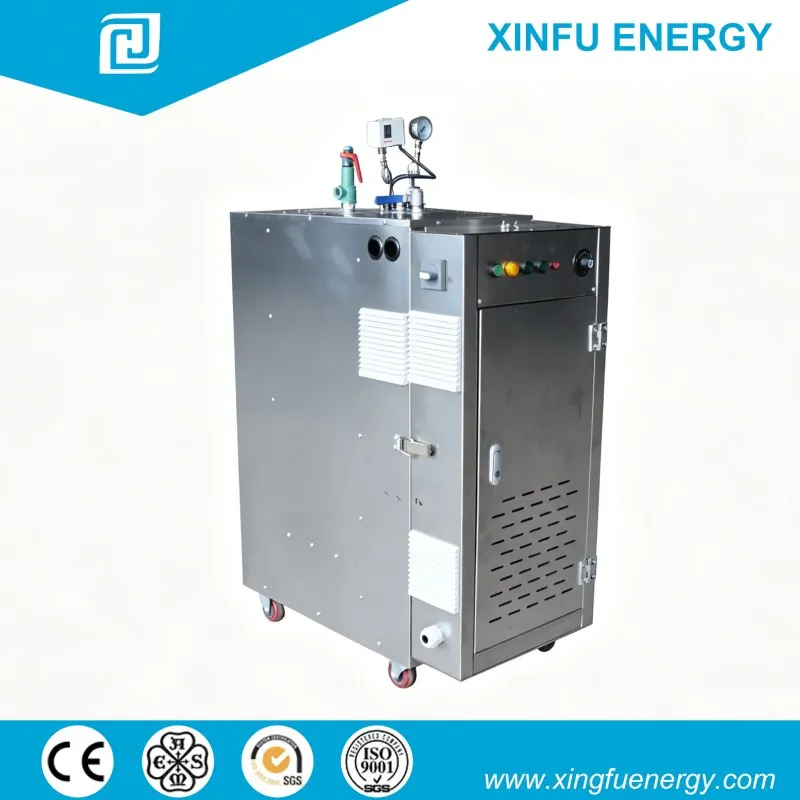
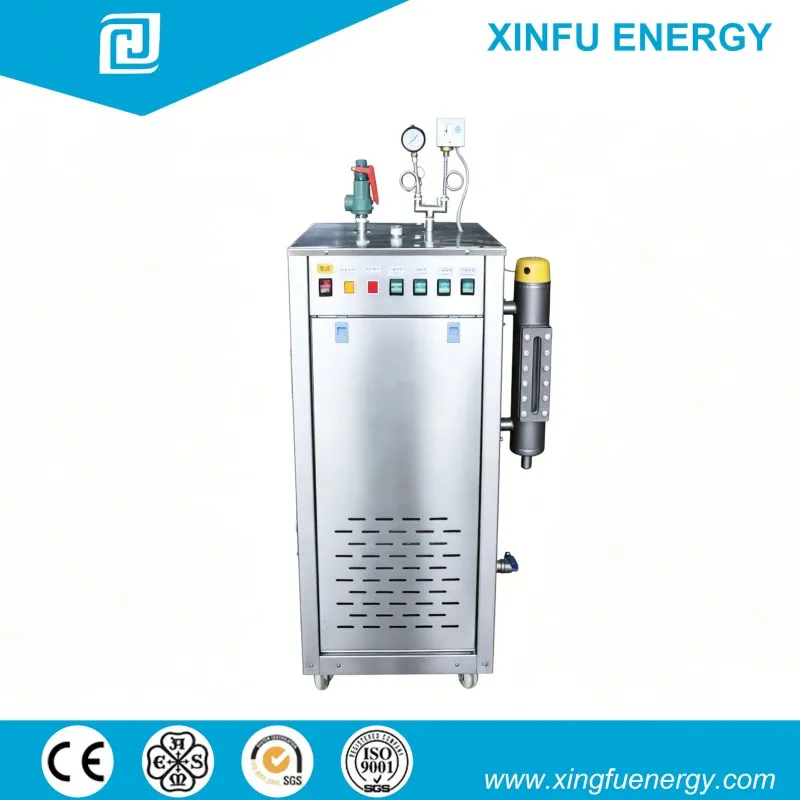
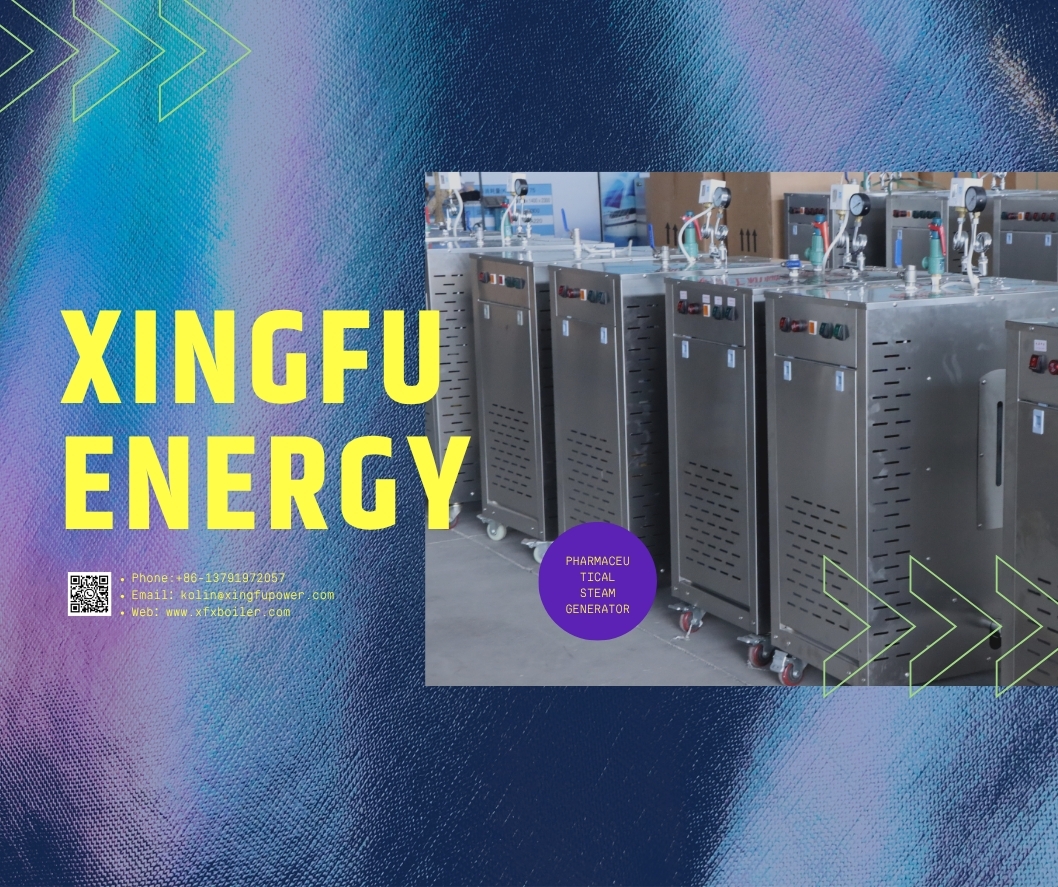
QINGDAO XINGFU ENERGY EQUIPMENT CO.,LTD has supplied steam generators for medical equipment to 17 hospitals and contract sterilization facilities across Poland, Malaysia, and South Korea since 2016. Their longest-running unit—installed in a Jakarta dental instrument reprocessing center—has completed 23,400 sterilization cycles without a single unscheduled shutdown. Its secret? Not higher wattage. Simpler design: fewer welds, no burner assembly, no refractory lining to spall. Just 316L vessel, immersion heaters with redundant thermal cutoffs, and a feed pump calibrated for local water hardness.
Their vertically integrated production means traceability down to the batch number of each heating element. Every unit undergoes 72 hours of continuous load testing—cycling between 0–100% output—before shipping. That’s why their warranty covers not just parts, but performance: guaranteed steam dryness ≥95%, pressure stability ±0.3 bar, and response time ≤70 seconds—for five years.
Steam generator for medical equipment isn’t about replacing an old boiler. It’s about eliminating a point of failure in your sterilization chain. When biological indicators pass consistently, when maintenance logs show zero steam-related interventions, when your QA team stops asking “Was the steam dry?”—that’s when you know the choice paid off.