-
+86-13791972057
-
No. 3009, Tower 3, Zhuoyue Century Center, No. 31th Longcheng Road, Qingdao, Shandong, China


+86-13791972057
No. 3009, Tower 3, Zhuoyue Century Center, No. 31th Longcheng Road, Qingdao, Shandong, China








2026-11-20
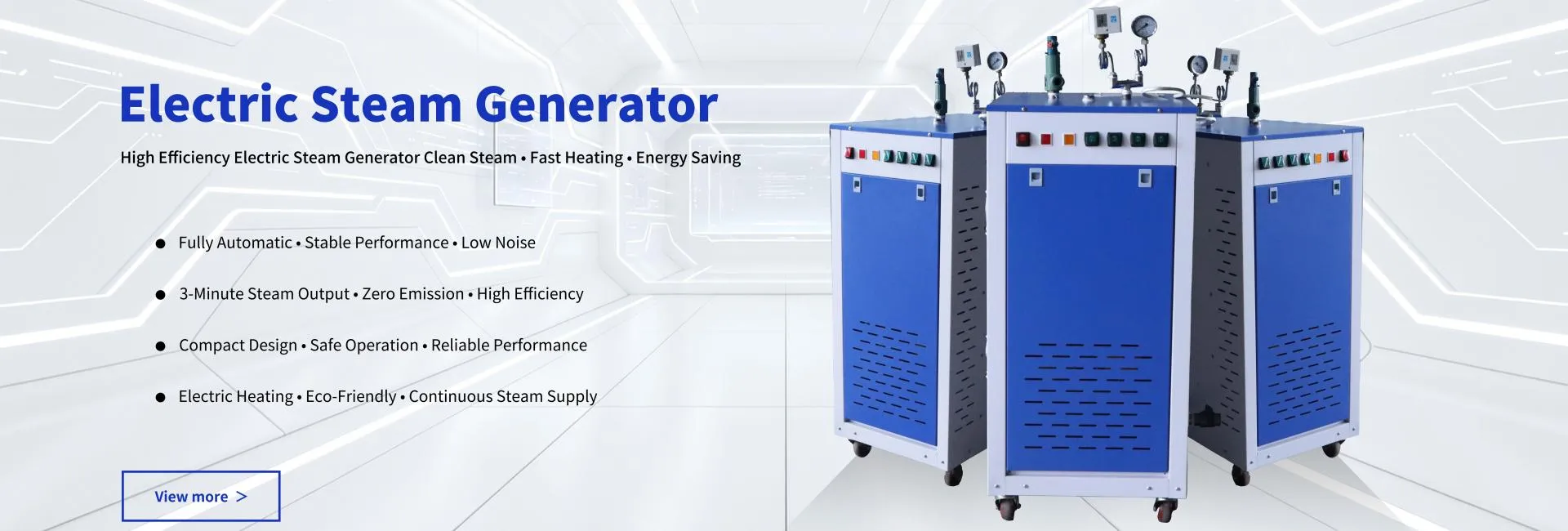
Pharmaceutical steam demand splits into three duties. For an electric steam generator in the pharmaceutical industry, the split matters more than the total: most plants learn this late, after a clean-steam system has been priced for the whole site or after an audit question exposes a sterilization point fed from an industrial header.
An electric steam generator for pharmaceutical industry sites serves three duties that differ in one respect: whether steam can reach the product. Process heating runs through jackets, coils and heat exchangers, where steam never meets the material. Sterilization and sterilization-in-place (SIP, steaming equipment in position) put steam against product-contact surfaces. Environmental and cleaning duties — humidification, hot water, equipment washing — stay outside the product path.
Confirmed parameters for this equipment class are 0.4–0.7 MPa gauge with rated steam temperature 150–170 °C. Saturated steam in that band sits between 151.8 °C and 170.4 °C, which covers sterilization temperatures and still suits process heating.
Walk the plant and mark each steam point contact or no-contact before reading further. That list is the input to every later decision.

Process heating is the largest duty in most plants and the least quality-sensitive, provided it stays indirect. Reactor jackets, evaporators, vacuum dryers, fluid-bed exchangers and media sterilization all take heat through a wall.
The ceiling on jacket temperature is the saturation temperature of the supply, not the heater rating: 151.8 °C at 0.4 MPa gauge, 170.4 °C at 0.7 MPa gauge. A jacket holding 145 °C therefore works with 6.8 K of approach at the low end of the band and 25.4 K at the high end.
Stability outranks peak capacity. A jacket that swings several degrees between batches moves the batch temperature with it, so band width and recovery time after a large draw matter more than the nameplate maximum.
Sensitivity varies by equipment. Vacuum dryers and fluid-bed units typically react to wet steam, because droplets slow heat transfer and disturb the drying curve. Large jacketed vessels react to instantaneous demand: the heat-up peak, not the running load, sizes the supply.
Indirect heating is the default grade; where steam is injected into a product stream or a vessel holding product, the point moves to the clean side.
Record two columns per process point: indirect or not, and the temperature the jacket must hold.
One question grades any steam point on a chemical or pharmaceutical site: can this steam reach the product, or a surface the product will touch.
| Grade | Typical use | Feedwater focus | Materials and interface | Records expected |
|---|---|---|---|---|
| Utility steam | Humidification, space heating, non-product washing | Hardness, dissolved solids | Standard industrial pipework | Maintenance log |
| Process steam | Jackets, coils, evaporators, dryers | Hardness, solids, carryover control | Carbon steel or stainless wetted parts | Pressure and temperature trend |
| Clean steam | SIP, direct injection, product-contact surfaces | Feedwater fit for product contact | Product-contact materials, drainable, no dead legs | Quality checks with batch traceability |
Clean steam quality rests on three properties: dryness, which decides how much delivered mass condenses and gives up heat; non-condensable gases, which blunt heat transfer wherever they collect; and contaminants carried from feedwater, which decide what steam leaves on a surface the product will later touch. Limits for all three come from the applicable standard and the plant’s validation protocol.
Three errors recur. Over-specification puts clean-side provisions on every point, raising capital without reducing risk on a humidification line. Under-specification feeds a SIP point from an industrial header and leaves a validation gap no later document closes. The third treats filtration as cleanliness: a filter removes particles but does not fix wet steam or remove dissolved gases.
Mark the grade beside each point on the piping and instrumentation drawing. If one line serves two grades, the drawing shows the boundary that must be built.

Sterilization steam is judged on saturation and air removal, not on pressure alone. A chamber can read its target pressure while the steam inside runs cooler than the gauge implies; venting until the discharge is steam, and confirming that by test, is the practical control.
Convert before comparing. Saturated steam at 121 °C is about 0.20 MPa absolute, roughly 0.10 MPa on a gauge; at 134 °C it is about 0.30 MPa absolute and 0.20 MPa gauge.
The 0.4–0.7 MPa band sits above both levels: margin absorbs line losses and the draw of simultaneous cycles. Sterilization loads are block-shaped, large during come-up and small during hold, so peak comes from how many chambers start together rather than from any single rating.
Count sterilizers and SIP circuits, their cycle times, and how many start together. That count sets the peak, not the sum of nameplates.
Records from a steam plant are evidence of supply, not proof of sterilization, and that distinction sets what a control system is worth on a pharmaceutical project.
Three control duties belong to the steam side. Pressure control holds the band and recovers after a large draw. Interlocks stop heating when a steam point is not ready. Protection covers overpressure and low water, independently of the control loop.
Stability is measurable, not descriptive: band width in normal operation and recovery time after the largest single draw. Convert the band before judging it: between 0.5 and 0.8 MPa absolute, 0.02 MPa of pressure variation moves saturation temperature about 1.1–1.2 K, so a ±0.02 MPa band is roughly ±1.2 K.
The system logs a time series — pressure, temperature, running state, alarms, maintenance events. It cannot substitute for the validation file. Equipment data feeds installation and operational qualification (IQ/OQ); performance qualification (PQ) remains a product-and-process exercise the manufacturer cannot run on the customer’s behalf. Electronic signature and audit-trail capability is a separate question.
Ask for three things: the control specification with band width and recovery figures, the record list with sampling intervals, and a written statement of what the equipment does not claim.
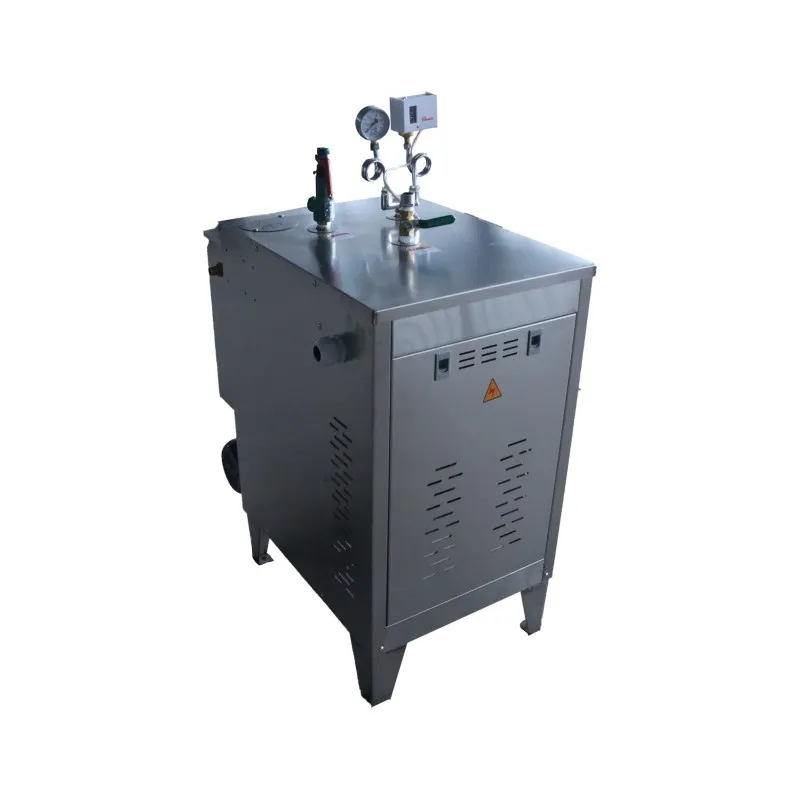
An electric steam generator for pharmaceutical industry projects is quoted per steam point, never per site total. Aggregating demand hides the grading that the price depends on.
| Input | Unit | Why it changes the answer |
|---|---|---|
| Steam point identifier | — | Keeps duties separate through sizing |
| Grade | utility / process / clean | Sets feedwater, materials, records |
| Steam demand, continuous | kg/h | Evaporation capacity |
| Steam demand, peak | kg/h | Margin and buffer choice |
| Working pressure | MPa (state gauge) | Band selection |
| Required temperature at the point | °C | Confirms the band is sufficient |
| Duty pattern | continuous / batch | Sizing basis and cycling |
| Supply voltage and frequency | V / Hz | Heater and electrical arrangement |
| Phase | single or three | Electrical arrangement |
| Daily run hours | h/day | Intermittency and wear |
| Feedwater source and quality | analysis | Treatment requirement |
| Redundancy | N+1 / standby / none | Continuity versus efficiency |
Supply options for this class cover 220/380/400/440 V and 50/60 Hz, single or three phase; confirm the local standard before ordering.
Missing inputs fail predictably. A total figure with no grading merges a clean point with a utility point, which yields an oversized clean system or an under-provisioned one.
Fill one row per point, mark estimates as estimates, and send the sheet with the drawing that already shows the grades.
Feedwater sets the ceiling on steam quality; maintenance only defends it. No amount of inspection recovers dryness the feedwater and separator never delivered.
Three water-side factors matter. Hardness deposits on heated surfaces and slowly cuts output, which shows first as longer heat-up rather than as an alarm. Dissolved solids can carry over into steam, and at a clean point that becomes a product-contact question rather than an equipment one. Contamination on the clean side travels the same path, so the clean loop is drained and dried between campaigns.
Blowdown belongs to the water analysis, not to a calendar. A fixed schedule either wastes heat or lets concentration drift; an inline conductivity reading turns that judgment into a number. Periodic checks still cover what a sensor cannot see: separator condition, element surfaces and the seals that keep the clean side clean.
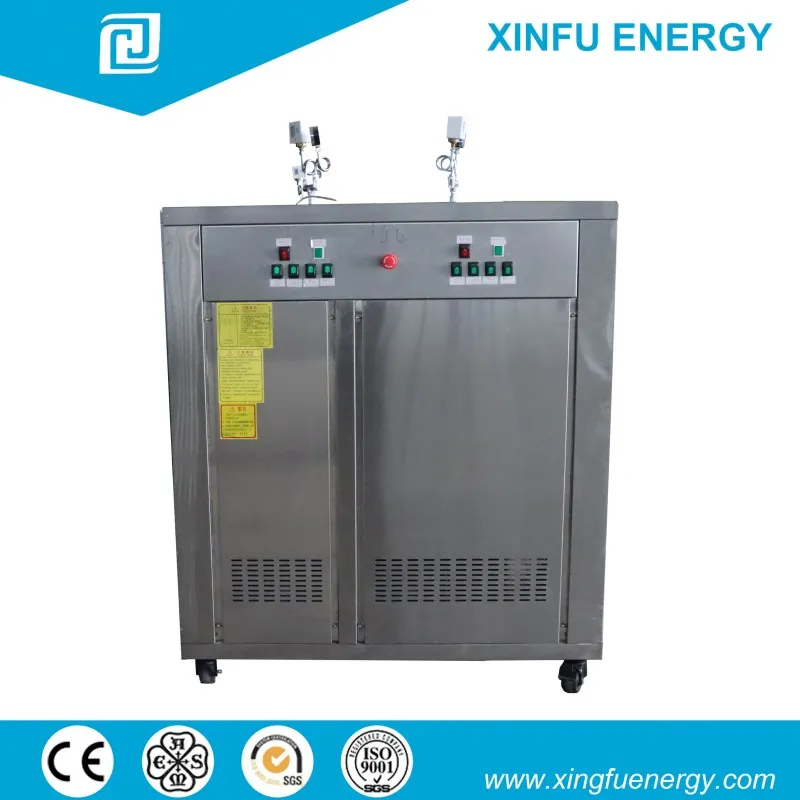
Log blowdown volumes, resin or cartridge changes, and any excursion with its cause; obtain a current feedwater analysis before specifying treatment, and set blowdown from it rather than from habit.
Does a pharmaceutical plant need clean steam everywhere?
No. Only points where steam reaches product or product-contact surfaces need that grade. Humidification, space heating and non-product washing normally run on utility steam, and grading them higher adds capital and maintenance without reducing risk at the point that matters.
Will industrial steam on a jacket create an audit finding?
Not by itself. Indirect heating keeps steam away from product, and the audit question is whether the grade matches the use. The finding appears where a SIP or injection point is fed from an industrial header with no documented boundary.
Can a 0.7 MPa unit reach 134 °C sterilization?
Yes, with margin: 0.7 MPa gauge is about 170 °C saturated. Chamber pressure is set downstream by the sterilizer’s own control and reducing valve, so the unit supplies the band that makes 134 °C reachable at the chamber, not the sterilization pressure itself.
What limits apply to dryness and non-condensable gases?
They come from the applicable standard and your validation protocol, and differ between jurisdictions and products. A supplier quoting one figure for every plant is guessing; ask for the basis, the version and the scope of that figure before accepting it.
Can equipment records be used directly for validation?
They support it rather than replace it. Pressure, temperature and alarm histories are inputs to installation and operational qualification, while performance qualification stays with product and process. Electronic signature and audit-trail capability is a separate item to confirm in writing.
Can one unit supply clean and process points?
It can, if a boundary is designed rather than improvised. A single system built to the clean grade costs more than two supplies each serving its own duty, and the decision belongs on the grading sheet, not the quotation stage.
Send the per-point sheet and the graded drawing before asking for a price on an electric steam generator for pharmaceutical industry work. Pressure and capacity describe the machine; the grades describe the project.