-
+86-13791972057
-
No. 3009, Tower 3, Zhuoyue Century Center, No. 31th Longcheng Road, Qingdao, Shandong, China


+86-13791972057
No. 3009, Tower 3, Zhuoyue Century Center, No. 31th Longcheng Road, Qingdao, Shandong, China








2026-11-20
At 0.4–0.7 MPa, a high-pressure steam generator is a pressure vessel, not an oversized humidifier, and that single distinction decides what you must specify, install and inspect. Most mis-specifications in this band come from reading the nameplate as a promise about the end point rather than as a starting condition. The sections below set the band’s real meaning, show how to size from the far end of the line, and list the safety provisions, parameters and compliance steps that follow from it.
For a high-pressure steam generator in this class, 0.4–0.7 MPa means saturated steam at 150–170 °C, and the two numbers only make sense as a pair. A gauge reads pressure above atmosphere, so 0.4 MPa on the plate is 0.50 MPa absolute, and the steam temperature that follows is 151.8 °C rather than the 143 °C a reader gets by treating the gauge value as absolute.
| Gauge pressure (MPa) | Absolute pressure (MPa) | Saturation temperature (°C) | Latent heat (kJ/kg) |
|---|---|---|---|
| 0.4 | 0.50 | 151.8 | 2,108 |
| 0.5 | 0.60 | 158.8 | 2,086 |
| 0.6 | 0.70 | 165.0 | 2,066 |
| 0.7 | 0.80 | 170.4 | 2,048 |
Values follow the IAPWS-IF97 saturated line and are rounded; check against a printed steam table before using them in a calculation. Saturated steam here means steam at its boiling temperature for that pressure, with no superheat margin above it.
Two consequences follow. First, the 0.1 MPa gap between gauge and absolute is 25% of the lowest value in this band, which is enough to misplace an end temperature by more than ten degrees. Second, in boiler classification this band sits at the low end of pressure ratings; the word “high” describes where it sits in a product line, above atmospheric and low-pressure units, not a position in a pressure hierarchy. Any figure above 0.7 MPa falls outside the range confirmed for this equipment class.
Before designing anything, read the plate and record the unit: MPa gauge is the normal convention on this equipment, and mixing it with bar or absolute values is the most common source of arithmetic errors in a selection sheet.
Size the high-pressure steam generator from the far end of the line, because pressure lost between the outlet and the point of use never comes back. A pressure steam generator rated 0.7 MPa does not deliver 0.7 MPa to a jacketed vessel across a plant; it delivers whatever survives the route.
Losses accumulate in three places. Pipe friction and bends take a share, more where diameters are small or runs are long. Steam traps and pressure-reducing valves take another, and a partly failed trap behaves like a closed orifice. Heat exchangers, jackets and coils add their own resistance, which rises as surfaces foul. Dryness matters alongside pressure: wet steam loses more temperature across the same drop and fouls surfaces faster.
Work in three steps. Fix the end requirement as a pressure and a temperature, not one of them. Estimate the total drop over the actual route, including the exchanger. Add a margin for fouling and for peak flow, then choose the nearest band at or above the result. With an end requirement of 0.5 MPa and an estimated drop of 0.15 MPa, the unit needs 0.65 MPa and the 0.7 MPa band is the practical choice; those figures are illustrative rather than a recommendation.

Where the sum lands above the top of the band, the answer is usually to reduce the drop — larger pipe, shorter route, a properly sized reducing station — rather than to look for a higher-pressure machine. Superheated steam does not solve it either. Superheat adds sensible heat above the saturation temperature, not condensing capacity, and the steam has to desuperheat before it condenses, which makes control harder wherever the process assumes saturated conditions.
Log the end pressure during peak demand, not at commissioning with the plant idle. A reading taken at low flow proves the pipe is connected; it does not prove the sizing, and a stable pressure steam boiler is one that holds its band through the peak.
This band is justified when an end point needs more than about 130 °C, when heat-transfer area is constrained, or when the run is long and serves several points — in roughly that order of frequency.
Three situations recur. Jacketed vessels and coils with limited surface need a higher condensing temperature to push heat through a small area. Cooking and sterilization equipment needs a ceiling above the low-pressure range, which reaches only about 120 °C at 0.1 MPa. Cleaning liquor and process water heated to the upper end of their range need a supply that holds temperature through recovery, not only at start-up. All three come back to the same test: an end temperature or a heat-transfer limit that the low-pressure range cannot reach.
The same band is wasted on humidification, wash water at 60–80 °C, space heating, and tank trace heating below 100 °C. Those duties run on atmospheric or low-pressure supply, and a pressure-rated unit adds inspection obligations without adding capability.
Apply a sequence rather than a feeling. If the highest end temperature is below 100 °C, atmospheric equipment covers it. Between 100 and 130 °C, a low-pressure unit is normally enough. Above 130 °C, this band is the candidate, and distance or point count only strengthens the case. When one line serves both a high-temperature and a low-temperature end, split the loads instead of sizing everything to the highest.
Write the end points down before calling anyone: temperature, pressure, simultaneous demand, and distance from the proposed generator position. That table is the input to every later decision, and it is the first thing a competent supplier asks for.
Four provisions cover the pressure side, and each answers a different failure rather than duplicating another.
The pressure control loop holds working pressure in a band, using a transmitter or switch to modulate heating. It prevents drift, and it is the only provision that operates continuously. A safety valve sits behind it, set at or below the design pressure, rated for steam rather than water, with discharge capacity at least equal to maximum steam output; that provision covers a control loop that has failed open. An independent overpressure cutout covers the case where the control loop is bypassed, stuck or wrongly tuned, and it must not share the same sensing path as the controller. A low-water cutoff protects the heated surfaces from dry firing, which is more consequential at higher pressure because stored energy per unit volume rises with it.

The hierarchy to check is short: working pressure below set pressure, and set pressure at or below design pressure. A valve set at the working pressure weeps continuously and destroys its own seat; a valve set above the design pressure protects the vessel by failing something else first.
Calibration and sealing belong with the provisions. Pressure gauges need periodic checking, and the safety valve should be sealed after setting so that a well-intentioned adjustment cannot quietly raise the ceiling. Set pressure, calibration interval and the inspection regime all depend on the destination’s rules.
Ask for three records before accepting a unit: the safety valve set-pressure certificate, the interlock test sheet, and the gauge calibration report. Confirm the discharge pipe runs to a safe location, away from walkways and intake air.
Ten inputs decide the quotation, and each omitted one buys a second round of questions. Six come from the plant, two from the electrical study, and two from the destination.
| Input | Unit | Why it changes the answer |
|---|---|---|
| Steam demand, continuous | kg/h | Sets the evaporation capacity |
| Steam demand, peak | kg/h | Sets margin and buffer choice |
| Working pressure | MPa (state gauge) | Selects the band |
| End-point temperature | °C | Confirms the band is sufficient |
| End-point pressure | MPa (gauge) | Drives the pressure-drop calculation |
| Supply voltage and frequency | V / Hz | Fixes the heater configuration |
| Phase | single or three | Fixes the electrical arrangement |
| Daily run hours | h/day | Separates intermittent from continuous duty |
| Feedwater source and hardness | ppm as CaCO3 | Sets the treatment requirement |
| Destination country | — | Sets compliance and electrical rules |
Power follows from capacity and pressure, not the reverse, which is why the power band is quoted separately: kW ≈ (kg/h × latent heat) ÷ 3,600. At 0.7 MPa, 100 kg/h works out near 57 kW before efficiency and margin; treat that as an illustration of the arithmetic, not a unit to order.
Missing inputs produce predictable errors. A demand figure without a pressure invites a unit that cannot hold temperature at the end point. A pressure figure without daily run hours invites intermittent sizing applied to a continuous load.
Fill the table from measurements and nameplates, and mark anything estimated as estimated. Suppliers price what is written, and unclear inputs are resolved either by a conservative margin or by a wrong assumption.
The line between bands is not the pressure number; it is two properties — whether the vessel is built to hold pressure, and whether the end equipment is too. Pressure without those two properties is a number on a plate.
| Band | Typical pressure | End temperature | Vessel status | End equipment |
|---|---|---|---|---|
| Atmospheric / open | at or near 0 MPa | up to about 100 °C | open, vented | hose, duct, open vessel |
| Low pressure | around 0.1 MPa | about 100–130 °C | pressure vessel, limited | rated pipe and fittings |
| 0.4–0.7 MPa band | 0.4–0.7 MPa | about 150–170 °C | pressure vessel | rated pipe, traps, valves |
Two misuses account for most of the trouble. Driving a high-temperature end from a low-pressure unit leaves the end permanently short of temperature, so operators raise the set point until an over-temperature alarm ends the argument. Feeding a pressure-rated supply into atmospheric-rated hoses produces leaks at joints and, worse, a jet of steam where someone is standing.
Mixing the two on one site is legitimate, but only with a boundary. A reducing station and a clear demarcation on the drawing separate them; throttling a valve by hand does not, because the upstream pressure remains available to anyone who opens it further.
Mark the boundary on the piping drawing before the equipment arrives. If a line feeds both a vessel above 130 °C and a washdown point, it needs two supplies or a documented reduction, not one supply and an instruction.
Two things decide whether an installation is acceptable: the room and the paperwork, and both are settled before the unit arrives.
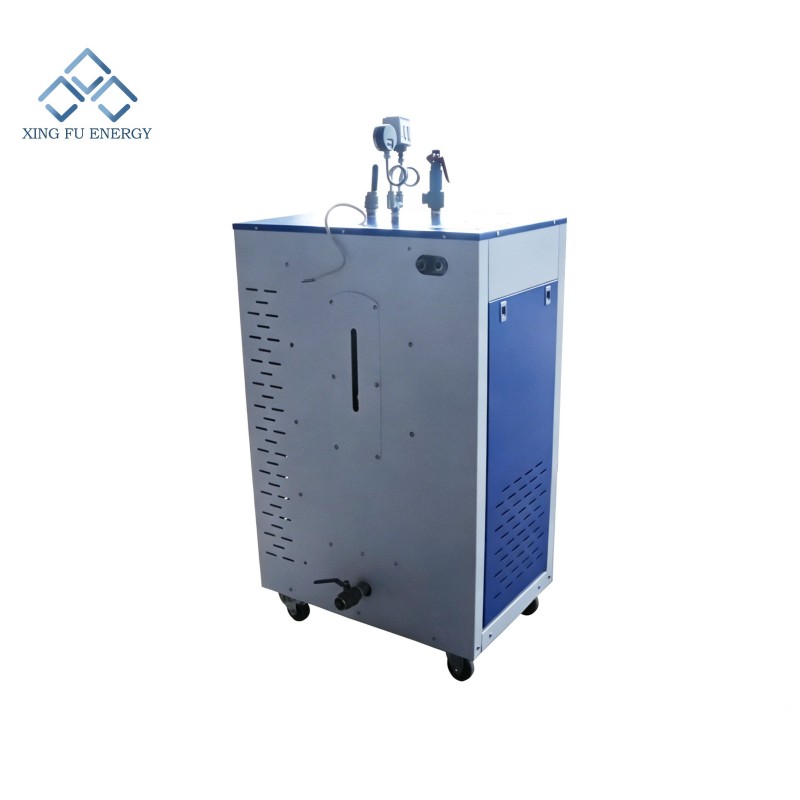
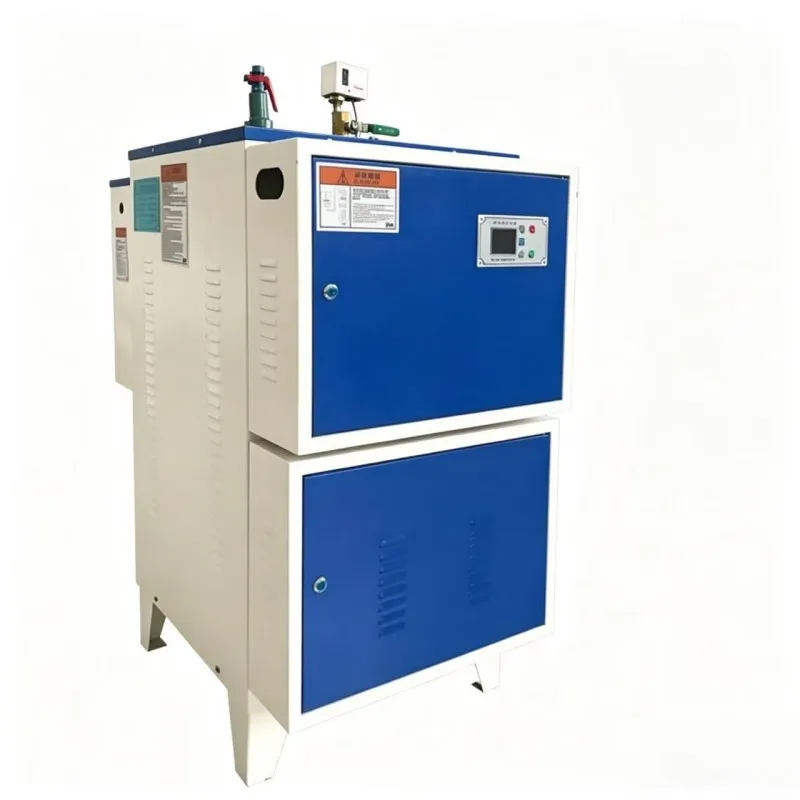
The room carries load, moves air, drains water and leaves access. Floor loading, ventilation for heat, a drain at the low point, and clearance for element replacement all belong in the plan. Electrical capacity and protection are part of the same check, since an electric high pressure steam boiler sized to the steam duty may exceed the spare capacity of an existing distribution board.

Piping decisions follow the pressure-drop estimate made earlier: diameter for flow at the allowed drop, insulation to keep dryness, traps and slope to remove condensate, and a discharge route for the safety valve that cannot be blocked or aimed at people.
Compliance starts with a question rather than an assumption. Whether the unit triggers registration and periodic inspection depends on the jurisdiction’s threshold, normally expressed as a combination of pressure and volume; export destinations apply their own regimes, and the applicable threshold and interval have to be confirmed for the destination \[EXPERT INPUT: applicable registration threshold and inspection interval for the destination country]. No supplier can promise that a pressure vessel is exempt; that determination belongs to the local authority.
Four actions close out commissioning: set and seal the safety valve, calibrate the pressure gauge, prove the overpressure and low-water interlocks by test rather than by inspection, and train the operators on both normal shutdown and emergency isolation. Record the design pressure from the plate and the set pressure from the valve tag into the equipment file; those two entries are what an inspector compares first.
Obtain the local threshold in writing before the order, and keep the set-pressure and test records with the equipment file. Those three documents answer most questions an inspector will ask.
Is 0.7 MPa always better than 0.4 MPa?
No. The higher end of the band buys temperature at the end point and costs stored energy, tighter inspection and more demanding piping. Choose the lowest value that satisfies the end temperature after pressure drop; a margin above that buys nothing but obligations.
The plate says 0.7 MPa but the end gauge reads 140 °C. What is wrong?
Two candidates. Pressure is being lost between the outlet and the end point, so the steam is at a lower saturation temperature than the plate implies; or the steam is wet, and droplets are dragging the effective temperature down. Measure at peak flow, then inspect traps and reducing valves before changing the set point.
Can one generator supply a 160 °C process and a 70 °C washdown line?
Yes, with a reducing station and a documented boundary. What does not work is one pressure-rated supply throttled by hand at the washdown point, because the upstream pressure stays available and the downstream fittings were never rated for it.
What changes when the unit is exported?
Voltage and frequency options cover 220/380/400/440 V and 50/60 Hz, in single or three phase. Confirm the local electrical standard before ordering, and confirm the destination’s pressure-vessel rules separately, since the two sets of requirements are decided by different authorities.
Does this band need better water treatment?
The principles are the same and the consequences are larger. Higher pressure means higher heat flux at the heated surface, so the same hardness deposits faster and costs more output. Carryover into steam also matters more wherever steam meets product.
How does intermittent duty change sizing?
Continuous duty is sized to sustained peak plus margin. Intermittent duty is sized to recovery time between batches, and a unit sized for the average rather than the recovery will cycle, with element life and pressure stability both paying for it.
Send the end-point table before asking for a price. Four columns — temperature, pressure, simultaneous demand and distance — turn a quotation for a high-pressure steam generator into a calculation rather than a guess.